Leaving Iraq


The last of the 4,000 soldiers in the 4th Stryker Brigade, 2nd Infantry Division, crossed the border from Iraq into Kuwait Thursday. There are no U.S. more combat brigade teams left in Iraq. All is going seemingly well for President Barack Obama’s plan to pull to leave just 50,000 troops there by September.

Hard to think about how it was then.

By then, I mean seven years ago, when the United States invaded Saddam Hussein’s Iraq and U.S. soldiers deployed in droves.

In 2003, I looked at the American Humvees and Abrams tanks rolling through Baghdad. The soldiers wore aviator glasses and pointed their M-16s triumphantly. I stood among crowds of Iraqis and like them, pondered the course of history.

I did not know then that more than 4,000 of those soldiers would die in Iraq, along with thousands of Iraqis, many of them caught in the middle of dirty urban warfare.

By the time I returned as an embedded reporter in 2005, Americans ruled the landscape.

Camp Liberty was a sprawling American base with air-conditioning, movie theaters, stores, restaurants and other amenities the Iraqis lacked. Even now, Iraqis say they have no electricity or other basic services. A young lieutenant who was waiting to catch a plane with me on the military side of the Baghdad airport told me that if the Americans could deliver electricity, they would win the war.

In a way, he was right. By 2008, Iraqis asked me why the world’s superpower could not give them something as basic as power.

This year, protests erupted over the lack of power. In a land where temperatures soar to 120-plus in the summer, it’s hard to live without a fan. Only two-thirds of Iraqi have their electricity needs met — in Baghdad, it averages to four hours a day.

I thought about the day when I returned to my tent at Camp Striker and the AC unit had shut off. I sat on my cot dripping buckets of sweat and and tried to imagine life for Baghdadis outside the camp.

Seven years after the war, basic services are still a problem in Iraq.

So is insecurity.

Many people like to point to the drop in violence as a marker for success in the war. But my Iraqi friends still worry about stepping out with their children.

A car bomb exploded in Ramadi Wednesday night, killing two people. That may not sound like a lot compared to the height of the war when hundreds died each month. But when it is your husband or your mother, it’s everything.

Another 48 people died Tuesday in an attack outside a military recruiting center in Baghdad.

When will the killing end in Iraq? When the Americans are gone? When the Americans are still there?

When will the government be formed? It has been almost six months since the parliamentary elections and still there are no agreements on forming a new government.

“Iraq is still at the beginning of the story of its evolution since 2003,” Ryan Crocker, the former American ambassador to Iraq, told CNN.

I cannot pretend to be an expert on Iraq and pass judgment on this day being hailed as another milestone in post-Saddam history.

Today, I am in the comfort of my Atlanta home, thinking back to all the suffering I saw in the past.

I think especially of Dahlia, a young girl I met in the barren fields of dust and scrub near Nasiriyah. She was walking testament to her name: Dahlia. A bright flower in the midst of drab.

She wore a crimson and lemon yellow printed robe, her head was covered in a black scarf – at 10, she was old enough to respect the modesty taught by her culture. She stood barefoot in front of a lone U.S. Humvee that stopped before entering the gates of Camp Cedar.

Dahlia’s father was killed by Saddam, she told me. She never went to school — there were no schools nearby. She lived in a makeshift tent with her mother and brother.

I asked her what she wanted to do when she grew up. “Nothing,” she said, as though she knew her fate was bound to the bleak sands of southern Iraq, that she would never break out of poverty.

She thought for a while longer. “I want to work at Cedar.”

That was in 2006. The U.S. military closed Cedar shortly after I met Dahlia. Now so many more of those bases are gone.

No, today, I cannot share in the optimism of all those who hail Iraq a success. I think of the hundreds of Dahlias I met in the midst of war.

You go, girl!


This Sunday, I will be watching the premiere of “Aarti Party.”

Aarti Sequeira won this season’s “The Next Food Network Star” on Sunday night. A lot of us at CNN were rooting for her — she worked as a producer in the Los Angeles bureau for a while. And, we felt, she was the most talented cook among the finalists.

But I wanted her to win for another reason.

I loved the way she infused the spices of my homeland into her cooking. I watched her week after week as she turned out dishes with roasted cumin, garam masala, cardomom. Those were the smells of my childhood, the aromas wafting out of the kitchen and into my bedroom on a warm, muggy Kolkata morning.

Aarti makes things like South of the Border Shrimp Masala. On her new hard-won show, she says, you might expect something like a Sloppy Bombay Joe made with a chicken tikka masala sauce. YUM! (as Rachael Ray would say)

Every Sunday night, I salivated. And from the very first episode, I wished for her to perform well. Her cooking reminded me of my mother’s.

I admired my ma’s improvisational skills. Leftover McDonald’s fries would show up the next day in a chicken curry. Vegetables on their way to being thrown out would star in a Bengali-style mixture of five spice — nigella, cumin, fennel, fenugreek and mustard. Pure heaven.

In a way, I thought of my mother as the first Indian fusion cook. We lived in a small town in Florida. She could not always obtain the spices or ingredients she needed. So she substituted whatever she could find at the Northwood Mall Publix in Tallahassee.

Arrti had that same spirit of infusion and innovation. I wanted to taste whatever she served up. I loved her style, especially that big smile and even bigger flower tucked in her mess of black curls.

I enjoy watching cooking shows but have always lamented the lack of South Asians on the network. Finally, we have Aarti. You go girl!

I’ll be watching.

Bangla kobita (poetry)


This poem is written by one of my favourite Bengali poets, Joy Goswami. It loses in the translation, of course. And yet…

In the evening sadness comes and stands by the door, his face
Is hidden, from the dying sun he took some colors and painted his body
The sadness comes in the evening,
I stretched my hand and he caught my wrist, in an iron-hard clasp
He caught me out from my room, his face
Is black, he is ahead of me and I follow him
I crossed from the evening to the night, from the night to the dawn, then the morning, the noon, the day, the month
Crossing water, tree, boat, city, hill
Crossing blows, stumbling, poison, suspicions, jealousy, graves, genocide, the bones and ribs of civilization, swamp and grass
Then crossing my own death, death after death, going on and on
The bony fingers holding nothing but a pen
Nothing…

Freedom and flooding

A difficult agreement created Pakistan 63 years ago. The “land of the pure” was partitioned off from India and both nations became independent — Pakistan on August 14, 1947 and India a day later.

Though it split India apart, we were finally free. No more British Empire. No more second-class citizenry.

That’s why today should have been like any other August 14. Joyful. Celebratory. Patriotic.

Instead, Pakistanis will be surrounded by the misery created by torrential monsoons. Walls of water have drowned everything. The mighty Indus flows bloated — in some areas, it has swollen to 20 kilometers in width.

“Poor Pakistan. It can’t catch a break,” said a friend of mine in Kolkata, referring to a the awful earthquake, political crisis and militancy, which mars the landscape with violence every day.

She wondered what might have happened if Pakistan had never been split off from India.

Hypothesizing on the course of history, is ultimately, useless, but I thought about how things might have been different. Or not.

Nothing would have changed the cresting of the Indus this week. Nothing would have changed the water pouring from the skies.

My thoughts this day are with the people of Pakistan, separated from me by history, but not in soul. And I hope India will temper its own celebrations on August 15 and pause to reflect the terrible suffering of its neighbor.

Kaniatarowanenneh


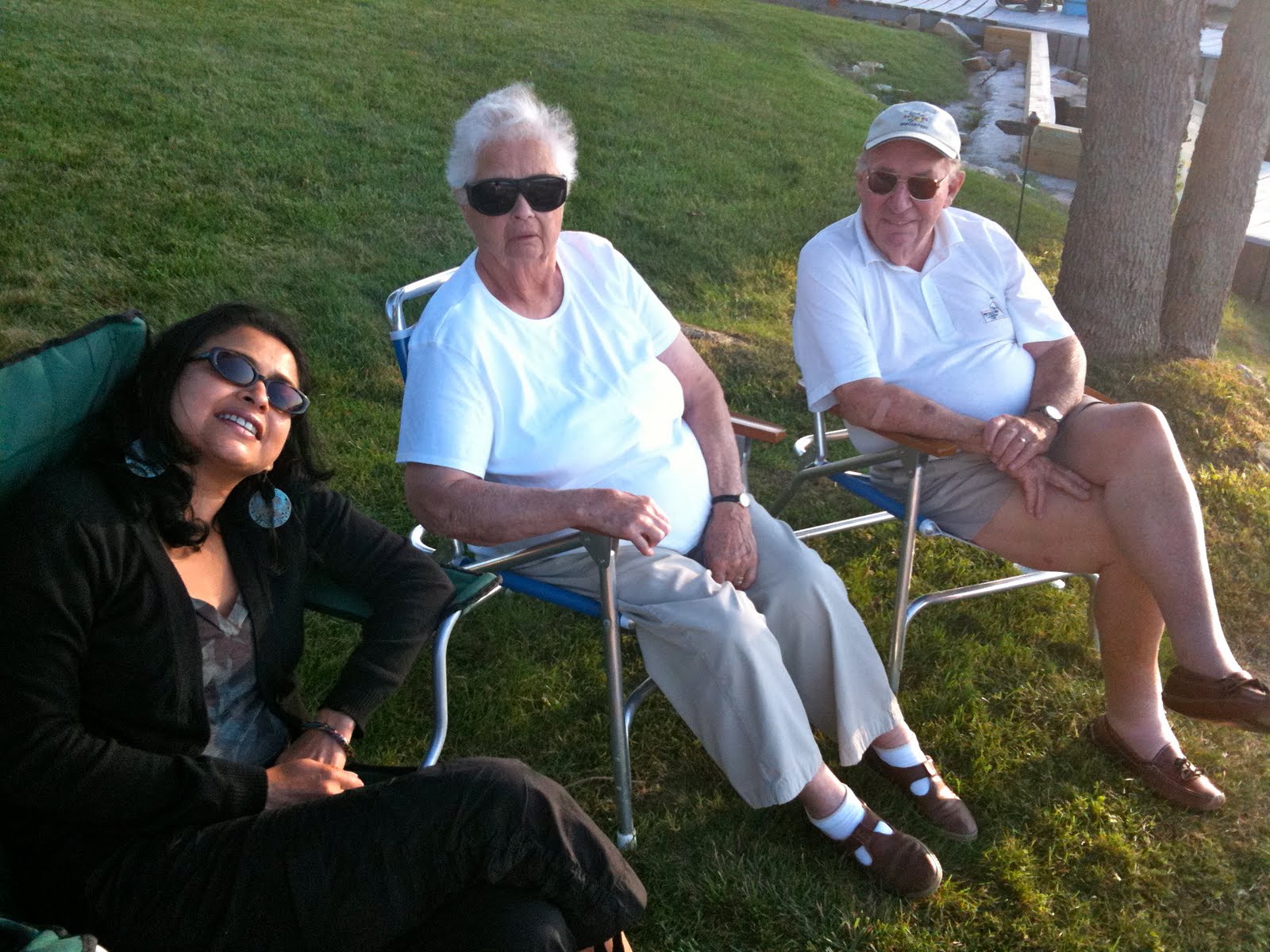
Kevin’s parents, Ed and Jean, have rented a summer cottage on Washington Island in Clayton. The place is perfectly situated — a watery feast for the eyes on the Saint Lawrence River.

Ahead lies Canada’s share of the Thousand Islands. Once in a while, a huge freighter floats by effortlessly, it seems, traversing deep waters toward Lake Ontario or on its way out to the Atlantic via the Saint Lawrence Seaway or as the French call it, the Fleuve Saint Laurent. The Native American tribes, of course, had their own names for the massive river. In Mohawk, the name is Kaniatarowanenneh, meaning, what else but big waterway.

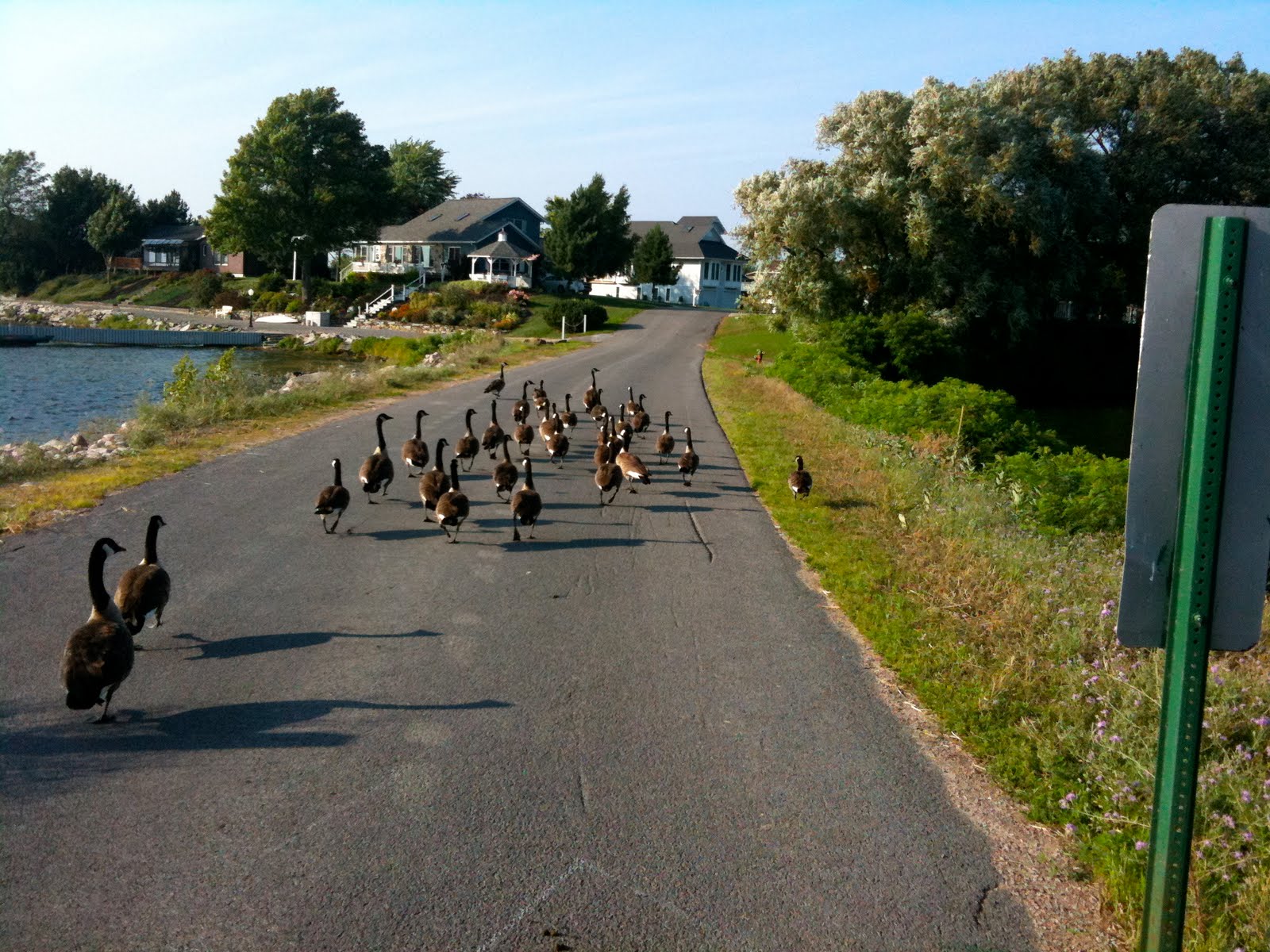
Here are a few photos of this shard of paradise that my in-laws are calling home until it’s time to return to warmer climes in Sarasota. The first picture is of the only kind of traffic jam one is likely to stumble upon around these parts. On the small bridge to the island, people and cars give way to the geese.

Hybrid & City Lights


I have been pondering the purchase of a new car an have seriously been thinking about a Toyota Prius. It’s hard to give up 51 miles per gallon.

Toyota hasn’t won me over completely yet. But this shot in Toronto could make a convincing ad. The CN tower is so beautiful at night and next to the car is an art school, also cleverly designed and illuminated.

What I saw at the harbour in Toronto!


A modern-day stoning

Read about an Iranian woman about to be stoned to death.

On CNN.com:

http://bit.ly/bOA1PB

Why not saffron, green and white?


Every four years, when the world crowns a new football champion, I root for Brazil. I grew up a being a Brazil fan — my father told me Pele was the greatest athlete ever.

As I grew older I wondered why my homeland wasn’t able to field a team to play in the World Cup. After all, when I was a young girl in Kolkata, I watched my cousins and friends kick the ball around with bare feet on a dirt field in the neighborhood park. Even now, every open field sports a goal net or stumps and bails.

So why then can’t an emerging global power, a nation of 1 billion plus, compete in soccer?

Why is India ranked a miserable 133rd out of the 202 football playing countries. Yes, India ranks even below war-ravaged nations like Rwanda and Sierra Leone. I suppose our only solace is that Pakistan and Bangladesh come even further down the list.

Many theories abound on India’s poor performance.

Some say India’s soccer program is run by people who are corrupt. They are more interested in lining their pockets than they are in athletics. The head of the football federation is, for God’s sake, the aviation minister!

Others say India’s real love is that other sport that Americans have yet to embrace, the one that involved the stumps and bails: cricket. Or that club football has never attained the kind of professionalism it has in other countries.

India last qualified for the World Cup in 1950. But the barefooted team never made it to Brazil to play because they couldn’t afford plane tickets to the other side of the world.

A football fanatic friend of mine says India can’t play anymore because it has fallen behind the curve. For many years, players insisted on bare feet when other nations were speeding ahead with fancy spikes, special grass and other new technology.

Instead, in my hometown, millions of people are crazy for Brazil. I remember watching World Cup games in 1998 — the crowds lining the streets were awash in yellow, blue and green. They cried openly when France defeated their team in the final. I felt as though I were on the beach in Ipanema, among Rio de Janeiro’s Cariocas — not in a middle-class Bengali neighborhood of Kolkata.

So I am forced to root for a country other than my own again this year. I have to reserve the Indian flag for that other World Cup, the one that involves the stumps and bails. India plays host next year. Maybe they will even nab their second Cup win.

Viva l’Italia


I never wanted Italy to win until today. But it’s my top pick in the World Cup pool this year. So…

… at 2:30 this afternoon, I gathered with friends at Fritti, a neighborhood restaurant, to watch Italy versus Paraguay.
In the end, my friend Jack said he’d buy me another glass of fine Italian Pinot Grigio if I donned his tricolor shorts. So I did. And said a Hail Mary. It didn’t quite work. Score: 1-1.

That’s really a loss for the fine talians.

But the Pinot Grigio was fine-r.