My friend Val gave the coolest birthday gift: a vanity plate for my Mini Cooper that says an abbreviated form of “EVILREPORTERCHICK.” So on Sunday, I went about trying to get it mounted on the front of my car.
Val and I stopped at an AutoZone on Memorial Drive only to learn that the store does not do any installations. I was disappointed but not for long.
“What do you need done?” said a man in the checkout line.
We showed him. He said he could do it. Wouldn’t take but a few minutes. If we wanted, we could follow him to his auto shop just down the road.
“I’m in the convertible Jag,” he said.
Sure enough, he climbed into the forest green Jaguar. I’d say it was circa 1980 or so. We followed it to a small house that looked like it was stuffed with things inside and about to fall apart on the outside.
“I’m Rodney,” the man told us.
Then he closed the gate to his back yard, teeming with junky cars and trucks. I looked at Val, wondering why Rodney felt compelled to close the gate. No one could see us anymore. What if Rodney turned out to be a troubled man?
But he wasn’t. Not really.
He told us how he was a preacher at the Emman-U-El Remnant Church. He does “special prayers” and marriage counseling, according to one of the business cards he gave us. He said he traveled all over the world as a missionary. He’d just been to Ethiopia.
Another card advertised Genesis Luxury Auto Broker, Inc. And a third said: “Rodney Holder, Master of all Massages. By appointment only.”
Whoa. I could have had him tackle my neck ache.
Instead, Rodney drilled and screwed and within minutes, my vanity plate was firmly attached to my Mini. He wouldn’t say how much we should pay him but we gave him a $20 — for his labor and the conversation. It was certainly the most interesting afternoon I’ve had in a while.
Whether it’s a auto repairs or soul searching or back pain, keep Rodney in mind. He’s a jack of all trades and apparently, a master of a few.
I had a dream last night. It was the same one I’ve had since August 20, when I learned of Jim Foley’s death.
A man in black holds a small knife in his left hand. He is too cowardly to show his face. But he holds up Jim’s face. For the world to see.
I have been told that if one uses a small knife for such a brutal method of execution, it is an excruciatingly painful way to die. Not like the guillotine; not like a heavy blade making a clean chop.
I dream this every night. I have dreamed it before. After Daniel Pearl’s murder in February 2002 by al-Qaida mastermind Khalid Sheikh Mohammed.
I do not understand people who wish to kill journalists and aid workers. I hope I will never understand them.
I know this: that if my dreams are so troubling, then how traumatic are these acts to the loved ones of those subjected to such heinous acts? I cannot imagine.
Some Muslims in that part of the world have told me that no less heinous acts happen in America each year. Murder in the most chilling fashion. Rape. Assault. Torture. Grisly crimes that make headlines — and some that do not.
But one act does not beget another. One crime does not justify another.
Jim was a journalist who cared. So was Steven Sotloff. David Haines dedicated his life to the betterment of others. How many more innocents will be killed in this horrific way?
I will see Jim Foley in my dreams tonight. Again. I am sure of it.
And, in the morning I will again awake saluting his courage, saluting all those who put themselves in harm’s way for making this world a little bit better.
Below is what K.S. Narendran, husband of Malaysia Airlines Flight 370 passenger Chandrika Sharma, posted on his Facebook page on the 6-month anniversary of the plane’s disappearance. I have admired his fortitude since I first spoke with him in March and his incredibly poignant expressions of his ordeal. So I thought I would share.
It is six calendar months since MH 370 made news….
Since then, many horrific events across continents makes one wonder about the world we live in. Are we moving towards a better world that will see future generations, or a world bereft of humanity? World-views that breed hate and intolerance, self-centeredness and greed, power mongering and domination, and, all brands of fundamentalism and violence are ascendent. The space for inquiry and dialogue has shrunk, mutual respect has given way to the valuing of mutual gain, and relationships have progressively reduced to the short hand of techno-aided ritualistic greeting and voyeuristic tracking. From this wide angle lens, the outlook is bleak and scary. It is then tempting to bring attention to one’s immediate context, seek relief and refuge, assuming of course that we are more ‘in control’ of our lives than of the world at large.
In my personal context, what rears up is that I have associated normalcy with a certain belief in the uninterrupted certainty of routines and relationships. The disappearance of MH 370 has been a rude reminder of the transience of all things and the fickleness of dreams, goals and plans. It has been easier putting these on hold or distancing from them, and harder to find energy and meaning in making each day count. From being a seeker and wanderer that I thought I was for the most part, I have seen myself be more the drifter and the dodger, allowing myself a lot of latitude rather than exhorting myself to ‘move on’.
So what am I stuck at? I think it has to do with acceptance of what seems like an irreversible loss…. not being sufficiently pragmatic in responding to an event that continues to defy explanation, and to be remain mired in the swirl of possibilities. The other day, after a hard grinding walk, I was lying flat on my back in my apartment doing my ‘stretches’ about the same time and place that Chandrika would as part of her daily routine to stay fit. Unannounced, a thought entered: “what if the phone rang and it was her?” No sooner had the thought crossed my mind, and the phone rang. At that moment, I told myself: “This can’t be true”. Of course, it wasn’t. But those seconds let me see that no matter how far my rational mind had moved on, at some undefinable depths of my being there remain remnants of expectations that cold thought or reason could not banish.
I have struggled to receive or counter those who helpfully ask me to keep up hope, following it up with “where is the evidence? Without a shred of evidence, why must we believe and accept the worst?”.There isn’t a paper from MAS to help approach the banks and other institutions with. I suppose even they are in a quandary on what they can commit to paper without being interrogated. So such of those concrete things that one does in closing a chapter in one’s life so a new chapter may be written is in abeyance.
As I take in the news of Tony Abott and Modi cozying up to each other,and doing the deals, I wonder if it may have helped for Modi to whisper a word on MH 370 and push for the truth. Given the silence in the establishment, it will not surprise many if those in power thought it was a Mumbai cab registration number. And as I read of Malaysia and Australia’s calling for an independent investigation into the incident involving MH 17, I wonder why the repeated calls for an independent investigation into MH370 have been seen as less deserving. While the difference in ground (or ocean) realities may be pointed out as basis, the lack of transparency and credibility in both instances stands out as crucial grounds to consider the case for independent investigators.
I have in the last few weeks tried to grapple with the idea of loss and mourning. Why do I miss those whom I have a shared a slice of life with and today are no more in our midst? Near ones. Friends in distant lands I hadn’t stayed in contact with for years. Friends I have met in recent months. Why should the knowledge of ‘physically forever gone’ be such a big deal? Often, the mind shifts to a shared past, suggesting that one part of loving, losing and grieving has less to do with another’s presence in the present. At other times, it moves forward in time to an imagined future, that now needs repair. The present has to do with being suddenly incapacitated in small or large measure to fully apprehend and respond to an altered sense of space and the configuration of things. The void that one experiences suggests a wholeness with ‘my world’ and within myself prior to separation, a wholeness whose quality I don’t have an acute awareness of (or value enough?). Memory then is a companion (or a crutch) that keeps alive the notion of the erstwhile unity or wholeness till I discover a new location to re-anchor myself, a new relationship with memory itself, with all people, and things. It is a bit like a glass of water with my finger dipped in, and what happens to the water whenI remove my finger.It is just that memory is sticky, heavy and impedes flow.
I am not a mushy sentimentalist. The over-grown stoic in me seldom made time for such a part. What I miss most in my intimate partner is a friend and a foil, whose expressiveness made up for my lack of it, and whose yen for thoughtful action ensured that life was never frozen, stagnant and lost in a sea of words.
Many years ago, I sought to understand what the process of celebration was all about. Strangely, in the current context, my mind has strayed to that very inquiry. It makes me wonder if celebration and mourning are essentially two sides of the same coin. That in mourning one invokes the memory of a life lived. That much like Robinson Crusoe who perhaps could not celebrate all by himself and needed a gathering, mourning is a collective process that celebrates the life of one who has gone, and gives a vocabulary to the legacy that lives on. In this process there is sadness, joy, and celebration, all in good measure.
Honoring the courage and fortitude of James Foley today. Rest in peace.
I had intended to write more about him but words are failing me now. So I am posting a few links for you. I hope you will think about how so many journalists put themselves in harm’s way so that you may know the truth about our sometimes vicious world.
On my last night in New Orleans, Sister Helen and I visited death penalty attorney Denny LaBoef at her home. Denny took this photo of us.
My journalism brings me face to face with all sorts of interesting people. Over the years I have met extraordinary men and women and ordinary ones who have extraordinary tales to tell.
Occasionally, I run into exceptional people, the kind who make me stop to reflect, respect and admire.
Sister Helen Prejean is one of them.
I’d known about her work for decades — I first learned about her ministry on death row when I, as a young reporter, began covering criminal justice issues in Florida. When her book, “Dead Man Walking” was published, I read it and immediately connected with her. She vomited after witnessing her first execution in the electric chair. So did I.
Last week, I was finally able to spend some time with her. She came to pick me up at the New Orleans airport. “Text me when eagle hits tarmac,” were her orders.
She was waiting patiently for me in her Toyota outside Delta baggage claim. Immediately, I got a first-hand experience of her lead-foot driving.
Over the next few days, I came to know a woman who has dedicated her entire life to the sisterhood, to the Catholic church, to the poor and disenfranchised. I also came to know a woman who is full of life and laughter and joy in her heart, despite the fact that she has been dealing with executions for 30 years. I could not get over her verve for life. I also gained a couple of pounds eating Oyster Po’ Boys with her. They were deelish.
My story on Sister Helen published today on CNN.com. Shortly after, I received another text from her — yes, she loves her iPhone.
“Moniiiiiiii!,” it said. “You amaze me. What a comprehensive, lively, piece. U r an incredible, encyclopedic, compassionate journalist. Even the parrot joke! I’ll call soon.”
I felt tears welling.
I’m raising a glass of Scotch in your honor tonight, Helen.
Sister Helen is perhaps America’s best known abolitionist. You and I may not agree with her position on the death penalty or other issues for that matter.
I was inspired not because she is a death penalty abolitionist but because she is a woman of courage, compassion and conviction. And a whole lot of strength.
Journalists often lose their sense of all the good in this world because we cover so much misery and suffering. Sister Helen gave me back a little bit of my diminishing faith in humanity.
There it was, posted on a light pole outside my house — a flier that made my heart skip a few beats.
“The KKK Wants you. The Loyal White Knights Neighborhood Watch.”
I’ve seen several of these fliers around in Atlanta intown neighborhoods. Two others were posted in front of homes I know are owned by people of colour.
I called the Southern Poverty Law Center — which tracks hate crimes — yesterday to find out whether this was a sign of Klan resurgence. The intel folks there assured me there was nothing to worry about. Turns out that the KKK is trying to capitalize on the current immigration crisis with a recruiting drive. Apparently the group has been spreading their message of hate in other states as well.
I called the two numbers listed on the flier. One call went to the Richmond, Virginia, area. The other, to North Carolina.
Both times, I got a recorded message. The first was a diatribe against immigrants that urged shoot-to-kill orders along the Mexican border. The second was a racist rant against black people. Niggers, it said, have IQs barely above mental retardation.
I have lived in the South for a majority of my life. I know well the brutal history of racism.
As a brown woman from another country, I have felt racism’s sting many a time. I’ve been called a sand nigger, a camel jockey, an injun. I’ve had readers of my stories tell me to go the hell back to the dirty, stinkin’ place I came from. They’ve called me Osama lover. Some have even sent me death threats.
But something about these fliers made me stop dead in my tracks.
I spoke with my friend, Valerie Boyd, about it last night. We talked about how — despite the hatred, bigotry and discrimination that still exists in American society — we were (fortunately) never victims as our parents were.
Val’s parents grew up in a Jim Crow South. My parents grew up under the British Empire. The movie theater near my mother’s childhood home had two drinking fountains. One was for Europeans, the other for Indians and dogs.
We talked about how the Klan burned crosses in the front yards of black people. The fliers, Val said, were the crosses of our generation.
I am by no means making any comparison here. But that’s how it felt when I first saw the “KKK” in front of my house. I felt the Klan was sending me a message: We know who you are and where you live. And we don’t want your kind here.
The Southern Poverty Law Center assured me I should not be scared by this routine canvassing attempt. But to me, there is little that is routine about what I heard on the recorded messages. They were another reminder to me of how far America still has to go.
Even with a black man in the Oval Office, even with America on the verge of transforming into a minority-majority nation, racism is alive and well.
Perhaps it will take many generations to eliminate racism. Until then, it behooves us all to talk about ugly things in the open, to make sure the brutality of the past is never repeated.
I worked for the Center for Participant Education at Florida State University and we had invited Angelou to speak on campus. I went with my friend Graciela Cuervo to fetch her at the Tallahassee airport, shook her hand and said: “Maya, I am so happy to finally meet you.”
She was a towering figure in so many ways. Even physically. She stood 6 feet tall.
She looked at me and said: “Ms. Basu, it’s Ms. Angelou.”
I was taken aback. I had not imagined her to be, well, so Diva-like.
She sent me all over town to find her an avocado sandwich. I moved her things from a west-facing room at the Holiday Inn because it was too hot. That night, at the event, I had to allow people to sit on the floor behind the podium on the stage — there were not enough seats in the auditorium. She didn’t like that and made it clear she didn’t. But on stage, she told everyone, in her resounding voice, how thrilled she was to be among them.
Others, including my friend Valerie Boyd, who curated the literary component of the National Black Arts Festival in Atlanta, have also spoken about how demanding Angelou could be. Journalist and writer A’Leila Bundles said she was dignity personified but sometimes haughty and over the top, according to folks who groused about the special items her contract required.
“Was the story about the rider requesting 30 year old cognac true or apocryphal?” Bundles asked. “That rumor, and the way she carried herself were the source of caricatures in recent years. How dare a little black girl speak with such precision and carry herself with such grace? Well, dare she did.”
If anyone had the right to be demanding, it was Angelou.
She grew up poor in a small Arkansas town, raised by a grandmother who assured a black girl in a brutally racist society that she was worthy, important and talented. She was pioneering in literature and wrote about the cruelty of Jim Crow like no other black woman had done before for wider audiences.
I was 16 when I read “I Know Why the Caged Bird Sings.” I was blown away.
Angelou gave voice to women of color. Her work continues to inspire generations of women, who, like me, drew from her words a strength to always live with pride.
The news of Angelou’s death spread quickly Wednesday. There are many obituaries and appreciations online. I urge you to read them, to learn more about a phenomenal woman.
Pretty women wonder where my secret lies. I’m not cute or built to suit a fashion model’s size But when I start to tell them, They think I’m telling lies. I say, It’s in the reach of my arms, The span of my hips, The stride of my step, The curl of my lips. I’m a woman Phenomenally. Phenomenal woman, That’s me.
I walk into a room Just as cool as you please, And to a man, The fellows stand or Fall down on their knees. Then they swarm around me, A hive of honey bees. I say, It’s the fire in my eyes, And the flash of my teeth, The swing in my waist, And the joy in my feet. I’m a woman Phenomenally.
Phenomenal woman, That’s me.
Men themselves have wondered What they see in me. They try so much But they can’t touch My inner mystery. When I try to show them, They say they still can’t see. I say, It’s in the arch of my back, The sun of my smile, The ride of my breasts, The grace of my style. I’m a woman Phenomenally. Phenomenal woman, That’s me.
Now you understand Just why my head’s not bowed. I don’t shout or jump about Or have to talk real loud. When you see me passing, It ought to make you proud. I say, It’s in the click of my heels, The bend of my hair, the palm of my hand, The need for my care. ’Cause I’m a woman Phenomenally. Phenomenal woman, That’s me.
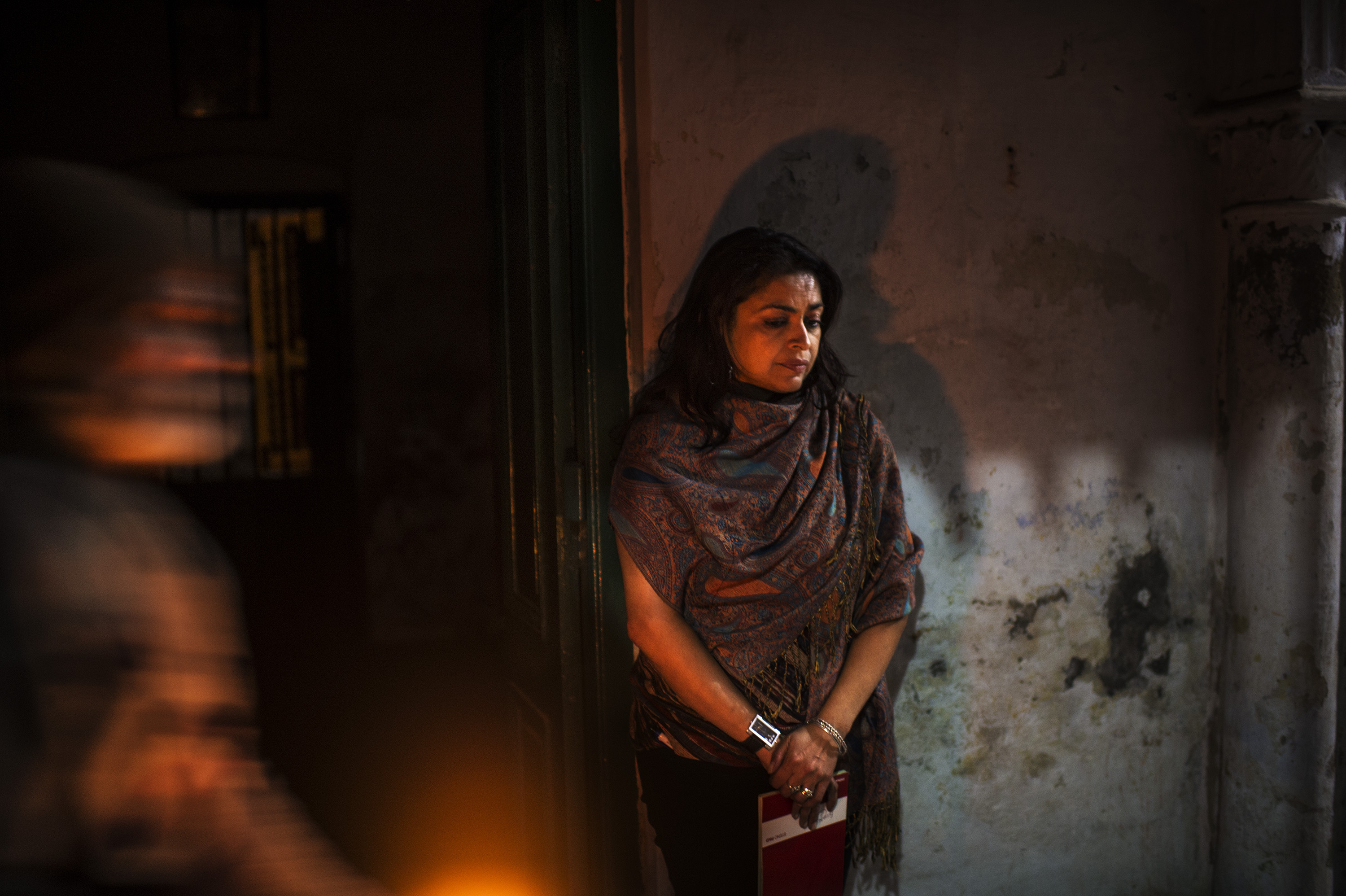
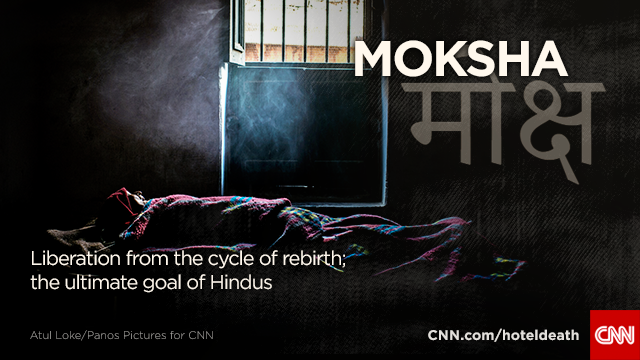
My story on a home for the dying in Varanasi, India, came out on CNN.com today.
I spent a week reporting in the fabled holy city and was fascinated by its spirituality much more this time than I was on previous trips. Part of it was because I was reporting on faith. But another part of it was that I think I have transformed over the years; my rebellion against organized religion has mellowed.
As I have grown older, I have lost people who were close to me. My parents, aunts, uncles, cousins and good friends. I was in shock after I returned from India in February to the death of my colleague Lateef Mungin. He was 10 years younger than me.
That kind of loss makes you think about the things that are important in life and also about what happens to us after we stop breathing.
The people I spent time with in Varanasi were, for the most part, steadfast in their beliefs, though there is one man in my story who may surprise you.
Anja Niedringhaus, 48, an acclaimed photographer for the Associated Press, died instantly after an Afghan policeman opened fire while they were sitting in their car in eastern Afghanistan, the AP said. Correspondent Kathy Gannon was wounded and is in stable condition in hospital.
“Anja and Kathy together have spent years in Afghanistan covering the conflict and the people there. Anja was a vibrant, dynamic journalist well-loved for her insightful photographs, her warm heart and joy for life. We are heartbroken at her loss,” said AP Executive Editor Kathleen Carroll.
I did not know Niedringhaus, though I am familiar with her incredible body of work. But I can imagine what kind of woman she was. Her fortitude. Her courage. Her convictions.
Just yesterday, I spoke on a panel at the University of Georgia about reporting on trauma. There was some discussion there about journalists in conflict zones. One student asked me how journalists deal with fear.
I did not have a good answer for her because the fear never goes away. It’s a matter of not dwelling on it and getting on with your work. But then, when news of tragedy comes, like today’s from Afghanistan, it’s difficult to remain composed.
Here’s to all my colleagues working at this very moment in places near and far where they are in harm’s way. They make me proud of my profession.



 Evil Reporter Chick