The world’s biggest election

Get this: Starting on April 7, nearly 815 million Indians will begin casting ballots in this year’s parliamentary elections. Yes, 815 million!

That’s almost 100 million more than there were in the last election in 2009.

How to accommodate the huge number of estimate voters in the world’s most populous democracy? Polling is staggered over nine days: April 7, 9, 10, 12, 17, 24, 30 and May 7, 12. There are 930,000 polling stations and 11 million personnel — including security forces — will be deployed to facilitate the voting.

The world’s biggest election pits the ruling Congress Party against the Hindu nationalist Bharatiya Janata Party and comes at a time when India is at a profound point in history. Who will lead the nation as it figures out how to charge forward into the future.

The vote will be counted May 16. Balloting is electronic but God help the people in charge!

“Elections to world’s largest democracy pose immense challenges with respect to logistics and man and material management,” said R. Balakrishnan, India’s deputy election commissioner.

We Americans consider ours the greatest democracy in the world. But I firmly believe the task at hand in my homeland is enormous. And if things go smoothly, India should stand proud.

Farewell to a friend

Lateef: Always cool, but an understated cool. (Photo courtesy Tricia Escobedo)

My friend and colleague Lateef Mungin died Friday. He was only 41.

I was asked to write a tribute for CNN.com.

There are some assignments that I dread. But none like this one. I was so afraid I would fail him. I hope this gives you an idea of what a caring and wonderful man he was. He was so loved.

The story published today. You can read it here: A CNN journalist and a giant in humanity.

Here’s to you, ‘Teef. You were the best and I will miss you terribly.

Varanasi (aka Benares, aka Kashi)

Varanasi or Benares, as the British called it, is known for a lot of things.

It’s one of the oldest continually inhabited cities in the world, the oldest, certainly, in India.

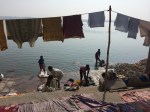
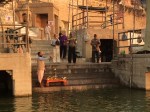
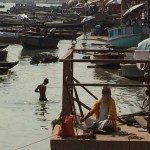
It is the holiest of seven holy cities for Hindus, known as Kashi in olden times. The might Ganges, flows through here and yes, thousands of people visit Benares every year. Hindus come here for obvious reasons. Foreigners flock here to take in the myriad rituals of Hinduism and walk the chaos of the city, now 3.5 million strong.

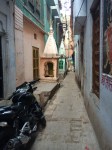
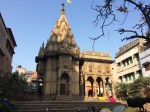
There are about 3,600 temples in Benares, I’ve been told. I walked through the old city last week and it felt as though there was a temple on every corner. Many of the ancient ones are gone, razed by Muslim invaders but some date back several hundred years. The city also claims 1,400 mosques.

I was mesmerized as I walked the narrow alleyways and snaking lanes of the old city. The smell of fresh cow dung mingled with motorbike exhaust and turmeric and cumin as I walked past homes and shops that all seemed stacked one on top of another.

Indians look down on Benares, a city that reminds me of how my native Kolkata was 30 years ago. Grimy, dusty, filthy with little order to the daily machinations of life. I, too felt that way about the city on my previous visits.

This was my third trip to Benares. I understand the magic of this city a little better now. I owe that to my superb guide Nandan Upadhyay, who a few years ago began running a tour company here. Nandan knows a lot about his hometown. If you are ever here, look him up. He has a website called Groovy Tours.

I’m posting a ton of photos with this dispatch. None capture the essence of the city, really. You have to not only see but smell, hear and touch Benares. And that’s not possible with a camera. Not even with a iPhone 5s.

Going to Goa

This slideshow requires JavaScript.

I’d never been to Goa until last week. My cousin Rahul and his wife Shraya moved to Goa several years ago but I hadn’t had a chance to visit them on my rapid-fire trips to India before.

The western state in India is a haven for tourists who flock to its beaches and revel in a culture that is far more progressive than in other parts of the subcontinent.

At first, it was hard for me to believe I was still in India. I’d spent the first 10 days in India in Kolkata, where many of my friends and family still aspire to tradition and abide by cultural norms set decades ago. I love my hometown but sometimes, it can feel a bit oppressive.

Goa surprised me instantly. People seemed far more laid back in their bermuda shorts and sandals and t-shirts. It felt more like coastal Mexico or Nicaragua than India. It looked that way, too, because of the influence of Portuguese architecture.

It’s warm in Goa even in January and I was saved only by the ocean breeze that flows through Rahul and Shraya’s house.

They own a multi-level space atop a hill. Their house is teeming with all sorts of art (Shraya is an artist) and colorful paint and textiles. On the top level is a massive terrace, where we sipped a cool drink at sunset and watched darkness descend.

Over four days, I ate delicious food — fish is a staple in Goa, as is chorizo. The Portuguese settled here and brought with them their culture and religion. About 27 percent of the Goan people are Catholics.

On Friday night, Rahul took me to a birthday party for one of his relatives. The crowd was largely expat. I didn’t get to speak with them much but I gathered they liked it in Goa because here, they could afford to live the kind of artsy, beachy, easy-breezy, stress-free lifestyle that appealed to them.

I’ve posted other photos of my trip on Facebook. You can check them out there.

Now I am back in Delhi. Back at work. And Goa seems distant again, as it always had been. But it was a great break. I am thankful to Rahul and Shraya for their generosity. I see another trip for me in the future. Very soon, I hope.

Suchitra

suchitra_sen

In my childhood, there weren’t too many Bengali women who had made it big enough to attain celebrity status. But there was Suchitra Sen, goddess of cinema.

Her films, usually with Uttam Kumar, were wildly popular in Kolkata.

To me, Sen was the ultimate beauty. She had a certain Bengaliness about her. She was feminine but strong. She had a “no-nonsense gravitas to care out a persona that has never been matched, let alone surpassed in Indian cinema,” film critic Saibal Chatterjee told the BBC.

I just remember my older cousins talking about her. They referred to her with only her first name. Like Greta. Or Marilyn. Legends don’t require a surname. In fact, it’s been said that idols of Lakshmi (goddess of prosperity) and Saraswati (goddess of knowledge) were modeled after Suchitra. Now, that’s some star power.

In all, Suchitra acted in 52 Bengali films and seven Hindi films. The first movie of hers that I saw was “Kamal Lata,” based on a story by famed Bengali author Sarat Chandra Chattapadhya. I was riveted by her performance, made all that much intense by the power of black and white imagery. I gazed into Suchitra’s big eyes and wanted to be like her one day. Talented, smart, strong, beautiful.

Suchitra died today in Kolkata — at the same hospital where my mother died.

Thank you for the hours of entertainment but mostly for inspiration, Suchitra. Rest in peace.

Beam me up, Scotty

panipuri
Pani puris, known as phuchkas in Kolkata, can be found on many street corners. I can eat many, many, many of these. And I will. Soon.


Dreaming of warm, dry winter days, pishi, pani puris on the street, a wedding, speaking Bengali and dear friends.

Wishing today were Saturday.

Wishing I could be across the world in an instant. Beam me up, Scotty.

Panesar

panesar
The etching Panesar took off a gallery wall and gave me.

A headline in my hometown newspaper brought me to tears this morning. B.P. Panesar had died.

He was a renowned artist. Water color. Oil. Etchings. He was also made a name as mentor to Shakila, a poor village woman who gained fame for her collages.

He gave away his earnings as an artist to charity. He never married and lived for many years in one room at the YMCA in central Kolkata. He died in an old people’s home, still holding paint and brush.

panesar2
Uncle Panesar and me when I was about a year old.

I knew him as Uncle Panesar. My father taught at the Indian Statistical Institute, where Panesar worked, and from the instant they met, they became fast friends. My father became an advcate for Panesar’s art. In time, he became a part of our family, especially in the years we spent living on campus in north Kolkata.

He loved to listen to my mother sing Rabindrasangeet and spend hours with my brother and me.

He held me as a baby, played with me when I was a child, encouraged me to paint as a teenager and inspired my creativity as an adult.

From early on, I found Uncle Panesar to be a calming force in my life. I’d peer into his eyes, under his thick bushy eyebrows and try to imagine what was swirling inside his head. What genius, I thought, to be able to produce such visual feasts.

I was especially enamored with Panesar’s collages made with magazine and newspaper cuttings, old pictures, bus tickets and other things people tossed in the trash. Panesar gave up his own collages to train Shakila. He was so taken with her talent. I was sorry at first until I went to visit Shakila and saw for the first time the mastery within that Panesar had helped awakened.

In the late 1980s, I visited Uncle Panesar at the Y. He had moved onto etchings by then and showed me his small studio. He invited me to go see his show at the Birla Academy. I was so taken with an etching of Mother Teresa — I’d volunteered at one of her organizations many years before — that when his show was over, Uncle Panesar took it off the gallery wall and presented it to me. It hangs by my dresser. I look at it as I begin each day. And think of all the good in the world.

I had hoped to see you in a few days in Kolkata. But you did not wait. You have flown away to a better place.

I will miss you, Uncle Panesar. Always.

Water, water, everywhere: Gaining perspective on New Year’s Day

The boat docked at Uros Island. Jose came to meet us with a smile on his face and a totora reed in his left hand.

Totora are the living reeds that float around Lake Titicaca, a massive body of water between Peru and Bolivia that is almost 13,000 feet in elevation. It’s known as the highest navigable lake in the world.

I’d wanted to visit ever since I was a child and my father told me stories about the magical lake in South America. He’d always wanted to visit Titicaca. He made it as far as Cusco and Machu Picchu but never made it to the lake. I was feasting on its majesty for both father and daughter.

My friend Aditi and I made the journey to Titicaca on a chilly December day. We boarded a small boat full of visitors and made our way first to Jose’s floating island.

Jose lives in a small hut on an floating island built with totora. His people have been living that way for hundreds of years, ever since they were forced out of their lands by the Incas. They fish and make handicrafts for tourists (like us) to buy.

The Uros people have faces tanned heavily by the sun — the high altitude makes for high rates of skin cancer. They lead lives from another era. Simple. Honest. Back-breaking at times. Jose let me enter his hut. There was nothing in it but a floor of reeds, a bed and a small black and white television. He thanked former Peruvian President Alberto Fujimori for bringing solar panels to the floating islands. Now he can watch TV and play music.

Oh and one other important difference these days: Human waste is taken by boat to dispose of on the mainland. That way, the water stays clean. Seemed fitting they would do that.

Jose explained how he and his family have to beef up the island as the reeds disintegrate. He then held up one of the reeds that look almost like sugarcane but are much softer. He peeled the outer layers and bit into the end. “Titicaca banana.” Ha.

From the floating islands, we traveled two hours to Taquile Island and marveled at the vastness of the lake. The people who live here also lead the simplest of lives, thriving on quinoa and vegetables they grow there. And trout — originally introduced to Titicaca from Canada — from the lake, though they must go to shallower waters for that. The water here is too cold and deep for fish.

There’s little pollution here. Or stress. Maybe that’s why the average life span is 95. Or so said our guide, Julio.

I thought of all the people I met on that trip that day as a new year is about to come upon us. I report on so much strife in the world. Of war, death, rape, torture. Of climate change and extreme poverty. Of sadness. Grief. And inhumanity. Sometimes, I crave the simplicity of the Uros.

I hope the world becomes a better place in 2014. Maybe there are some crucial lessons to learn from the people of Titicaca.


Cat fight between homeland and home

I just read a CNN-IBN report on the Devyani Khobragade episode that made me squirm.

“Devyani’s arrest,” the report said, “has rattled the Indian Diplomatic Corps.

“It is forcing the government to hit back at the U.S. According to Indian diplomats serving in the Western countries, paying lesser than what is actually on official papers is a common practice among the Indian diplomats. They claim that the salary fixed by the U.S. government is too high for the Indian diplomats.”

Indian diplomats say they cannot afford to pay $4,500 a month for domestic help. They say they, themselves, make just a little bit more than that a month.

What? Really?

In that case, diplomats should not be hiring live-in help.

They certainly cannot expect to treat domestic workers like they are often treated in India — underpaid and sometimes abused in other ways.

The row that has erupted over Khobragade’s arrest and strip search has turned into a Cold War-style standoff between two countries that have enjoyed warm relations in the past few years.

Many of my Indian friends are upset the United States that Khobragade was strip-searched. How dare America treat a diplomat like that? America would not stand for it if one of their own was treated this way. I see their point.

But my guess is that some Indian politicians may be taking a staunchly nationalist stance ahead of critical elections to drum up support for themselves. It pays for them to take a tough position against the United States.

Khobragade, meanwhile, has been transferred to the United Nations mission and can apply for diplomatic immunity. That’s not right if indeed she is guilty of a crime. She, like any other Indian in this country, should be held accountable if she broke the law.

It all seems very stressful as I prepare for an upcoming trip to India. I am stuck watching a political match between my homeland and the nation I now call home. Not good.

Rest in Peace, Madiba

Nelson MandelaThe world turned dark today.

Nelson Mandela flew away. To a better place than this world.

My memories take me back to when I was a child in India, to class IV current events class, where I first learned about the cruelty and viscousness of apartheid. And then to my days at Florida State University, where I protested apartheid and urged divestment. The demonstrations over investments in South Africa matured me in so many ways. To February 11, 1990, when Mandela was released from prison. I could not take my eyes away from CNN, tears streaming down my face. It was as all the world had been freed. To the day in 2010 when I finally visited South Africa. Soweto and Robben Island were my two top destinations.

I stood in Mandela’s cell. Tried to imagine…

What a tower of a man he was. His name was synonymous with words that describe the very best of mankind. Courage. Virtue. Goodness. Strength. Love. Dedication. Honesty. Conviction. Fortitude. Brilliance. Soulful.

In the next few hours, days, weeks, I am sure I will read countless pieces on Mandela. But really, there are no words to describe the loss to the world.

Goodbye, Madiba.