Happy Birthday, CNN


It’s CNN’s 30th birthday today.

I was not yet 18 when Ted Turner launched his visionary network. I didn’t know then that I would be a journalist, let alone work for the world’s most reputable news network.

I watched CNN cover the Challenger disaster, Baby Jessica and then the Gulf War. CNN had arrived. I watched Christiane Amanpour report from Bosnia-Herzegovina and admired her talent and courage.

Just before the invasion of Iraq, I spent several weeks in Baghdad covering the U.N inspections and writing about the fear in Iraqi hearts. War was imminent in a nation that had already suffered so much.

I was alone on that trip. And nervous to be in a police state. I found friends at CNN. Eason Jordan, then a top executive at CNN, offered me workspace and conversation. It was a relief just to be in the presence of friendly faces.

But the world of broadcast remained alien to me.

I was a print journalist and newspapers were still turning profits. But the industry changed rapidly.

Last year, I left the Atlanta Journal-Constitution after 19 long years. Needless to say, the decision was tough.

But I was lucky enough to land at CNN. The more I learn about television, the more I am fascinated.

The stories on CNN’s 30th anniversary are focusing on a pivotal time for the network. Outdone in the ratings race in prime time, CNN, say analysts, has to figure out how to reinvent itself before it gets beat at its own game.

Maybe.

We’ll see where the next few months take us.

But f you ask me, CNN does a mighty fine job bringing the world to millions of homes. Every day. 24/7. And I am glad to play a part.

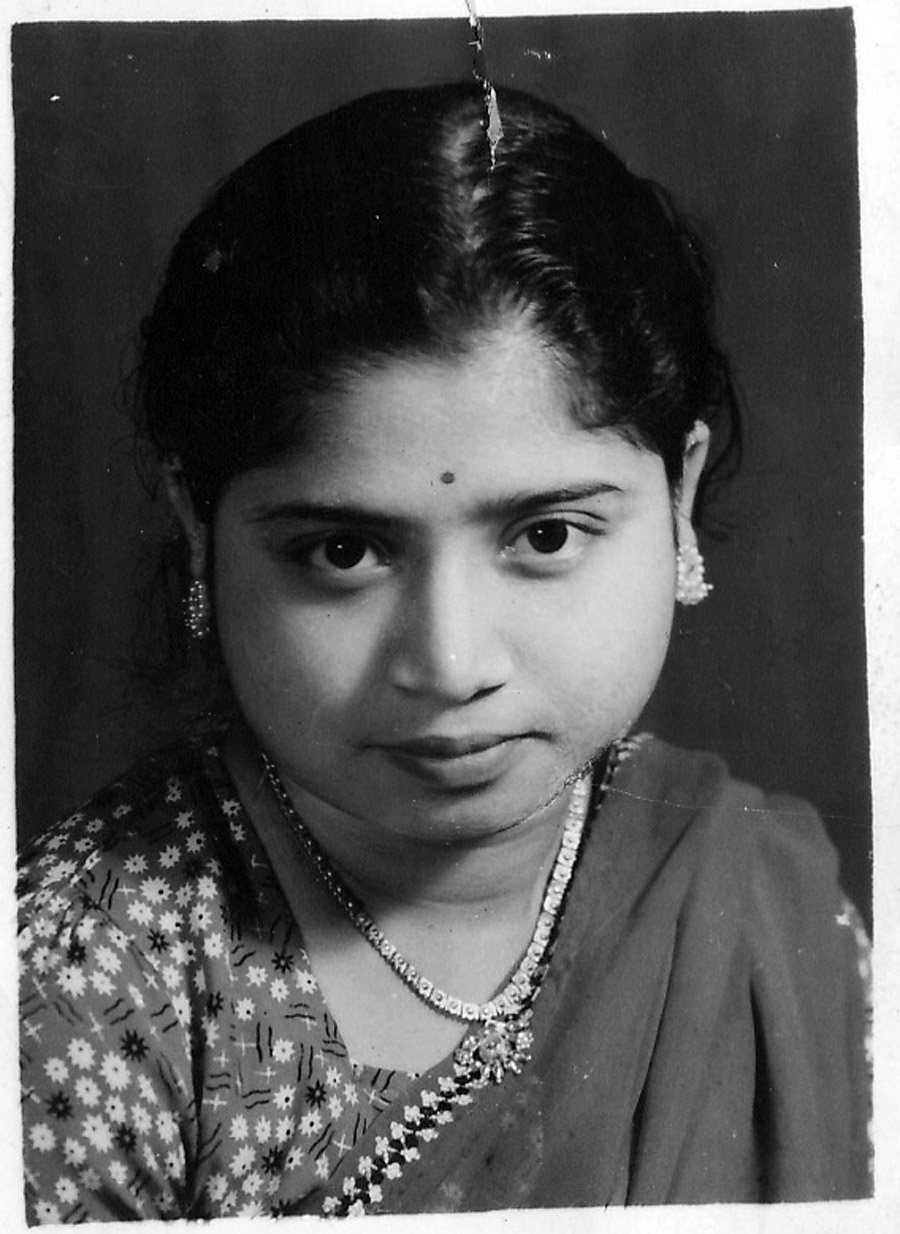
Ma


I refrained from posting this on Mother’s Day out of respect for all my friends who are mothers and for all my friends who still have mothers.

But Mother’s Day is tough. Very tough.

Nine years ago, my mother died.

May 19, 2001.

A few months before 9/11. It became a year that everyone remembers for the terrorist attacks. I remember it as the year my father died, and, exactly two months later, my mother.

Every year on this day, a melancholy descends on me.

I don’t feel like doing much of anything save look at her photographs and her handwriting — I still have all the letters she wrote me from Kolkata. I even have her clothes, fresh from her closet in our flat. Even after all these years, they smell like her, though the scents are fading and I desperately don’t want them to. I put a few of her things in a plastic bag to prevent her from escaping.

I miss her smile. I miss her hand on my forehead. I miss her kiss and her embrace.

I miss everything about her.

She had a massive stroke in 1982. She was only 51 then. But she lived another 19 years, bound to a wheelchair, half her brain cells gone. Toward the end of her life, we exchanged roles. I became a mother, taking care of her, making all the important decisions in her life. She was almost like my child, completely dependent on me.

And yet, every time I gazed into her eyes, I thought of the immense sacrifices she made — as a young Bengali woman who came to these shores not speaking English, not knowing how to operate an electric stove or drive a car. She endured the death of her own parents from afar, endured her loneliness. Never shared her pain with us; only her joy.

Only later, only after she died and it was too late to talk, did I discover her journals and writings. Only then did I realize how incredibly steely my mother was.

Only now do I appreciate her fully. Now that she is gone. Forever.

And a deep void fills my life. Today on the anniversary of her death. And every day that I live.

After ‘le catastrophe’

Four months on, horror has given way to acceptance. But desperation is everywhere in Haiti.

Here is the link to my slide show on CNN.
http://bit.ly/cf7JlT

Celebrity in Haiti


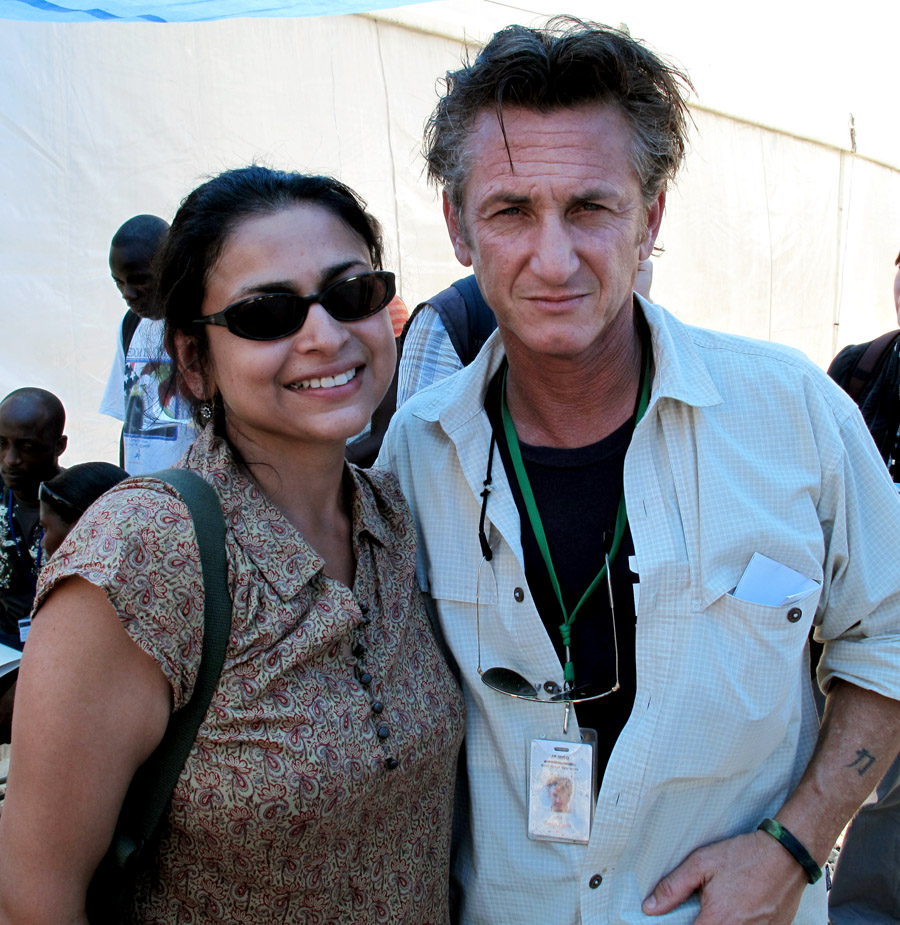
I spent time with Sean Penn in Haiti for CNN.
Read my story at http://bit.ly/cROzVw

More about Mariot


You read about Mariot in an earlier post.

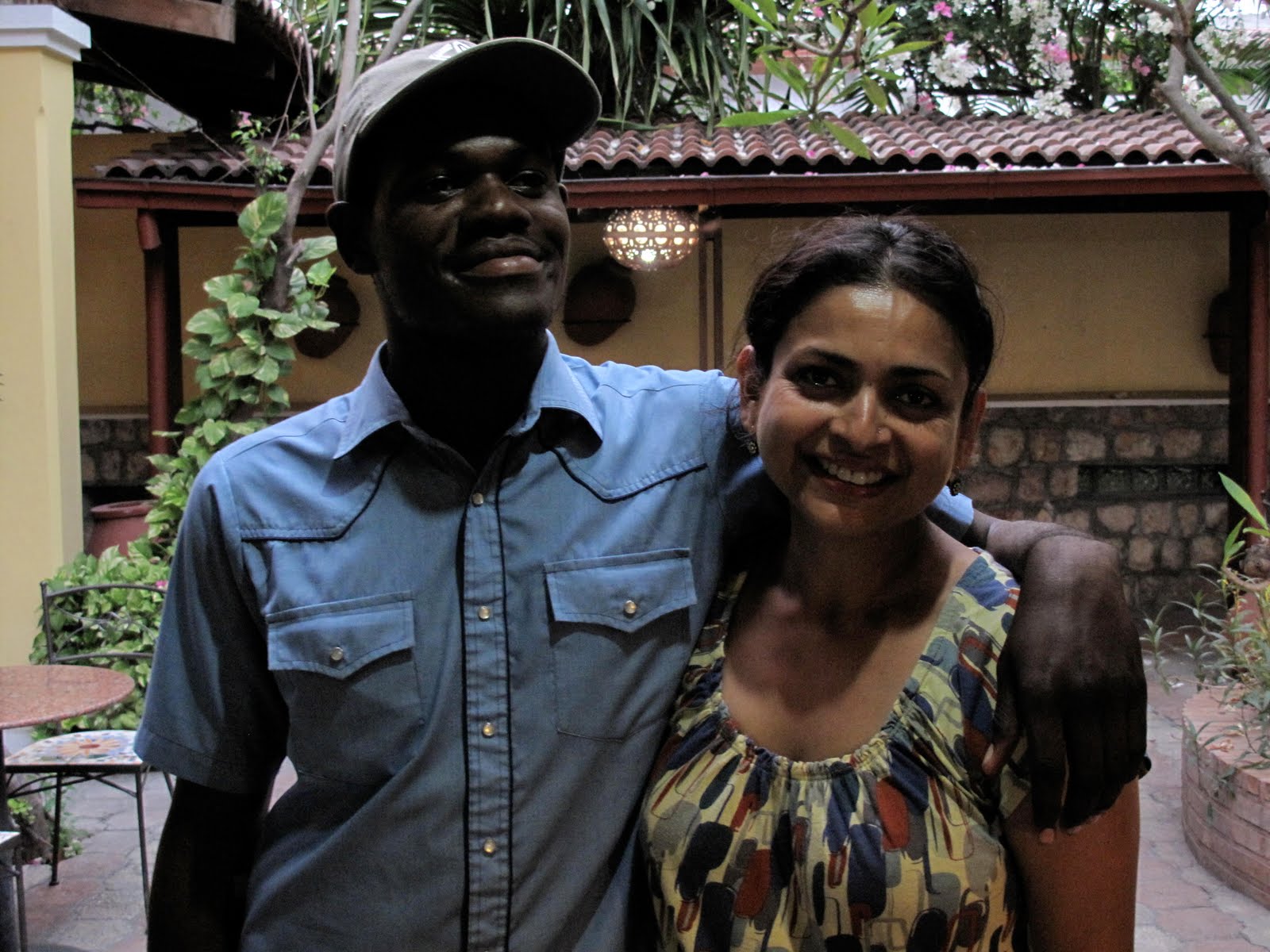
In January and February, he was hired by CNN to drive us around. On my latest trip, he drove me around and translated for me. Mariot’s English, all self-taught, is very good.

Stuck in Port-au-Prince traffic, Mariot and I enjoyed interesting conversation.

He gave me a book this time: “Like the Dew that Waters the Grass.” It’s a collection of words from Haitian women — about gender violence, political turmoil, Aristide, jobs, lives and most of all, perseverance and courage.

Mariot signed the book to me: “Don’t try to be a copy of somebody else.”

Even more precious is that he rescued the book from the rubble of his quake-destroyed home.

Thank you, Mariot.

The rainy season


It rained heavily in Port-au-Prince tonight.

I stood in the balcony of the Plaza hotel — the exact spot from which Anderson Cooper broadcasted his show in January — and looked beyond. At the Champs de Mars, the city’s central plaza that is now home to thousands of people left without anywhere to go after the massive January 12 earthquake.

I thought about what the rain must feel like under a flimsy tent or plastic tarp, water seeping in from every direction. I watched as people tried to close shut the entrances, some of them just thin cotton sheets or blankets. Suddenly, the constant noise of the street came to a halt, replaced by the thud of monstrous drops falling hard from the sky. And the laughter of gleeful children cooling off after another scorching day.

The water started building along the roadside and I knew that in many of the camps, dirt had turned to mud. I was at the Petionville Golf Club earlier in the day, where resident Vital Junior had told me how treacherous the place becomes when it rains. About 50,000 people are living on a hilly nine-hole golf course at the once-swanky club for the elite. From its perch, the club affords a beautiful view of the city on a clear day. So many of Haiti’s elite must have sipped cocktails in the clubhouse and looked down on those below.

Now, the view was marred by human misery.

From the Plaza balcony, I ran back to my room, wet from the few short steps through the hotel’s open-air courtyard. What must it feel like to have no shelter from the elements.

I listened to the rain; reminded me of the monsoons in India. I knew more was on the way for Haiti — May starts the rainy season here.

And people who have already suffered too much will suffer some more.

Back to Haiti


I returned to Port-au-Prince yesterday.

Before January, it was a city known to me only through books and a few films and of course, the news – always bad news. But CNN sent me to Haiti to report on the aftermath of the earthquake. And my eyes were opened to a whole new world.

I saw Haiti for the first time after devastation and suffering of epic proportions. I regretted that I had not seen it before.

But before in what? “Normal times?” What were normal times for Haiti? This country has been through more turmoil and pain than any other nearby.

In news stories, you see phrases like “the most impoverished nation in the Western hemisphere.” You see on CNN that Haiti’s comeback will be that much more difficult because of lack of government, lack of system, lack of everything.

When I was there in January and February, I worked closely with a CNN producer, Edvige Jean-Francois. She taught me to see Haiti the way it ought to be seen – outside the American lens. She showed me the richness of culture, the wealth of Haiti. Not in monetary terms, but in other ways that matter.

Now, almost four months later, I am back.

I still see uncleared rubble and buildings teetering on the verge of collapse. But the smell of death has gone. There is no longer that dazed look on people’s faces – the look you have after you have lost everything, when you haven’t yet distilled the horror that has befallen your homeland.

On the way from the airport, I saw school children wearing bright checkered uniforms. I knew then that Haiti was progressing. Slowly, perhaps. But moving forward.

Earth Day

Today is the 40th anniversary of Earth Day.

Millions of people around the globe are holding events today that reflect on the planet and increase awareness of the environment. Back in 1970, when Earth Day was launched, the event was limited to Baby Boomer activists keen on seeing green. Now, of course, green is cool. Green is in. Green in hip. Green is, well, mainstream.

Even America’s giant corporations are involved with Earth Day activities. Good or bad, Earth Day is big business now, as a story in today’s New York Times points out. Companies like AT&T, Pepsi and F.A.O. Schwartz sponsor green events. And environmental agencies concede they must partner with corporate America in order to spread the word about the evils of fossil fuels.

But those who were involved with the movement back then lament that the environment is not a priority as it was then with participants of Earth Day. For most Americans, the environment sits low on the agenda. It’s certainly not a make-or-break issue in political campaigns. The fervor of the first Earth Day participants, say some, has been replaced with the convenience of going green with the utmost ease. It’s not hard to buy green these days.

Documentary filmmaker Robert Stone made an important point in a story that appeared in the New York Times today: that the environmental movement is a victim of its own success in clearing up tangible problems with air and water.

“Every Earth Day is a reflection of where we are as a culture,” he said. “If it has become commoditized, about green consumerism instead of systemic change, then it is a reflection of our society.”

Sisters


I don’t have a sister, though sometimes, in my childhood, I got a taste of what that might be like because we lived among extended families. The line between a cousin and a sister quickly blurred.

But I longed for the sister I never had.

Like Elizabeth and Jane Bennett in “Pride & Prejudice.” Or even the dysfunctional variety in “Rachel Getting Married.”

I wanted to share clothes and the heart’s innermost secrets. Wanted to whisper into the night until we both fell asleep. Wanted someone to be there. Always.

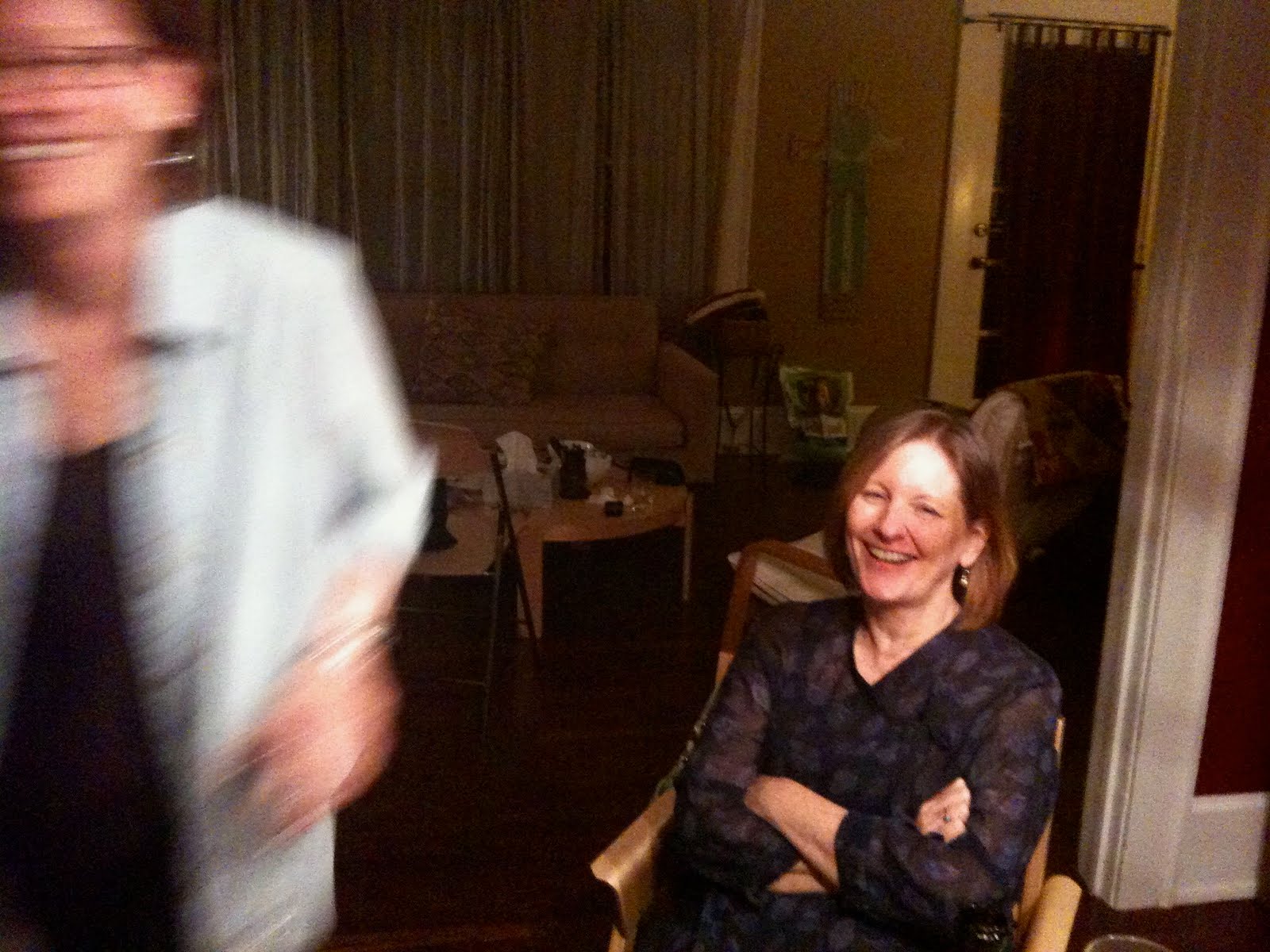
So when Deirdre came to visit Eileen, I went to see the Drennen girls. Of course, I enjoy spending time with them — I have known Ei for almost three decades and first met Deirdre in the mid-1980s when she came to visit Ei in Tallahassee. I gave her one of my salwar kameez suits. It looked grand on her, I thought. She was so thin and tall and pretty.

Eileen has four sisters. I have always been jealous of that. But she gels perfectly with Deirdre. Unmistakably sisters. One comforts the other — always has, in times of divorce, illness and the darker things in life that take us down.

We sat around the living room table and talked. And talked. For a few moments, I pretended. Sisters, we were.

And at 10:30 at night, when the Drennen girls realized their bellies were empty and the groceries were still intact, we piled into the kitchen to fix a fattening concoction of macaroni with Swiss chard, cheese and more cheese.

How divine.

Loadshedding


India has come a long way since my childhood.

And not.

This week’s headlines: Celsius rises, so does loadshedding. In American English, this means temperatures soaring above 100 degrees Fahrenheit and no electricity for hours and hours and hours.

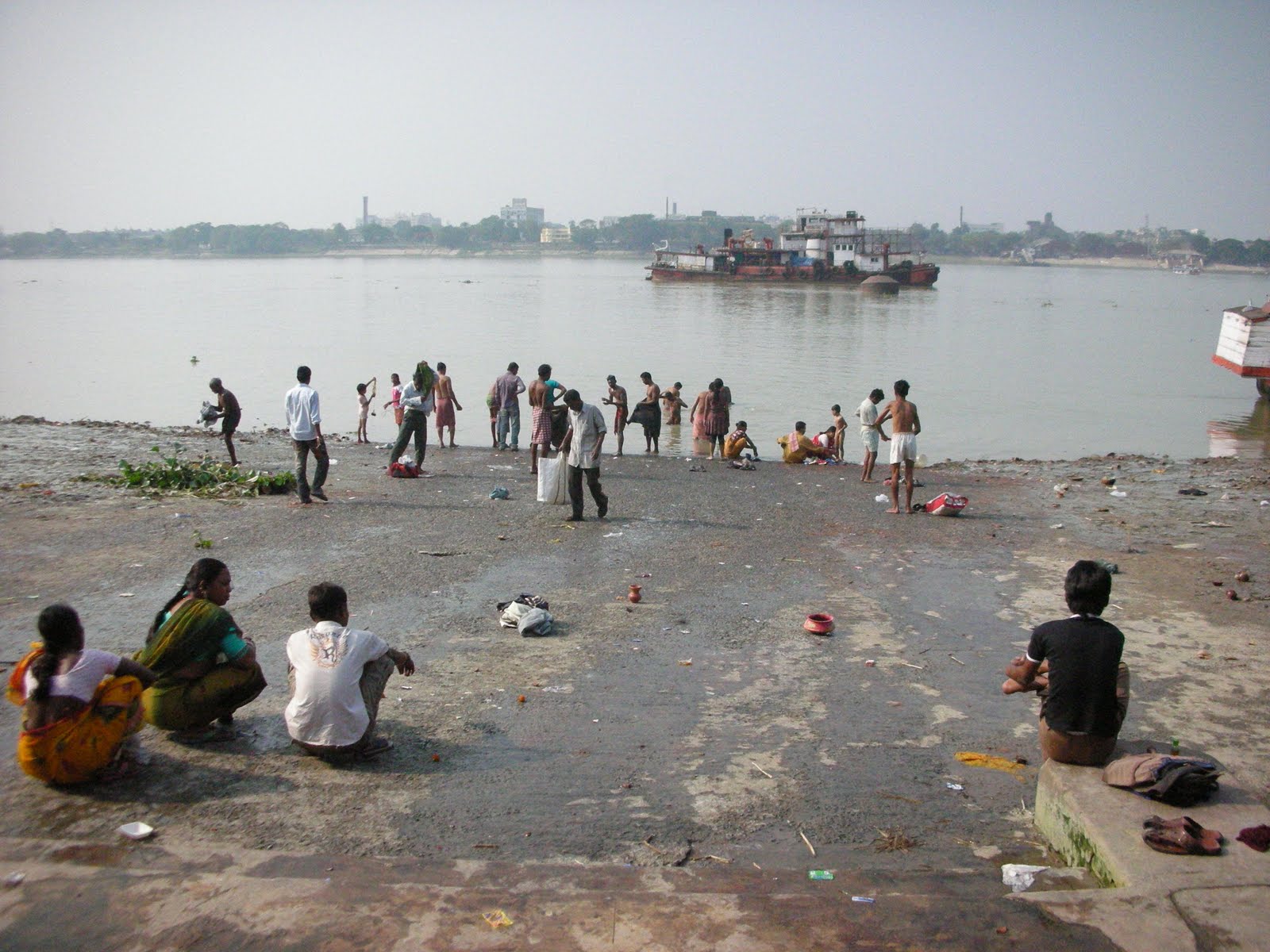
That’s the way it was when I was growing up in Kolkata. The only relief was to take a plunge in the rather polluted Ganges (see photo).

At school, it was difficult to concentrate. Instead, I’d be busy wiping dry the droplets of sweat on my textbook. One time, I’d obliterated the face of Shah Jahan (the Mogul emperor who built the Tak Mahal) in my history book with a good dousing. I watched the black ink run down the innards of the cheaply printed text. Too bad his son Aurangzeb could not dispose of him that easily.

Going home on a searing summer day was no comfort either. No bath because there was no power to pump the water to the roof. No fan. No respite. At night, we wet our bed sheets and put slabs of ice on our mattresses to stay cool inside the thick cotton mosquito nets and watched flying cockroaches and creepy insects crawl up the sides.

We’d wait for the monsoons to begin– usually the first or second week of June. My brother and I would stand in the courtyard fully clothed and let the rain soak us through. There was nothing that felt more soothing.

And now, in 2010, despite all of India’s economic gains, my friends and family in Kolkata are doing the same as we did 40 years ago.

The problem, says the Telegraph newspaper: Snags in the coal-supply chain are causing power generation units to perform below capacity.

While government agencies played the blame game, almost every Kolkata resident suffered power cuts this week for at least six ours. Worse still, the monsoonal rains are still far from the congested city — the weather forecast calls for hot and humid days.

Still feel like complaining about the pollen?