Heading West: Deirdre and her cowboy


<img style="float:left; margin:0 10px 10px 0;cursor:pointer; cursor:hand;width: 20

0px; height: 150px;” src=”https://evilreporterchick.com/wp-content/uploads/2011/06/deirdre32.jpg?w=300″ border=”0″ alt=””id=”BLOGGER_PHOTO_ID_5616037014890889698″ />
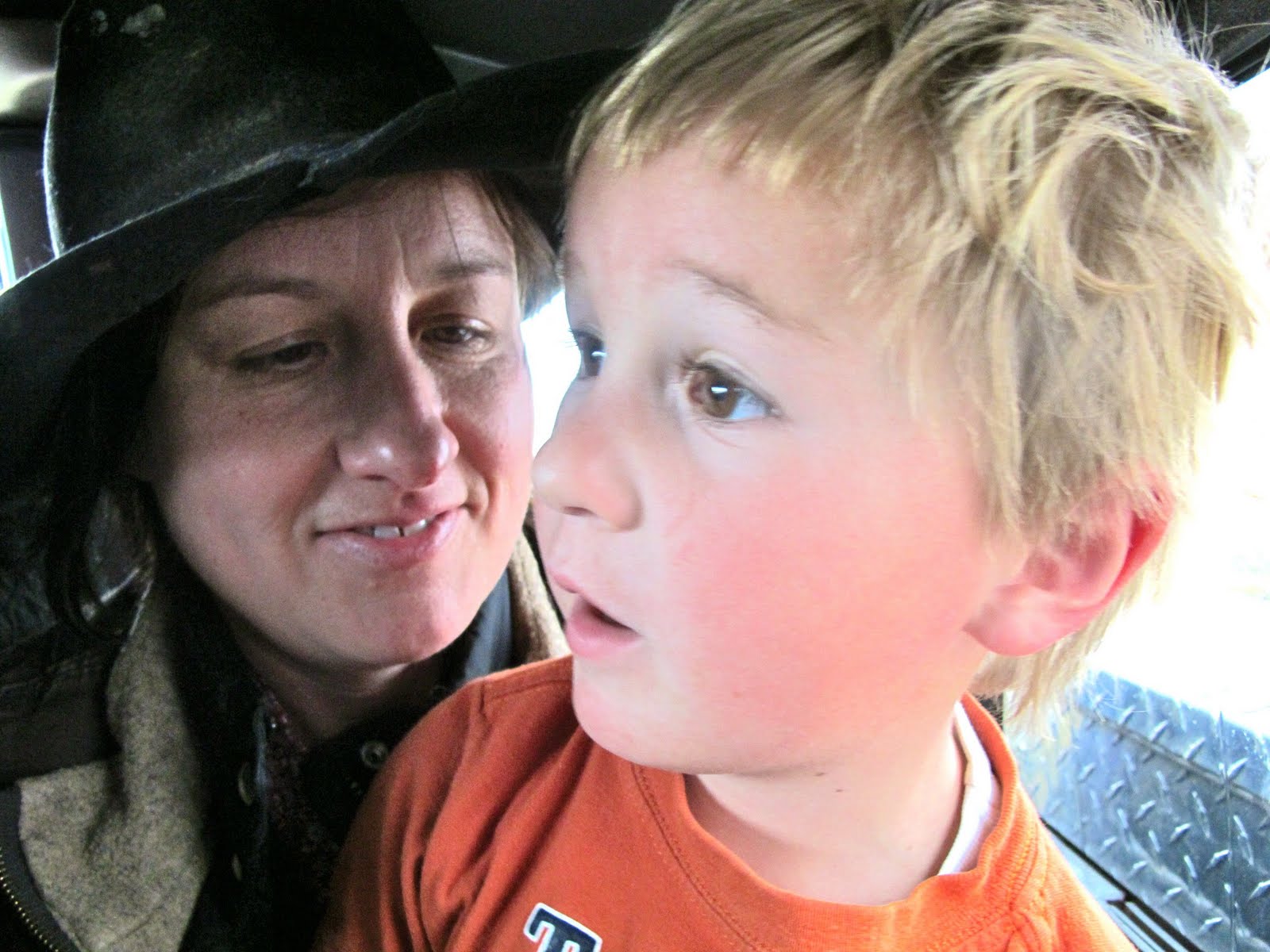
We meet Deirdre Stoelze Graves in Casper on a day when the clouds have given way to sun for a few moments and the wind is blowing like it always does in Wyoming. Deirdre came out here many years ago to get away from it all on the East coast. She got a job as a cop reporter for the Casper paper — even gave us the crime tour of the city — and ended up staying two decades.

Along the way she married a cowboy. I have only spoken to Dale twice — on the phone, when I called Deirdre to talk Dart Society business. That’s how I first met her, in 2008, when I won a Dart Center for Journalism and Trauma fellowship and spent a week in Chicago. I liked her instantly. She is such a free spirit. Crazy. Fun. Generous. Kind. And the heartbeat of the Dart Society.

Still, I am a bit unsure about staying with her. I have heard so much about her husband and the ranch but it all feels so alien to me, the city girl who revels in the bleakest urban jungle. Deirdre navigates us up Interstate 25 to Kaycee. A town had once thrived here but flooding destroyed much of it a few years back. Now, mostly, it is a collection of trailers and a few downtown buildings that survived, two bars and a general store that sells spaghetti for almost $3 a box.

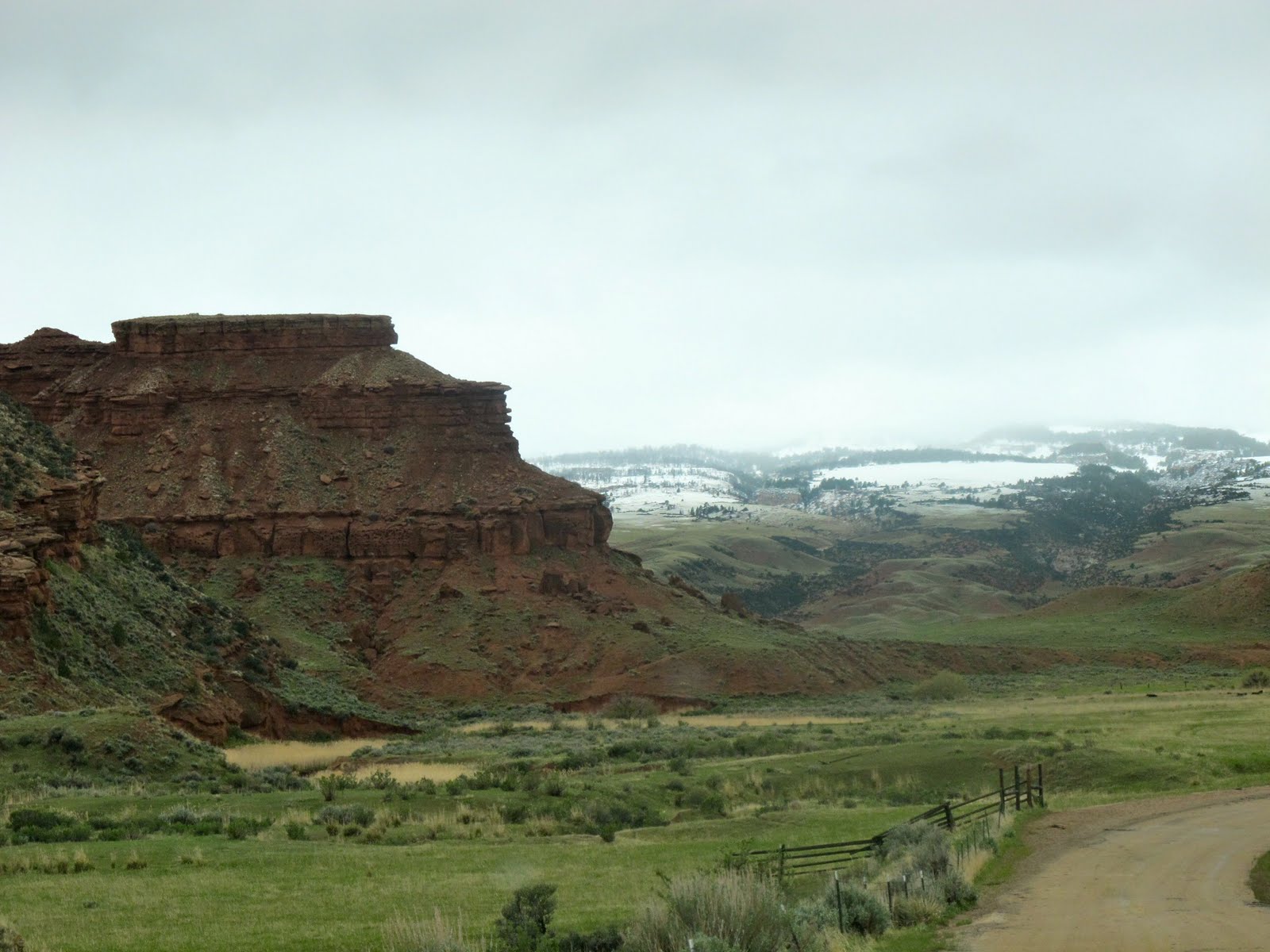
From Kaycee, we drive anther 20 lonely miles inward. Rolling hills and fields of cattle and sheep give way to the sight of the Big Horn Mountains. This is Broke Back Mountain territory, where Jack Twist couldn’t quit Ennis del Mar in, perhaps, an exaggerated story of love between ranch hands. It snowed in the morning, Dierdre tells me. The mountains are white. We drive further in, past red sandstone cliffs that remind me of Arizona, before we arrive at the doublewide trailer that Deirdre and Dale and their little boy Elliot call home. It’s expensive to build a house out here, Dale says. It’s much easier to plop down a trailer.

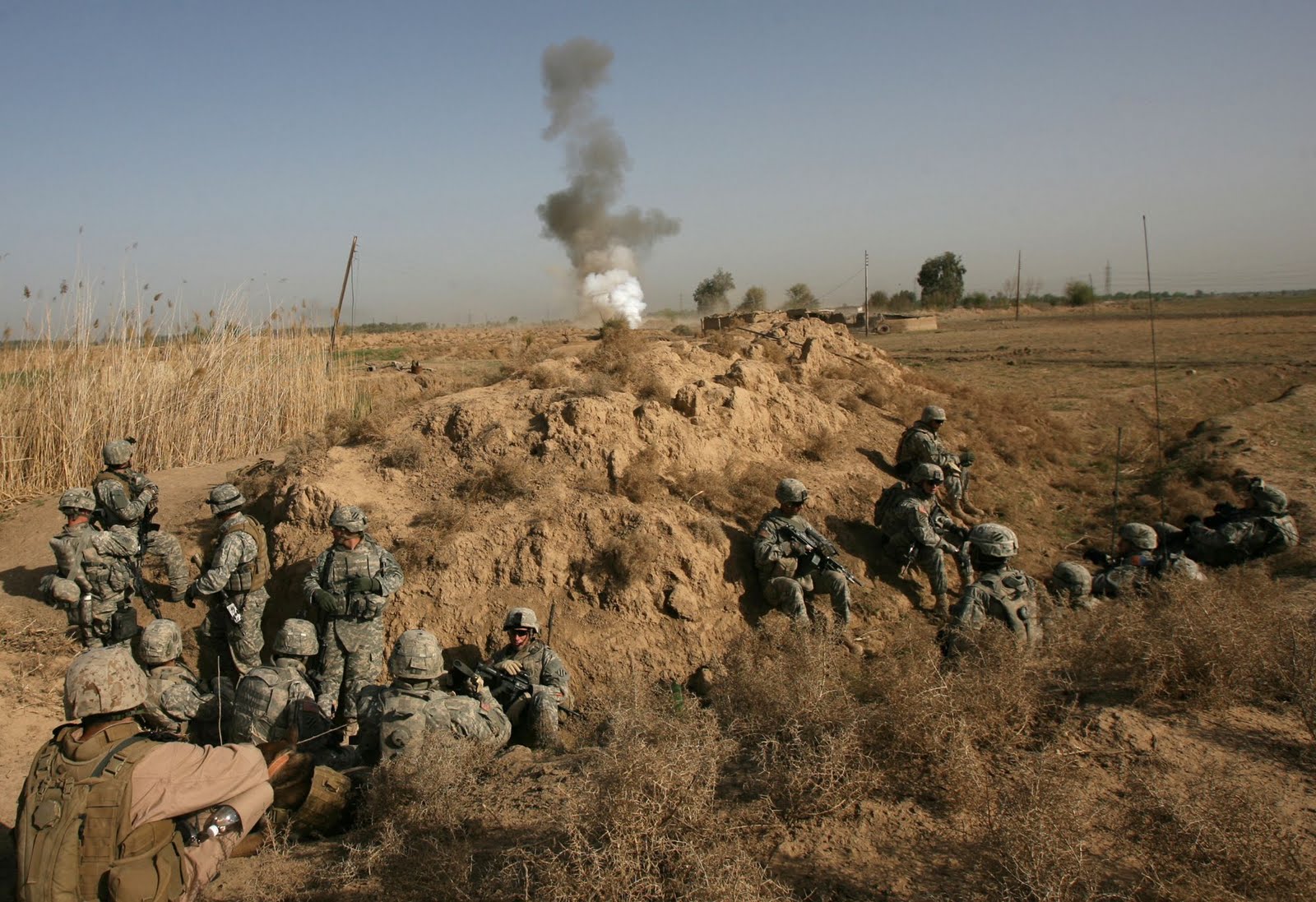
It has rained and snowed and is now raining again and the fields, normally dry at this time of year, are like vats of peanut butter mud. My boots sink in and my mind in taken back instantly to Iraq, where trekking through mud on U.S. military bases had become a daily thing.

We get inside Deirdre’s cozy abode and fill our bellies with salami sandwiches and homemade pumpkin pie. It is so quiet here. No distractions, save nature’s fury and the barking of Clyde, the family dog who is ordered to chase the neighbor’s beef cows away from Deirdre and Dale’s property. They’ll eat every last blade of grass, Dale says.

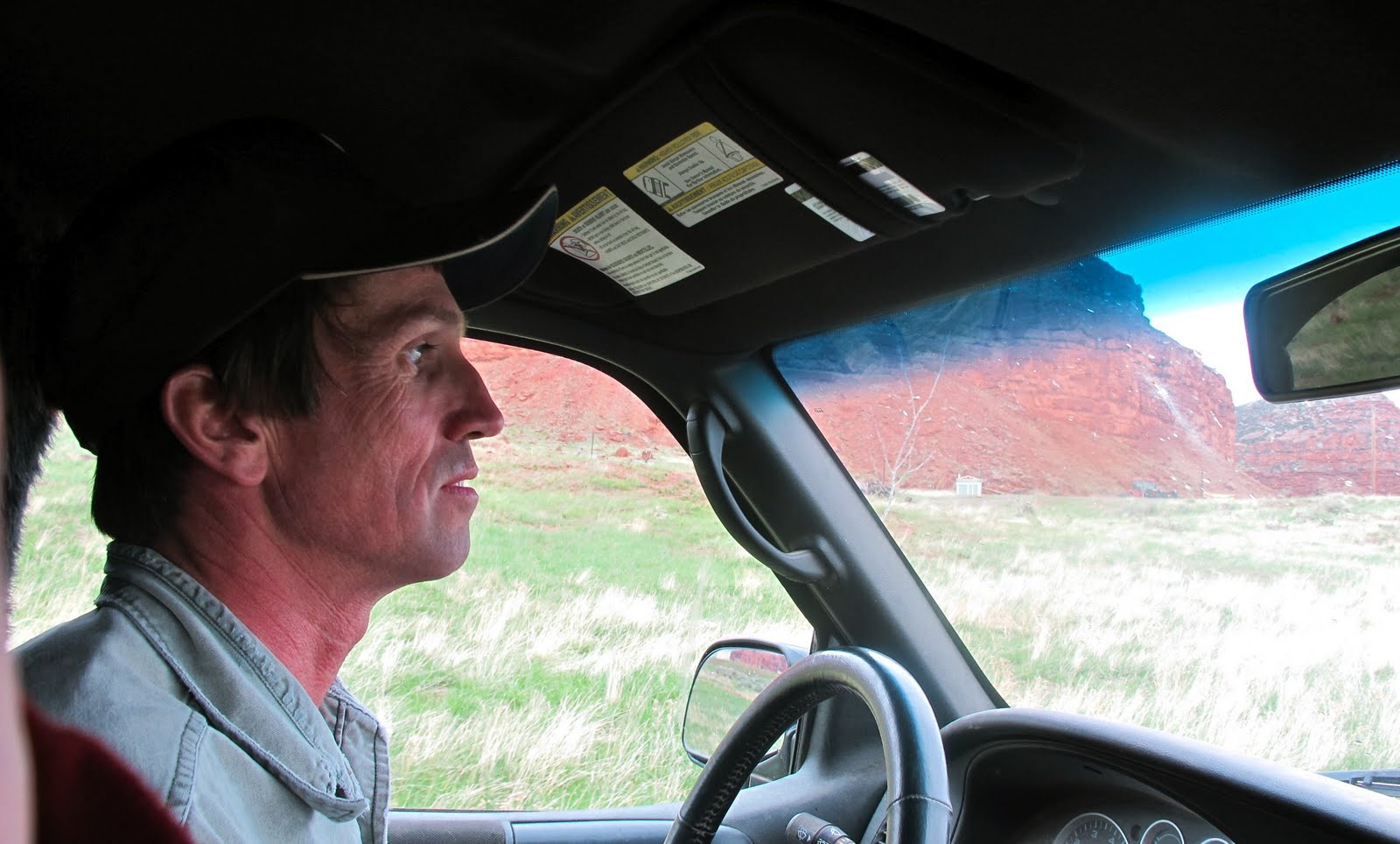
Dale is tall, lanky. He’s not wearing cowboy boots or a cowboy hat. He’s gentle and tolerant of Deirdre’s friends who have interrupted the solace of his Sunday. But he’s unmistakably a cowboy. The sun has deepened the lines of his face. They run like the rivers that cut the canyons out here.

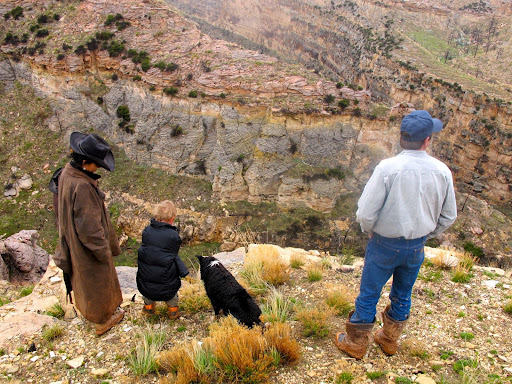
Dale drives us to one of those canyons. We stand on the very edge — no tourist barriers here — and I strain to see the water many feet below. Deirdre and Dale were married here, they tell me. Suddenly, heaven seems closer and it doesn’t matter that the rain has started up again. I am well covered in Dale’s oil skin ranch coat and Deirdre’s cowboy boots.

I’d seen all this only in movies before.

Deirdre says she feels too isolated out here these days. She craves interaction with people who can relate to her. Most folks around here see her as a hippie chick, the only Obama supporter around for many miles. But Dale grew up here and besides a vacation to Italy, he’s hardly left Wyoming. And never will. Ranching is in his blood. He wouldn’t know how to make a living any other way.

My dear friend has to reconcile her love with her lifestyle. She talks about it as we cram into the back of Dale’s pickup and slush back to the house. Inside, Elliot prances about the counters and furniture. If he could, he’s climb the walls. He has Deirdre’s energy.

She breaks out the white linens for dinner. We sip tempranillo and watch the sun go down. We watch The Red Wall, as the sandstone is known, glow in the light. And listen to the silence outside. It is a life I could not have imagined before.

Wild West: first stop


From Denver airport, we drive to Steamboat Springs — a place that is as pretty as its name sounds. The slopes are closed for the summer but plenty of people are still around. As is the snow atop the mountains. On this day, everyone is excited about the sun. It’s the first day in a while that the wet stuff has stopped, the clouds have vanished. A magnificent statue of an elk graces a public park by the river.

At Chocolate Soup, Chelsea serves us a savory scone and strawberry rhubarb waffles. I can tell this vacation will be filled with many lazy afternoons and heaping plates of delicious food. Never tasted a waffle with rhubarb before. It made me think of the pies at Yoder’s in Sarasota. Only better.

From the picturesque Colorado ski resort, we drive northeast, through more rugged country. Just before the Wyoming state line, we come across the Hoopla shop in Walden — elevation, 8,100 feet. Amy Symonds grew up here. Her father was a caretaker of a flourspar mine. That’s the stuff they make fluoride out of. And very pretty pendants.

Her store is in the middle of a broken town. Nothing but a saloon, a barber shop and a host of trailers here. The opposite of Steamboat, I think.

Tom Waits is on the CD player. Symonds is wearing a giant fur hat on her head and stands behind the counter to greet her customers, all two of us. She sells all sorts of pelts — mink, ermin, skunk. She sells hat boxes, vintage hoop skirts and handbags, jewelry, furniture and a bunch of other assorted stuff. Her shop was featured in a western magazine. She’s happy about that. She sells me an old silver ring with a heap of copper on it. Looks like someone forgot to mold it into a more shapely sight.

We meander down the road, catch sight of a moose. I’d never seen a real live one before. We stop at Woods Landing, more out of curiosity than thirst, and sit at the bar with a folks who watch Fox News and hate CNN. On weekends, the dance hall is filled here with wranglers, ranchers and pretty girls. Bartender Mary Albright serves me an ice-cold Corona and tells me to never mind all those anti-CNN sentiments. She watches Anderson Cooper every night, she says. Tapes it when she can’t watch it live. She was born in Germany, grew up in Nebraska and worked at Home Depot in Denver before she came to Woods Landing four years ago. Now, she makes a mean vodka tonic and watches people twirl on the century-plus-old floor.

After a refreshing drink, we are off on a lonely highway, through Laramie, the town that became notorious for the torture and murder of Matt Shepard, a gay student at the University of Wyoming. Must be tough to live in a town that’s become synonymous with something that evil.

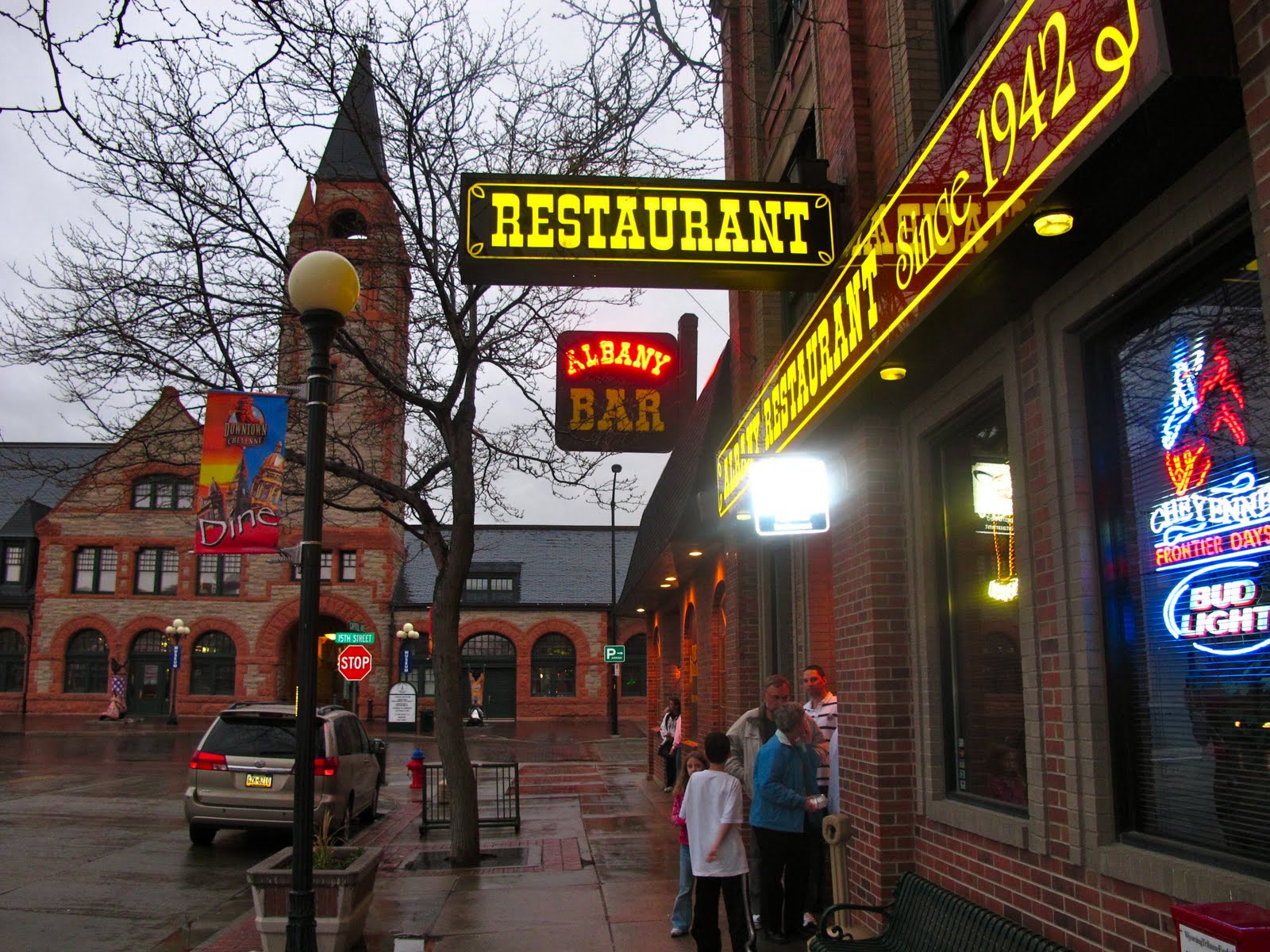
The drizzle gets heavier in Laramie. The skies are gray. It’s the end of May but feels more like mid-winter in Atlanta. We hit the highway to Cheyenne, the state capital. My colleague Matt Smith lived here once and suggested we stay at the Plains Hotel, a no-frills lodging in a beautiful old building. Matt said we ought to eat at The Albany, and so we did. The place used to be brothel, named after the Union Pacific trains from Albany, New York. They carried troops going off to fight in World War II who had some fun on their stop in Cheyenne.

There was a lot of gambling and prostitution here until the interstates shut all that down, says owner Gus Kallas. I stare at a photograph on the wall of the Thomas Heaney saloon taken in 1888. I notice one of the workers behind the bar. He is a black man.

Get well, my friend


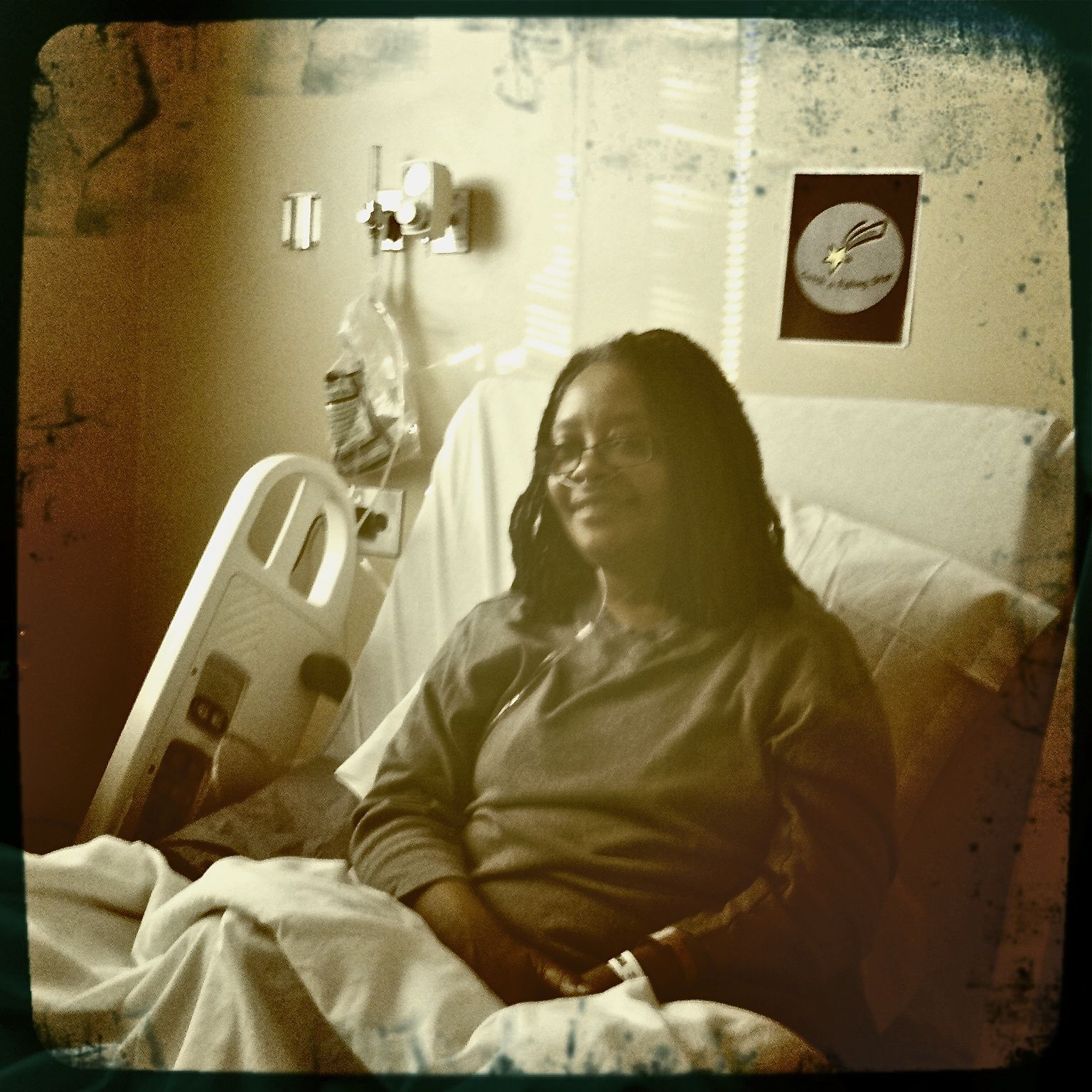
Valerie Boyd is one of the strongest women I know. Fiercely independent, passionate in her defending her views. Certainly, an inspiration to me, ever since I met her years ago at the Atlanta Journal-Constitution. I admired her talent, her tremendous writing skills, her astuteness as an editor. I especially felt a bond with her at a time when there were not too many women of color working in mainstream newsrooms.

So when I went to teach my magazine writing class at UGA (a job for which Val recommended me) more than two weeks ago and found out she had been hospitalized with pneumonia, I grew worried. After I received a message from her partner, Veta, I understood how serious Valerie’s situation was. She was in the intensive care unit, sedated, intubated, on a ventilator.

For days, the update on Val’s status sounded like this: She is getting better but she is still on the ventilator.

I thought of my own mother, who had been on a ventilator for the last three weeks of her life. When she died, I saw her chest still heaving on that machine and for a moment, believed that the heart monitor was wrong. How could she be breathing still when the monitor indicated her heart had stopped? I learned later that she had been kept on the ventilator until her doctor could order it to be shut off. It was one of the most horrifying moments of my life and an image that stays with me always.

I imagined Valerie, at DeKalb Medical Center, gasping for air, on that ventilator.

It was unnatural. She was too young to die like this. She has so much more to give to the world.

The strong-willed woman that she is, Valerie fought pneumonia like a soldier in battle. She wasn’t going to succumb to something that robbed her of her independence.

She was deemed well enough to breathe without the machine a few days ago and moved into a rehab part of the hospital Monday.

When I went to see her Tuesday evening, she told me she had thought much about death. It was not in the natural order of things for her elderly father to plan her funeral. It was she who should be doing that for him.

She told me of her dreams in her frail state. How she had seen my parents as children again; that they were with me once again on this earth. And of all children of color, who fight every day for survival.

Valerie’s near-death experience has made her cherish more all of life’s beautiful things — the sunlight and the birds, a slice of fresh pineapple (yes, she was craving slushy fruit), walking her dog. How strange she had felt that someone had to help her to the commode or watch her take a bath for fear she would fall.

I suppose most everyone who skirts death has similar thoughts. But Valerie articulated them from her hospital bed with the clarity and haunting beauty of her language that is familiar to all who have read her work, especially her biography of literary giant Zora Neale Hurston. In the drabness of hospital hues and in a strained voice that sounded like a 90-year-old chain smoking man’s (we joked), she talked of her verve for life.

Yesterday, it was Valerie who was wrapped in rainbows.

I left her room at dinner time, walked back through the halls of a chaotic hospital where suffering knows no end. And yet, a calm settled on me and once again, I knew I was better for having seen my friend. And thankful that there would be many more meetings to come.

Remembering Ma — and a great poet


I made it through Mother’s Day. I thank birthday celebrations for Rabindranath Tagore for keeping the tears at bay. Well, most of the time, anyway.

My mother died 10 years ago. At her memorial service, we honored her with the work of Tagore, who had been such a big part of her life. He won the Nobel for literature in 1913, the first non-European to be bestowed that honor.

This is what the Nobel site says: The Nobel Prize in Literature awarded to Tagore “because of his profoundly sensitive, fresh and beautiful verse, by which, with consummate skill, he has made his poetic thought, expressed in his own English words, a part of the literature of the West”.

His words were magical, especially when they were sung. My mother went to music school, studied Tagore, even made a record.

As long as I can remember, she sat on the floor with a harmonium or, when we were abroad, at a piano, belting out her songs. She taught me Rabindrasangeet (the songs of Tagore) from an early age. For that I am glad, though I was impatient then.

In 1982, my mother suffered a massive stroke that robbed her of her ability to sing. Still, she tried. She sat in her seat in our Kolkata flat with a cane by her side and a Geetobitan (a book of Tagore songs) on her lap. She even organized musical sessions at our house and invited singers to our house.

This week, India and Bangladesh are celebrating the 150th birthday of the great Bengali poet.

Ma, I miss you so much. Not even Tagore, I think, would have been able to capture in words my sadness on Mother’s Day.

Tet Kale


Michel Martelly, bad-boy musician, is Haiti’s next president, according to preliminary results released Monday.

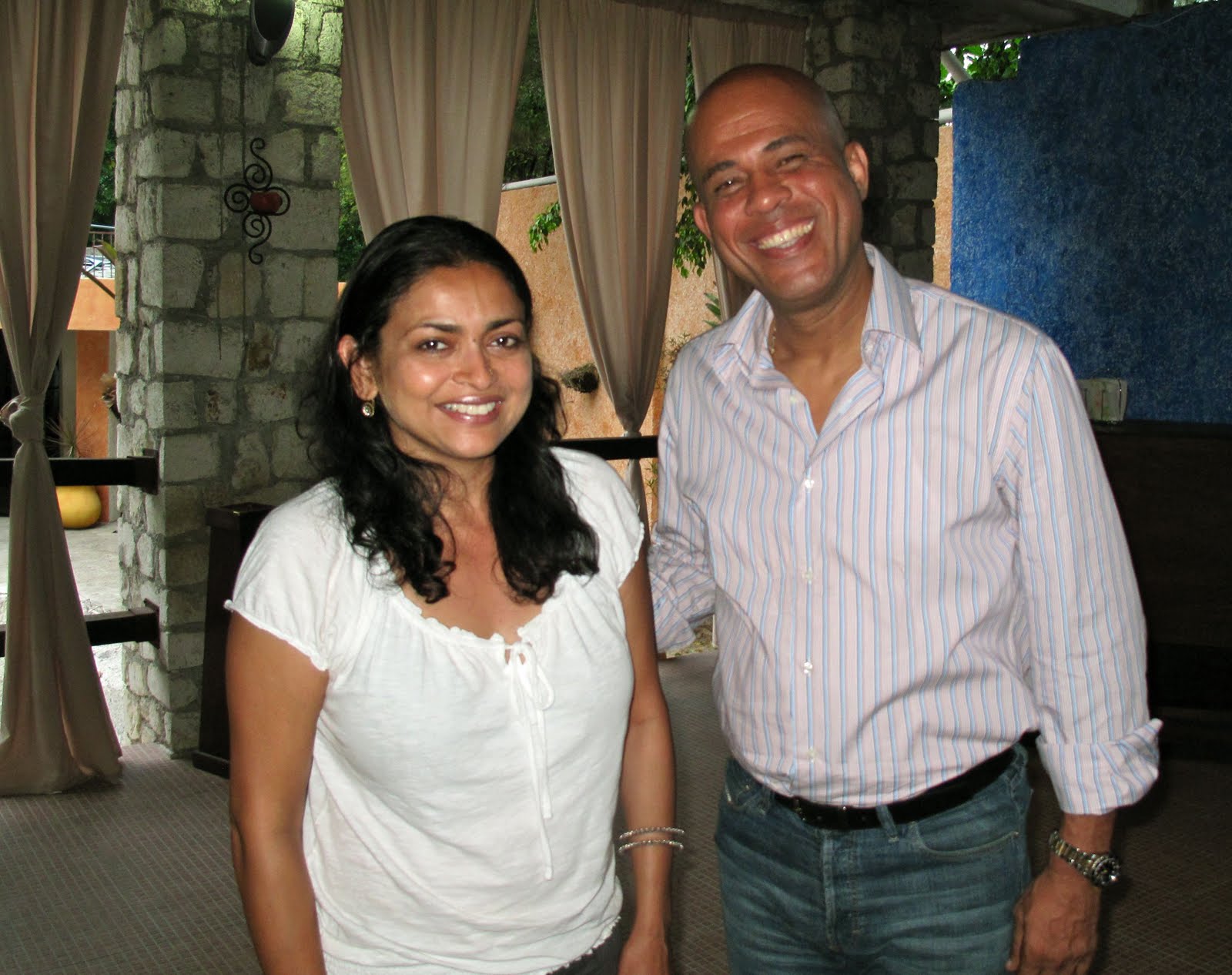
He called himself an outsider to Haiti’s corrupt political machine and when I met him at his home in December (see photo), he told me about how he would do things differently than all his predecessors — dictators and leftist priests alike. Sitting in the entertainment room of his Peguyville house, I thought: Wow. How can a musician lead Haiti out of all its woes? Earthquake, cholera, poverty, corruption, more poverty, more corruption.

But he laid out a plan that began like this: “Don’t hand Haitians money. They don’t know how to handle it. I am Haitian. o don’t even hand me money. Just come and rebuild for us.”

I thought him earnest.

Out on the streets of Port-au-Prince, they were chanting “Tet Kale!” It means bald head, as in Martelly’s. We will see now if the people will still be calling his name as he takes charge in Haiti.

His win made me want to get on a plane back to Haiti. He told me, after all, that he would take me around Port-au-Prince himself, if he were elected. I might just have to hold him to that promise.

The grimmest of anniversaries

Anniversary stories are common in journalism. A year ago in Haiti, an earthquake devastated the country…

Anniversaries a great peg to revisit stories.

Number 10 is a big one and I am sure journalists around the country are gearing up to tell all sorts of stories as we approach the 10th anniversary of the 9/11 attacks in New York, Washington and Pennsylvania. Hard to believe sometimes that it has been that long.

I have been thinking of my own 10th anniversaries this year — of a massive earthquake struck I covered in western India when I suddenly found myself in the midst of intense human misery.

Today is the 10th anniversary of my father’s death. Alzheimer’s turned his brain to mush and rendered his body weak and feeble. In the end, he had massive bed sores eating away the outer layers of flesh.

I knew he was very ill and was rushing to get home to Kolkata. In Amsterdam, during a six-hour layover, I found out he had died.

I sat at an airport bar, drinking glasses of cabernet and wiping away unstoppable tears.

I tried to calm myself with the thought of my father’s pain finally ending; that he had found relief.

I landed in Kolkata and tended right away to his cremation,

Today, I went to work with thoughts of my father’s death. It was one anniversary that went without notice in the CNN newsroom.

War


Today is the eight anniversary of the Iraq war.

That fact got lost in all the breaking news, most significantly, the U.S. use of force against Libya.

It reminded me of George W. Bush’s intention to remove Saddam Hussein. The term “regime change” did not surface much but that’s essentially what’s going on in Libya, right? The United States would not be leading the charge against Moammar Qaddafi if he were a friendly fellow, even if he did fire on his own people.

Lost also in the news of the last week are the horrific events unfolding in Cote D’Ivoire, where a political crisis has spiraled downward rapidly into bloodshed. The United Nations has reported incidents of people burned alive. Others have had their throats slit. At least seven women were butchered earlier this month — the video posted online showed one who had been decapitated by the power of a big gun.

Crimson rivers are flowing in West Africa — and in the East. Sudan, Somalia. Yet we hear so little in the news.

I hope that Libya does not escalate or turn into protracted war in the same vein as Iraq or Afghanistan. And while that conflict is most urgent, I hope we will not turn away from human suffering in other parts of the world.

What’s in a word?

Journalists in newsrooms across the globe have been grappling with the language they use in telling the story of the Libyan uprising.

It’s not Tunisia or Egypt. The unrest there has gone beyond demonstrations and anti-government protests. So what do we call Libyans who are opposing strongman Moammar Gadhafi. Last week, CNN began using the word rebels. So did other news outlets.

Does rebel have a negative connotation? I don’t think so — unless there is Confederate paraphernalia involved. But apparently many people, including those fighting on the streets of Libya, don’t like the word. They didn’t like that we called the opposition fighters rebels.

We also began using sentences that said Libya was inching towards civil war. When does a conflict become civil war?

This was the topic of NPR’s “On the Media” segment Sunday. How do words change the way readers perceive the conflict there?

Here’s how Merriam Webster’s dictionary defines these terms:

Rebel: one who rebels or participates in a rebellion
Civil war: a war between opposing groups of citizens of the same country

Susan Chira, foreign editor of the New York Times, said the newspaper began using both terms when it became clear that there was a military conflict in Libya. But she said the paper, just like CNN, has refrained from saying it’s an all-out civil war, though it very well could become one soon.

Yes, words can change everything.

NPR host Brooke Gladstone noted this:

“Several people have told me that the moment they hear the word ‘rebel’ they begin to disconnect. The effect is compounded when combined with the phrase ‘civil war.’ Whether or not people like us on the other side of the world choose to engage or even follow the story is a decision each of us makes every day. We think we make those choices consciously, weighing the expense and time and mental energy with what we stand to gain. But often we decide without deciding. What we choose can hinge on the unrecognized power of a single world.”

There are other words, too, that we journalists use that can influence the opinions of our readers and audiences.

Take for instance, “regime.”

Merriam-Webster defines it as a government in power. But we don’t ever say the Obama regime, do we? We only use it for governments that are deemed less than worthy.

Or “revolution.” Sudden, radical and complete change — that’s revolution. But is that what happened in Egypt? Or were we too hasty to label it so?

Sometimes terms become contagious, used repeatedly by news outlets without a thought as to whether it’s the most appropriate. The fast-changing events in North Africa have made at least this journalist think hard about every word.

New hope for a son of Libya


This is Bashir Al Megaryaf. He’s holding a poster demanding the release of his father, imprisoned in a Libyan jail for two decades. Bashir was only 1 when his father was detained. He has not seen him since.

But he has new hope in his heart that the two may be together again as the Libyan uprising against strongman Moammar Gadhafi gathers steam.

Bashir was among a crowd of Libyans demonstrating in front of CNN Center in Atlanta on Saturday. I had just finished writing a main Libya story for CNN Wires and CNN.com; had watched gruesome videos and listened to the on-air descriptions by witnesses of Gadhafi’s bloody crackdown that was unfolding in Libyan cities and towns.

Writing about the uprisings in North Africa and the Middle East have been overwhelming — they are such powerful stories of human perseverance and courage. I wished so many times that I might have an opportunity to cover the story from the ground.

Thus far, I have seen it only from the CNN newsroom.

So when I stepped out into the gloriously sunny and warm afternoon Saturday, accosted by thousands of people attending a hair show, a cheerleading convention and a circus, I felt compelled to walk over the waving Libyan flags and the voices that rang out the loudest on Marietta Street.

Meeting Bashir brought Libya home for me. I have been reading a new book of my father’s writings and could not imagine a life without ever knowing him. Suddenly, the idea of freedom in Libya, a nation have never visited, became very personal to me.

I hope to write more about Bashir in the days ahead. Meanwhile, you can read about Libya and the rest of the region on CNN.com

Baba’s legacy


A new book of my father’s writings was released last week. “The Selected Works of Debabrata Basu” was compiled by Anirban Dasgupta, one of my father’s former Ph.D students who now teaches at Perdue University.

Dasgupta wrote in the introduction of the book that he took on this task with a great deal of apprehension. My father was the best teacher Dasgupta had ever had, he said. My father, he said, never used any notes or read anything out in class. He explained everything with effortlessness and clarity that Dasgupta said he never again experienced.

I know this to be true because I sat in on many of my father’s classes. I was not learned enough to understand the complexities of what he was teaching but I could see how at ease he felt with his students and why, they, in turn, admired him so. I never had a knack for mathematics, as my brother did, but I always did well in algebra, geometry, arithmetic, trigonometry and calculus only because my father took the time to sit down with me and explain why things were the way they were.

“Never try to memorize formulas,” he said. “They are a recipe for failure.”

In the book, his former students said my father told them the same thing. I suppose that’s why they all turned out to be successful.

My father was known as somewhat of a radical in the field of statistical theory.

In 1955, he published “The Basu Theorem,” a fundamental tool for proving independence of statistics, said his colleague Malay Ghosh. It is often used in statistics as a tool to prove independence of two statistics, by first demonstrating one is complete sufficient and the other is ancillary.

“The theorem itself is beautiful because of its elegance and simplicity, and yet one must acknowledge its underlying depth, as it is built on several fundamental concepts of statistics, such as sufficiency, completeness and ancillarity.”

Later in life, my father became a Bayesian. In other words, he believed it was necessary to incorporate prior knowledge, along with a given set of current observations, in order to make statistical inferences. “You cannot ignore history,” he would say to me as I proofread his essays, trying desperately to understand the formulas that came interspersed in stories about circus elephants and Martians who landed on Earth.

If you roll the dice a thousand times and it comes up six, then on the next roll, the chance of again showing a six are higher than any other combination, even though pure statistics will tell you otherwise — that your chances of getting a six are still one in six. There must be something going on to influence the roll.

I thought I would remember that the next time i hit Vegas, but I never really understood how my father was able to prove those theories mathematically.

As I skimmed the pages of the book posted on the publisher’s website, I felt incredible pride to be my father’s daughter (the first photo is of me with my father in 1969). I loved him deeply in life but I never took the opportunity to sit down and understand the world of numbers that engulfed my his head.

A decade has passed since my father died of Alzheimer’s, a disease that robbed him of all things, the ability to use his brain. Towards the end of his life (second photo), my father could not talk, could not express himself. I realized that the end was near when I asked him: “Baba (the Bengali word for father), what is two plus two?” He stared vacantly ahead, right through me.

I left his room at our flat in Kolkata and closed myself in mine. It was where all my father’s published works sat on a varnished bookshelf. He had led such an incredible life and I knew that day that I was about to lose him.

I thank Anirban Dasgupta for taking on this book on my father’s work. You are living proof of my father’s genius.