Water, oil and Iraq

Five years ago, a tropical depression formed in the Atlantic and began moving towards Florida. Later, it would become one of the worst hurricanes to hit the United States.

Katrina.

On the day that the hurricane hit the Gulf Coast, my friend and colleague left Baghdad to return home. I watched her drive off into the hot, dusty Iraqi afternoon, went back inside to the tent that we had shared for a month. Her cot was empty. So was my heart.

It was tough enough being embedded with the U.S. Army. But to do it solo, in the middle of a raging war? I began to feel sorry for myself until I heard the news from Louisiana.

The next day, at the Camp Striker chow hall, I ran into Louisiana National Guard soldiers. The 256th Infantry Brigade Combat Team had been at war for a year, based at nearby Camp Liberty. They called their pad Tigerland.

They had lost about 40 men. Each day, they had smelled the acrid fumes of bombs and ammunition, seen the worst of humanity. They were exhausted and so ready to go home.

It should have been a happy few last days. Instead, it turned wretchedly bittersweet.

They could not take their eyes off the television screens. Image after image of New Orleans under a 30-foot wall of water.

One soldier recognized his block in the lower 9th ward; even thought he saw his house, just the rooftop visible in the footage.

“Look, look,” he said. “That’s where I live.”

The excitement quickly turned to dread on his face. He sat stone cold at the table, not being able to say anything for a few minutes.

Then: “Well, that’s where I used to live,” he said, running off to the AT&T phone trailer to see if he could check on his mama.

I am sure his effort was in vain.

New Orleans was dark. No lights, no phones. Nothing.

The soldiers quickly realized that a great many of them had no homes to return to. There would be no deliriously happy homecoming with firecrackers, parades and cake. Amid the joy of reunion with their wives and children, they would

Many of them wanted to get on a plane that instant so they could help their fellow Guardsmen with rescue efforts. In their last days in Iraq, a guilt gnawed at their hearts. Some felt lucky to be in Iraq.

Life seemed like a series of terrible ironies at that moment. So cruel and unfair.

I crawled back into my tent that night no longer wallowing in my loneliness. Just grateful to be have a home back in Atlanta. Grateful to be alive.

I read a story on Slate a few days ago about the same brigade, back in Iraq, back in the chow hall glued to the TV screens. Only this time, it was oil instead of water.

You go, girl!


This Sunday, I will be watching the premiere of “Aarti Party.”

Aarti Sequeira won this season’s “The Next Food Network Star” on Sunday night. A lot of us at CNN were rooting for her — she worked as a producer in the Los Angeles bureau for a while. And, we felt, she was the most talented cook among the finalists.

But I wanted her to win for another reason.

I loved the way she infused the spices of my homeland into her cooking. I watched her week after week as she turned out dishes with roasted cumin, garam masala, cardomom. Those were the smells of my childhood, the aromas wafting out of the kitchen and into my bedroom on a warm, muggy Kolkata morning.

Aarti makes things like South of the Border Shrimp Masala. On her new hard-won show, she says, you might expect something like a Sloppy Bombay Joe made with a chicken tikka masala sauce. YUM! (as Rachael Ray would say)

Every Sunday night, I salivated. And from the very first episode, I wished for her to perform well. Her cooking reminded me of my mother’s.

I admired my ma’s improvisational skills. Leftover McDonald’s fries would show up the next day in a chicken curry. Vegetables on their way to being thrown out would star in a Bengali-style mixture of five spice — nigella, cumin, fennel, fenugreek and mustard. Pure heaven.

In a way, I thought of my mother as the first Indian fusion cook. We lived in a small town in Florida. She could not always obtain the spices or ingredients she needed. So she substituted whatever she could find at the Northwood Mall Publix in Tallahassee.

Arrti had that same spirit of infusion and innovation. I wanted to taste whatever she served up. I loved her style, especially that big smile and even bigger flower tucked in her mess of black curls.

I enjoy watching cooking shows but have always lamented the lack of South Asians on the network. Finally, we have Aarti. You go girl!

I’ll be watching.

Hybrid & City Lights


I have been pondering the purchase of a new car an have seriously been thinking about a Toyota Prius. It’s hard to give up 51 miles per gallon.

Toyota hasn’t won me over completely yet. But this shot in Toronto could make a convincing ad. The CN tower is so beautiful at night and next to the car is an art school, also cleverly designed and illuminated.

A modern-day stoning

Read about an Iranian woman about to be stoned to death.

On CNN.com:

http://bit.ly/bOA1PB

Why not saffron, green and white?


Every four years, when the world crowns a new football champion, I root for Brazil. I grew up a being a Brazil fan — my father told me Pele was the greatest athlete ever.

As I grew older I wondered why my homeland wasn’t able to field a team to play in the World Cup. After all, when I was a young girl in Kolkata, I watched my cousins and friends kick the ball around with bare feet on a dirt field in the neighborhood park. Even now, every open field sports a goal net or stumps and bails.

So why then can’t an emerging global power, a nation of 1 billion plus, compete in soccer?

Why is India ranked a miserable 133rd out of the 202 football playing countries. Yes, India ranks even below war-ravaged nations like Rwanda and Sierra Leone. I suppose our only solace is that Pakistan and Bangladesh come even further down the list.

Many theories abound on India’s poor performance.

Some say India’s soccer program is run by people who are corrupt. They are more interested in lining their pockets than they are in athletics. The head of the football federation is, for God’s sake, the aviation minister!

Others say India’s real love is that other sport that Americans have yet to embrace, the one that involved the stumps and bails: cricket. Or that club football has never attained the kind of professionalism it has in other countries.

India last qualified for the World Cup in 1950. But the barefooted team never made it to Brazil to play because they couldn’t afford plane tickets to the other side of the world.

A football fanatic friend of mine says India can’t play anymore because it has fallen behind the curve. For many years, players insisted on bare feet when other nations were speeding ahead with fancy spikes, special grass and other new technology.

Instead, in my hometown, millions of people are crazy for Brazil. I remember watching World Cup games in 1998 — the crowds lining the streets were awash in yellow, blue and green. They cried openly when France defeated their team in the final. I felt as though I were on the beach in Ipanema, among Rio de Janeiro’s Cariocas — not in a middle-class Bengali neighborhood of Kolkata.

So I am forced to root for a country other than my own again this year. I have to reserve the Indian flag for that other World Cup, the one that involves the stumps and bails. India plays host next year. Maybe they will even nab their second Cup win.

Ma


I refrained from posting this on Mother’s Day out of respect for all my friends who are mothers and for all my friends who still have mothers.

But Mother’s Day is tough. Very tough.

Nine years ago, my mother died.

May 19, 2001.

A few months before 9/11. It became a year that everyone remembers for the terrorist attacks. I remember it as the year my father died, and, exactly two months later, my mother.

Every year on this day, a melancholy descends on me.

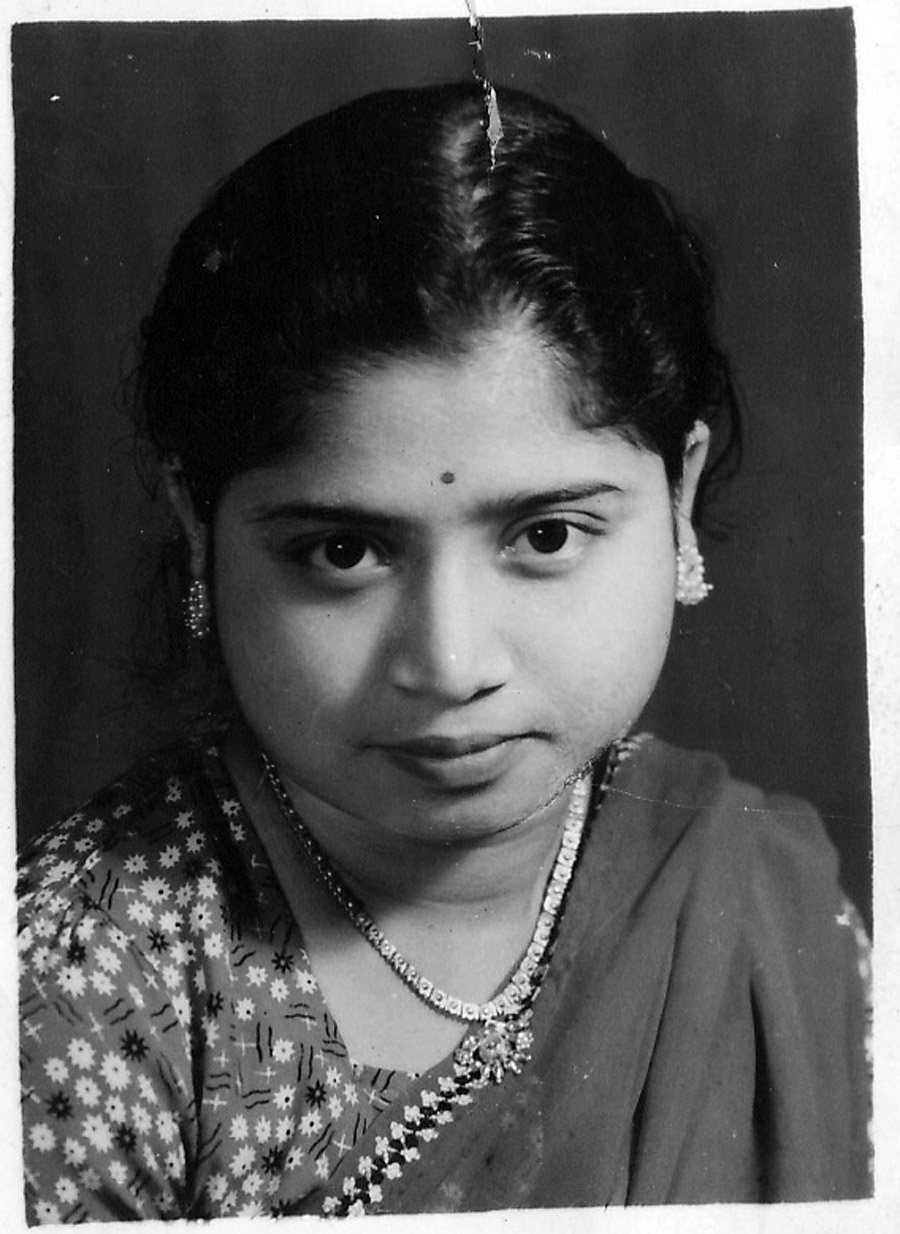
I don’t feel like doing much of anything save look at her photographs and her handwriting — I still have all the letters she wrote me from Kolkata. I even have her clothes, fresh from her closet in our flat. Even after all these years, they smell like her, though the scents are fading and I desperately don’t want them to. I put a few of her things in a plastic bag to prevent her from escaping.

I miss her smile. I miss her hand on my forehead. I miss her kiss and her embrace.

I miss everything about her.

She had a massive stroke in 1982. She was only 51 then. But she lived another 19 years, bound to a wheelchair, half her brain cells gone. Toward the end of her life, we exchanged roles. I became a mother, taking care of her, making all the important decisions in her life. She was almost like my child, completely dependent on me.

And yet, every time I gazed into her eyes, I thought of the immense sacrifices she made — as a young Bengali woman who came to these shores not speaking English, not knowing how to operate an electric stove or drive a car. She endured the death of her own parents from afar, endured her loneliness. Never shared her pain with us; only her joy.

Only later, only after she died and it was too late to talk, did I discover her journals and writings. Only then did I realize how incredibly steely my mother was.

Only now do I appreciate her fully. Now that she is gone. Forever.

And a deep void fills my life. Today on the anniversary of her death. And every day that I live.

After ‘le catastrophe’

Four months on, horror has given way to acceptance. But desperation is everywhere in Haiti.

Here is the link to my slide show on CNN.
http://bit.ly/cf7JlT

Celebrity in Haiti


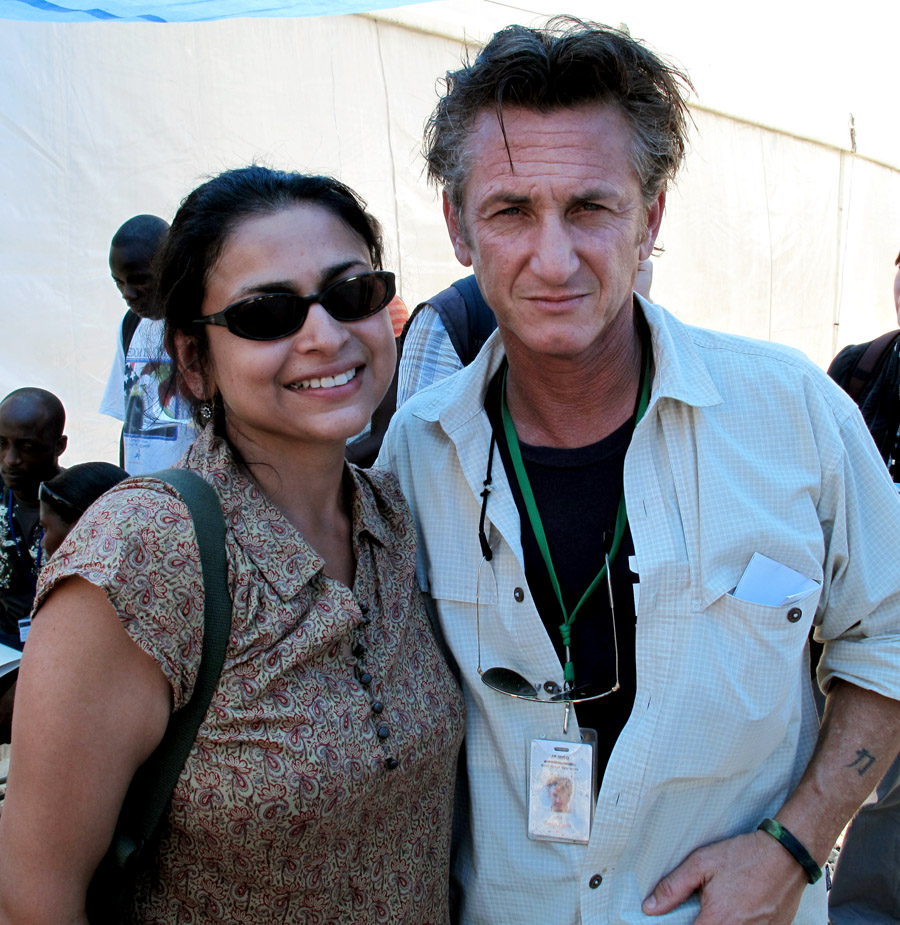
I spent time with Sean Penn in Haiti for CNN.
Read my story at http://bit.ly/cROzVw

More about Mariot


You read about Mariot in an earlier post.

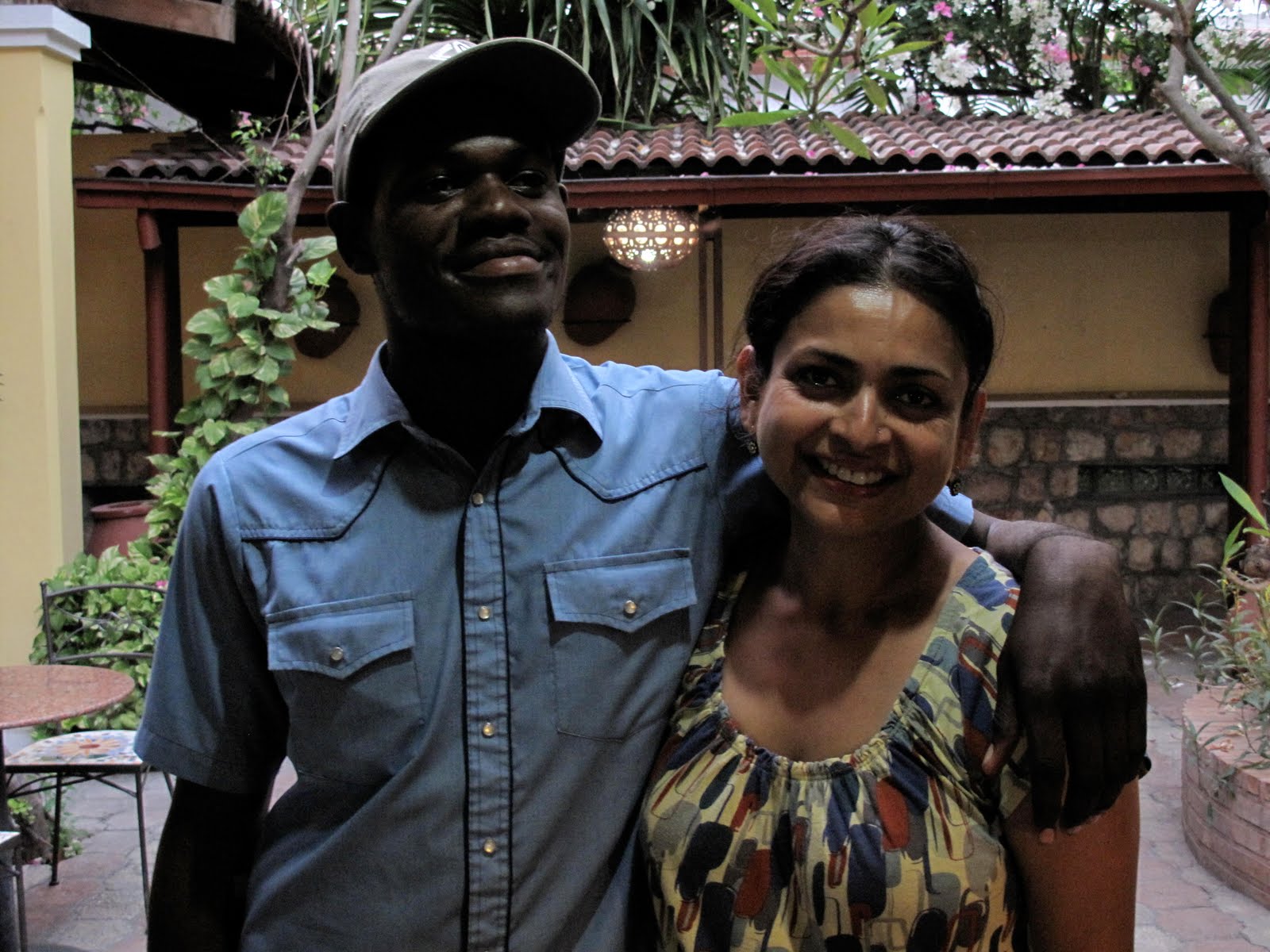
In January and February, he was hired by CNN to drive us around. On my latest trip, he drove me around and translated for me. Mariot’s English, all self-taught, is very good.

Stuck in Port-au-Prince traffic, Mariot and I enjoyed interesting conversation.

He gave me a book this time: “Like the Dew that Waters the Grass.” It’s a collection of words from Haitian women — about gender violence, political turmoil, Aristide, jobs, lives and most of all, perseverance and courage.

Mariot signed the book to me: “Don’t try to be a copy of somebody else.”

Even more precious is that he rescued the book from the rubble of his quake-destroyed home.

Thank you, Mariot.

The rainy season


It rained heavily in Port-au-Prince tonight.

I stood in the balcony of the Plaza hotel — the exact spot from which Anderson Cooper broadcasted his show in January — and looked beyond. At the Champs de Mars, the city’s central plaza that is now home to thousands of people left without anywhere to go after the massive January 12 earthquake.

I thought about what the rain must feel like under a flimsy tent or plastic tarp, water seeping in from every direction. I watched as people tried to close shut the entrances, some of them just thin cotton sheets or blankets. Suddenly, the constant noise of the street came to a halt, replaced by the thud of monstrous drops falling hard from the sky. And the laughter of gleeful children cooling off after another scorching day.

The water started building along the roadside and I knew that in many of the camps, dirt had turned to mud. I was at the Petionville Golf Club earlier in the day, where resident Vital Junior had told me how treacherous the place becomes when it rains. About 50,000 people are living on a hilly nine-hole golf course at the once-swanky club for the elite. From its perch, the club affords a beautiful view of the city on a clear day. So many of Haiti’s elite must have sipped cocktails in the clubhouse and looked down on those below.

Now, the view was marred by human misery.

From the Plaza balcony, I ran back to my room, wet from the few short steps through the hotel’s open-air courtyard. What must it feel like to have no shelter from the elements.

I listened to the rain; reminded me of the monsoons in India. I knew more was on the way for Haiti — May starts the rainy season here.

And people who have already suffered too much will suffer some more.