Faces of hope


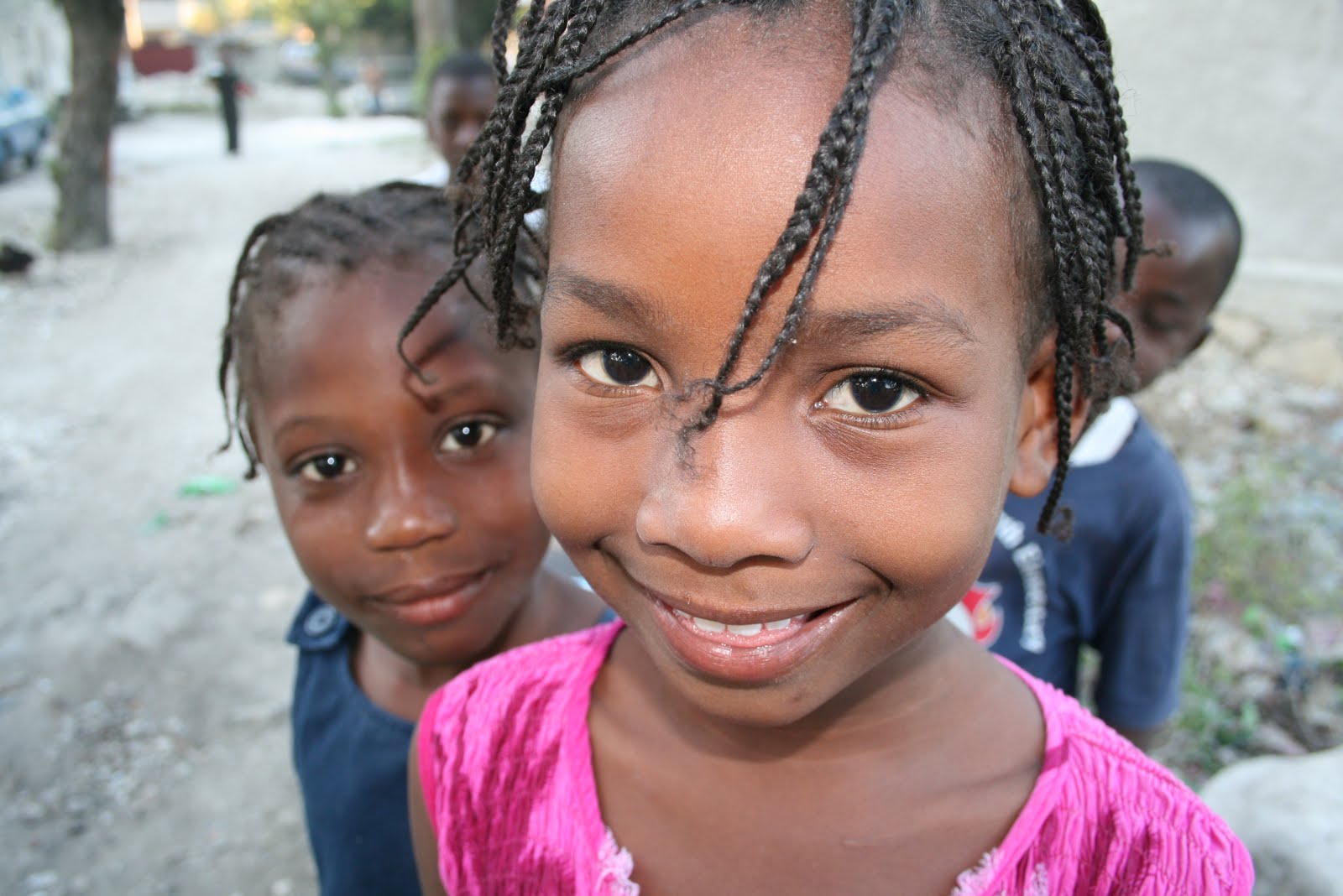
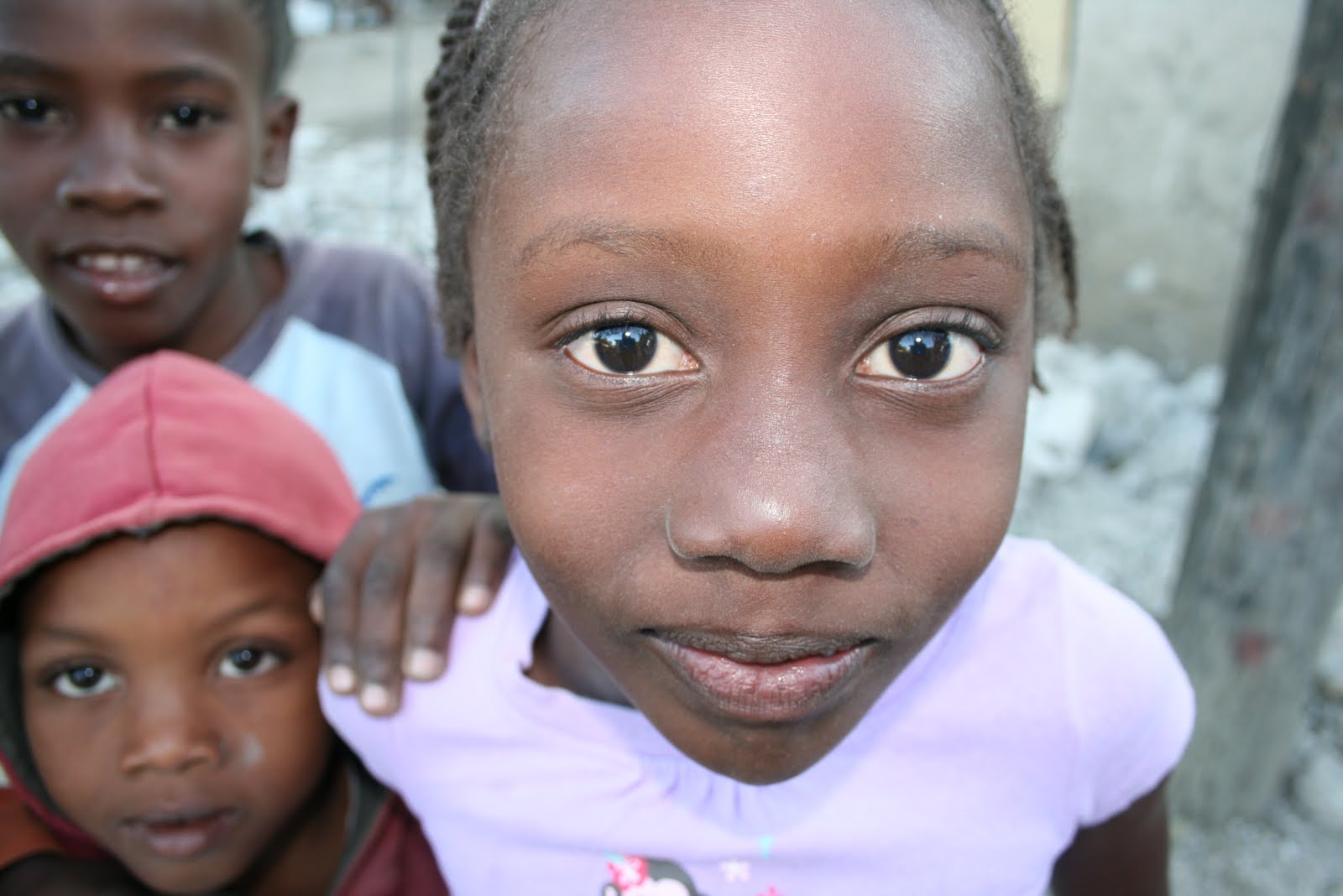
A few days ago, I accompanied CNN producer Edvige Jean-Francois to her father’s grave in Port-au-Prince (she was worried that it might have been desecrated after the quake) and then to the home her parents had recently finished building.

There, like everywhere I have been to in Haiti, the children flocked toward the visiting journalists. Their faces tell me there is hope. That Haitians are resolved to overcome their national agony.

Here are a few photos.

What have they done?

I wandered through the Port-au-Prince cemetery today with a Haitian colleague looking for his family crypt. His heart was full of trepidation. What would he find?

Had someone tossed his ancestor’s bodies and stuffed fresh ones in there instead. That’s what has happened to so many crypts.

We stepped over bones and skulls spread through the maze of crypts. Flies swarmed. The stench of rotting human flesh.

And the souls of the dead. Restless. Disturbed. “Why can’t you let us rest in peace?” they seemed to say.

What else were people to do? Where to dispose of those freshly departed? After the earthquake, there were bodies everywhere. And nowhere to bury them properly.

I don’t know where to begin this story for CNN.

Haiti’s horror

My heart breaks.

Every time I head out of the Plaza Hotel in a CNN car, my heart breaks.

In the massive tent cities, in the villages, on the big island in the deep blue Caribbean. My heart breaks.

A woman grasped my arm today and would not let go. She held her sick child with her other arm. “I am hungry,” she said.

Everywhere you look, there is misery. People who had nothing have one hundred times nothing now.

After the earth heaved, the world turned to help Haiti but will it now begin to turn away?

“I am out of this stinking place tomorrow,” said one journalist staying at our hotel. He had just come out from a dip in the pool.

Yes, yes, you can go home. I can go home. We can all run away, back to our plush places with climate control, soft beds and enough on our plates to feed five Haitians.

But what of those who are already home? Amid the stench of rotting bodies, garbage-strewn streets and makeshift settlements where, if they are lucky, an aid group has delivered bulgar and lentils.

Imagine living side by side, without privacy. A woman on her period. Families bathing in public. Flies swarming, the heat rising. Ahead, lies the rainy season. And more misery.

Imagine never recovering what you have lost, memories and lives forever buried under mountains of crushed concrete and twisted metal.

I met a young man Tuesday on the Isle de la Gonave. Joinvil Anvousse. He was studying theology in Port-au-Prince. Today, he thinks his education is lost. He has no money. He does not know where his parents are. The house where he was living is gone. He moved back to the isolated island and eats every two or three days. One meal of plain rice. When someone shows mercy.

I pulled out a melting Pop-Tart from my backpack and gave to him. Within seconds, he devoured half. The other half he shared with his cousin. Then, he gave me his e-mail address.

“Tell the world my story because I want to go to school,” he said. “Promise me, you will.”

Yes, Joinvil, I promise.

For Haiti’s sake.

Read my stories about Haiti: http://www.cnn.com

A Haitian tragedy

I sat at work last night writing the main Haiti earthquake story for CNN Wires and my mind raced back to 2001, when I was in the Indian state of Gujarat, covering the massive quake that also struck on a January day.

Families, separated. Mothers searching for their babies. Husbands clawing throwing rubble in the hope of hearing their wife’s voice somewhere — under mountains of rubble. Dust-caked faces. Bloodied bodies. Unidentifiable flesh and bones.

In Haiti, the people are desperately dependent on foreign aid. Foreign medicine. Foreign doctors. The Caribbean country, the poorest n the Western hemisphere and one of the poorest in the entire world, has hardly the resources to save their own.

I thought, too, of walking nine blocks of rubble in the northern Iraqi city of Tal Afar, disgusted by the work of a suicide bomber who had detonated massive amounts of TNT and destroyed the lives of thousands.

Nature’s fury and man-made horrors.

The end result is the same. Tragedy. Magnified in parts of the world without money, without the ability to help their own.

Life means no less in war-ravaged, strife-torn, impoverished nations. But we are somehow dulled to the plight of ordinary men and women who live in places like that. Think how you would feel if your child was missing after the earth convulsed for several minutes in your town. If you didn’t know whether a loved one had died. Or if you were holding the dead in your arms.

Please help. Check out the site below to see how.

http://edition.cnn.com/SPECIALS/2007/impact/

About men and atom bombs


Two people of note died this week without fanfare or blazing headlines.


The first was Mary Daly, a rip-roaring feminist who touched my life deeply when I was a student at Florida State University in the early 1980s. She came to speak there but would not take the podium unless the men in the room left. It caused an uproar, of course, because her trip had been funded with public money.

But I admired her courage for standing up for her beliefs. “You learn courage by couraging,” she said.

She said she was not interested in men. Rather, she wanted to study the capacities of women, repressed for centuries under male-dominated societies.

I didn’t agree with all of Mary Daly’s theories, but she inspired me to think outside the box.

Daly stuck to her principles all her life. At Boston University, the feminist theologian ended a stormy tenure by retiring rather than allowing men to sit in her classrooms.

Mary Daly was 81.

On the other side of the world, a man of a different sort of courage died of stomach cancer in a hospital in Nagasaki, Japan.

Tsutomu Yamaguchi was the only person officially recognized as having survived both the atomic bombing of Hiroshima and Nagasaki at the end of World War II.

Yamaguchi was on a business trip to Hiroshima when he saw and felt the great white flash. Badly burned, he returned home to Nagasaki, where three days later, he witnessed horror again.

He, like may atom bomb survivors, suffered from health problems all his life. Still he lived to the ripe old age of 93 and in later years, he became a voice for the abolition of nuclear weapons.

Some said Yamaguchi was the luckiest man on Earth to have survived two nuclear bombs. Others wondered if he was the unluckiest to have lived — and to have remembered.


— Read Yamaguchi’s remarkable story here: http://bit.ly/5OO4CD

Reinvention

The alarm sounded at 6:15 a.m., heralding the start of a momentous day. After a 8-month hiatus from the working world, Kevin returned to an office today.

My journalist friends would say he went to “the dark side,” a term for public relations work. He’s a flak, they would say. But after seeing so many of my talented and qualified friends struggle to find jobs, I am relieved that Kevin found one; that he was able to reinvent himself after 30-plus years at newspapers.
I felt particularly lucky after seeing “Up in the Air” last night. The movie revolves around a man whose job is to travel the country and fire people. Jobs lost, lives changed forever.
In America, we are going through the worst recession since the Great Depression. The economy will bounce back soon, one hopes, but so many professions are being reshaped in this rapidly evolving world we inhabit. The slow death of newspapers, for one, touched my life in ways I never imagined. I always assumed I would retire as a daily newspaper reporter. So did Kevin.
On my trip home to India a month ago, I noticed a different sort of change. The street life I knew from childhood — the hawkers and sellers — are threatened by a new lifestyle, a new middle class that has enough disposable income to spend at fancy malls and restaurants.
In the next few blogs, I plan to highlight a few of these professions that are dying off. Some may feel familiar; others not so much. Some are essential; others quirky. All involve people, like ourselves, who must now think of reinventing their lives.


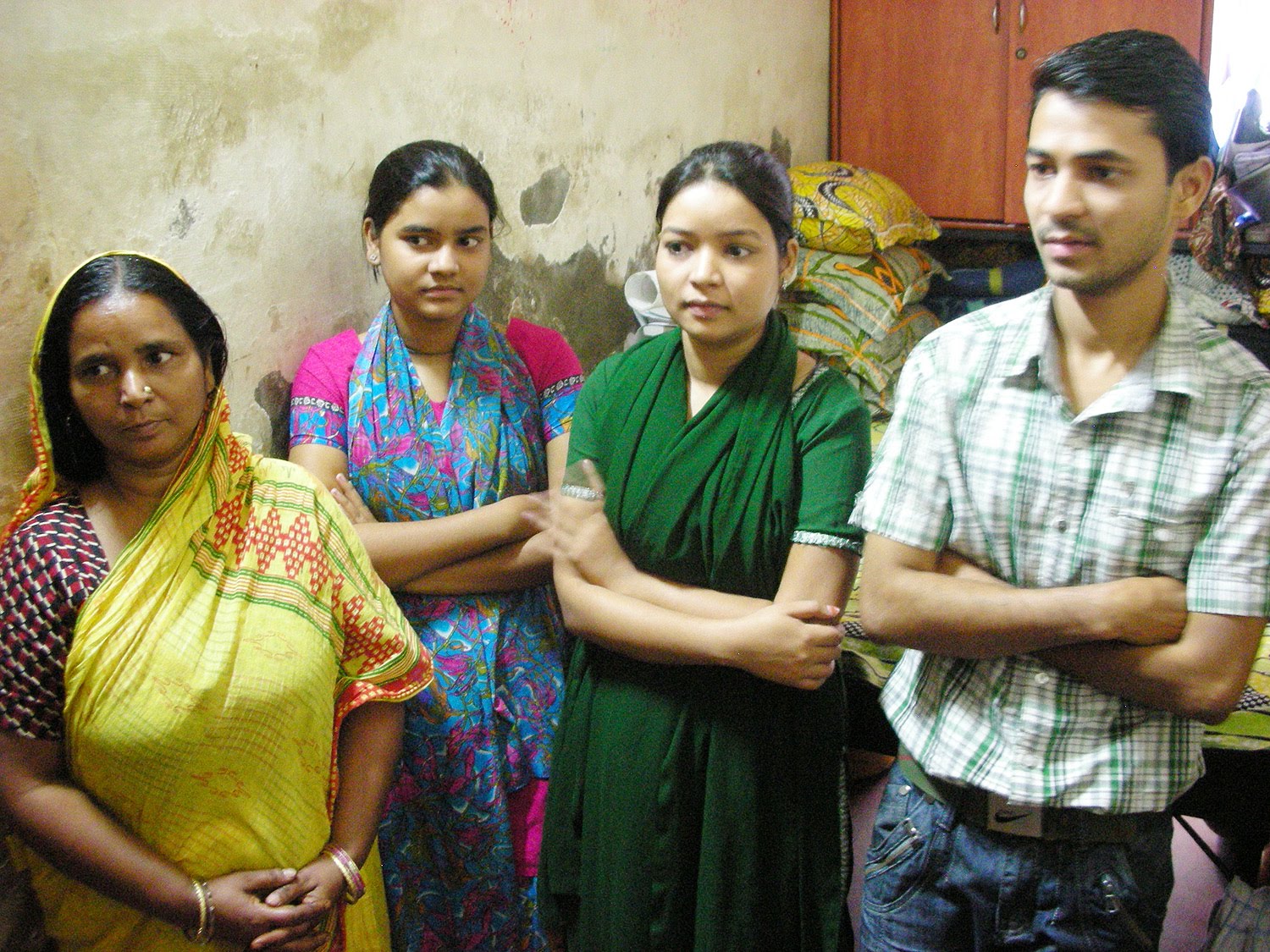
Ibrahim with his mother and sisters in the tiny room in which the family lives. Outside, the hall is dark and damp. Ibrahim’s father (sitting in the photo below) cannot work because of his asthma.

My Christmas gift


This is the season when we feel compelled to give. We give our time at homeless shelters, buy bags of food for the hungry and write checks out to charities that help people in far-flung places. Sometimes, it’s difficult to choose an agency. Many of us are cynical about how effectively the money will be spent. Or we question whether it will do any good at all.

I do not pretend to know the answers to solving global poverty, but I will share with you a story about one family whose life is about to change radically.

Ibrahim Gulam lives in a part of central Kolkata that is usually not seen by visitors to the city. I would guess that many of my friends and relatives have never even been to this part of town. The main road still bears its British name — Colin Road.

the streets are overflowing with workshops and warehouses. Gulam lives in an area where plaster molding is manufactured. Some of the men and women look like aliens, their dark faces perpetually smeared with white dust.

Crime and drug addiction is rampant in this part of town. So, too, are broken hearts. Broken dreams.

You have to snake through tiny lanes bursting with humanity to get to the room that Ibrahim shares with his parents and three siblings. He and his brother sleep atop the hard bed, his mother and sisters share the floor and his father, an asthmatic who has not been able to hold down a full time job because of his respiratory ailments, lies under the bed.

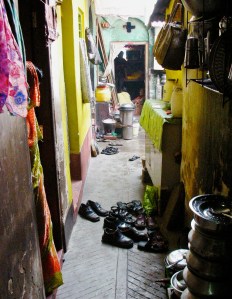
In the summer, the heat and humidity are so intense that the whitewash on the walls peels off. Little adorns the dark, cramped room save scripture from the Quran. Ibrahim’s mother cooks on a coal-burning stove on the floor outside, where shoes heap up and the cement is incessantly wet from household use.

The family shares a latrine with countless other people. Often, bathing is done is public at the local tubewell.

The smells here are like nothing found in America — a mixture of life and waste and human misery.

Westerners dubbed this “the city of joy.” I heard a businessman on my flight back telling the flight attendant that he had taken his young son for a tour of Kolkata slums. He leaned back in his $4,000 business class seat and talked of how “fascinating” the lives of the poor were.

He should talk to Ibrahim.

To say that his life has been a struggle is an understatement.

I met him when he was in grade school. He was one of several children my brother and I sponsored. We paid for their schooling so that they would have a chance in life.

No one in Ibrahim’s neighborhood has finished high school. His father, Gulam Siddiq, studied in a Bengali medium school but dropped out in the second grade, later learning how to be an electrician. His mother, Rabyia Sultana, stopped in the fifth grade in her native Bihar.

I wanted Ibrahim and his siblings not to live the life of his parents. I wanted to do everything in power to preserve his joie de vivre.

I watched him grow, visited him when I went home every year. He did well in Navjjyoti, a school for poor children that my friend Vijay helped establish. He was admitted to the reputable Assembly of God Church school. So was his brother Zahid and sisters Anjum and Zahida.

Ibrahim is now 24 and will soon earn a degree from Seacom Engineering College. I visited him in early December and his latest report card showed him excelling in almost every subject.

His brother and sister followed in his footsteps and are also in college. His youngest sister will enroll in college next year. She wants to study microbiology.

Ibrahim’s mother beamed with pride as she talked about her children. She knows that one day soon, the family will leave that dismal room. On Ibrahim’s salary, they will be able to afford a flat in a nicer part of the city, put better food in their bellies.

Ibrahim had the fortitude to win against all odds — to study in dim light, distracted by the hub-bub of the slum. He persisted when I had half expected him to give up. Yet, year after year, he delighted me with his report cards. A few years ago, he came to visit me with his grades in hand. That’s when he told me: “I want to be an engineer. I want life to be different.”

In India, a nation of 1.1 billion people, sometimes, not even an education is a ticket out of poverty. But without it, a young man or woman stands no chance of success. There, vocations do not pay as well as they do in America. Labour is cheap and the life of an electrician like Ibrahim’s father is far from comfort.

I sponsor other children in Kolkata as well. I talk to their parents, who want to pull them out of classrooms and put them to work instead. Many of them are not supportive of their children and even punish them for wanting to sit down with their books. But it’s not easy persuading a poor person to give up another source of income.

Not all my kids have been as successful as Ibrahim. Ranjeet Shaw is struggling to pass his high school board exams, though he told me when I saw him a few weeks ago that he was not giving up. He has seen hope and he is not going to let it go without a fight.

I don’t have children of my own, but my Kolkata kids have filled that void in my life. And then some.

Mehndi

I met my dear friend Vijay Chowdhary when I was in the fifth grade. My brother and I went to school with Vijay and his sister Renu. They were Marwaris originally from Rajasthan who had settled in Bengal and I quickly became fascinated with facets of their culture that were, up until then, unknown to me.
Like mehndi.
Bengali women in my family lined their heels with alta, a red dye that matched the traditional red bordered white saris they wore. But the women in Renu’s family adorned themselves with mehndi or henna.
On occasion, Renu’s mother would call upon mehndi artisans for a visit and I would tear away from home, running down the streets of New Alipur’s Block N to make sure I was included. The mehndi artisans were old Marwari women, their hands so crinkled and worn that the liquids involved in the process would trickle down the crevices of their skin like ancient rivers snaking from the Himalayas to the Bay of Bengal.
The women needed no tools. No brushes or tubes or pens or instruments used in modern-day beauty salons. They worked quickly and deftly with their fingers, applying the thicky, goopy paste made from a powder of dried henna leaves, lemon, tea, eucalyptus or nilgiri oil. It smelled heavenly.
The paste went on dark as they worked their magic on my hands. Intricate designs with paisleys, flowers, geometrics. I was mesmerized.
Renu and I hardly had the patience to sit for three hours for the mehndi to work its magic. But somehow we managed to keep still, applying a sugary concoction to make sure it didn’t dry and fall off our hands prematurely.
And then came the fun part. We scraped off the dried paste with butter knives and marveled at the burnt orange stains on our skin. My mother would get after me for not washing my hands properly for days after that — I wanted to preserve the henna as long as I possibly could.
These days, mehndi is everywhere in India. Everywhere here. You can find mehndi artists at craft fairs and salons. Was it Madonna who made the ancient Eastern practice trendy here? Or Gwen Stefani?
It’s so popular that you can get it done on the streets of Calcutta by village men who have decided to make a penny off the trend. So here I am in this photo, on the streets of Gariahat, Kolkata’s busiest Bengali shopping area, sitting on a cheap plastic stool on Rash Behari Avenue, getting my arms adorned.
I told Mr. Pal I had little time. “Ten minutes,” he said. “And one hundred rupees.”
He wanted extra for making it speedy. So I paid him what amounted to about $2, watched the world around me — and a whole new one emerging on my arms.