Rena

rena golden
Rena Golden

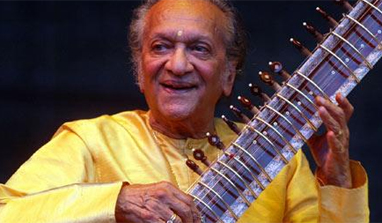
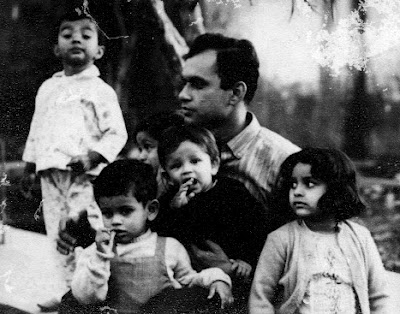
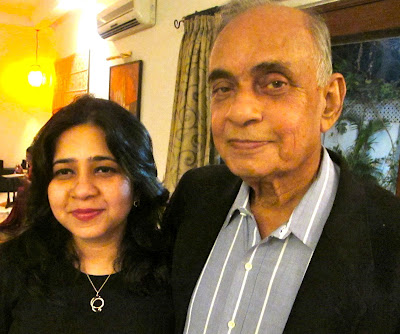
Hasan Zeya used to boast about how he was still practicing medicine into his early 80s. But at 84, he no longer is happy about his age. His daughter, Rena, passed away last week, days shy of her 52nd birthday.

“She did a bad thing. She cut ahead of me in the queue,” he tells me at her funeral Sunday.

Tears well in his eyes, though he keeps a brave front among the hundreds of people who have come to pay tribute to Rena. The weather, dreary and wet, matches the mood inside the inside Temple Kol Emeth.

Rena’s memorial was exactly how it should have been. A rabbi and grieving husband spoke of her incredible talent, compassion and ability to inspire. They spoke of a daughter, a wife, a mother, who gave her all to her family.

Rena worked for many years at CNN, a majority of her time spent as a leader at CNN International. The temple was filled with journalists who stood in awe of her.

Watch a birthday message from Dr. Zeya to Rena  on her birthday last year:

Dr. Zeya tells me how his own father had been a journalist in India but discouraged his son from ever becoming one. It was hard work and no money. But maybe that’s where Rena got her passion.

As a little girl, Rena would make her parents watch as she pretended to be a news anchor. She would hide under the table and appear from behind the tablecloth to the deliver the news.

Rena came to America on her sixth birthday. Dr. Zeya had wanted a better life for his family and moved to North Carolina from a remote part of the Indian state of Bihar. His family hailed from the place where Mahatma Gandhi launched his civil disobedience campaign in India — there’s a scene in the Oscar winning film that shows Gandhi arriving at that train station.

Dr. Zeya tells me he was happy to leave what he called the “most backward place in India.” For a variety of reasons.

He tells me he loved that in Chapel Hill, he could shower with hot water spewing from the faucets. And that he did not have to sweat through the entire summer like we did in India when the electricity went out and the fans stopped for hours. I felt connected with him — and to Rena — in a whole different way.

I never really spoke with Rena much about her early childhood in India. My connections to our homeland, of course, were much stronger since my parents chose to return there many years ago. But in a strange sort of way, it was comforting to know now that Rena had experienced life as I had there. She was only a year and half older than me.

My deepest connection to Rena was that when I first met her more than 20 years ago, she was the only other Indian woman I knew in mainstream journalism in the United States. Now, of course, there are many successful South Asian women practicing great journalism. But back then, there were few. Rena knew that and encouraged women like me to keep pushing forward.

As I speak with her father, I realize where she got a lot of her spunk, though he insists that it was she who inspired him.

Dr. Zeya tells me he never wanted to color his children’s thoughts about big things in life. Like religion. He wanted Rena to make up her own mind. It was exactly how my father had raised my brother and me. He never allowed organized religion to infiltrate our home. He wanted us to figure it out for ourselves.

Sunday afternoon, Dr. Zeya sat in the temple to hear Rabbi Steven Lebow tell the audience what Rena had said to him when it became apparent she was going to die.

She told him she didn’t fear death — she never had in her painful two-year battle against lymphoma. She worried only about what would happen to her children, Sabrina and Adam, and to the love of her life, her husband, Rob Golden.

She also told Rabbi Lebow that she wasn’t religious, though she considered herself deeply spiritual. It was a statement that made her father proud.

We spoke of religious tensions in India. Dr. Zeya sipped Sprite and launched a conversation on Islam. He believes followers of that faith must rethink their path to the future. It was not a discussion I’d expected to have at Rena’s funeral and at first, I was caught by surprise.

But on the long drive back home on 1-75, I decided otherwise. My conversation with Dr. Zeya was exactly what Rena would have wanted. Smart, forward-thinking, outside-the-box, provocative, even, and totally unexpected at a funeral. She would have liked that her father initiated an intelligent conversation with her friends and colleagues.

The rain came down harder. It was as though the entire world was mourning the loss of Rena Shaheen Zeya Golden.

WAR & Fashion

Carnage: Afghanistan, Iraq, Syria.

Catwalk: Armani, Balenciaga, Yves Saint Laurent.

War is ugly. Fashion is beautiful. War projects the worst of humanity. Fashion displays sartorial splendor in its highest.

War is fraught with danger, even for journalists and especially for photographers who must get up close to their subjects to frame an image.

Fashion is far less perilous, though photographers must also get intimate with their subjects on and around the runways.
There are photographers who shoot both: battlefields and runways, guns and glamour. At first, photographing war and fashion appear as incongruous acts that are difficult to reconcile. Until, perhaps, you take a deeper look.

Check out this provocative project on CNN. It was our Director of Photography Simon Barnett’s idea. I got to interview some very cool people for the story.  http://www.cnn.com/interactive/2013/02/world/war-and-fashion/index.html

A New Year’s salute to amazing people not on any lists

Zhanna
I met Zhanna Dawson at her Atlanta home in April.

Today, we bid goodbye to 2012 and usher in a new year. It’s a time of cheer and remembrance.

We like lists. So we have the top 10s of everything from movies to gadgets to events. And there are lists of admirable people. Barack Obama was Time’s Man of the Year. Malala  Yousafzai topped other lists. As did Mohamed Morsy, the Egyptian president and Olympians who set records and won medals last summer in London.

Then there are all those people who perhaps made the news in remarkable moments and then faded to the background again. Their names are not on any Top 10 lists though it’s likely they went on in their acts of courage, brilliance and altruism.

There are countless people, of course, who deserve recognition. I am naming a few who I had the opportunity to write about in the last 12 months.

Dr. Kasem kept the Hippocratic Oath at a makeshift hospital in the besieged Syrian city of Al Quasyr. He knew every patient could be his last; that at any minute, a rocket could slam into the building at any moment. Instead, he kept moving the hospital from building to building and held steadfast to the medical oath he took that demands that he do all he can to save lives.

“If I will die when I help people, it is good for me,” he told CNN many months ago. “Because I am a doctor. I must help people, especially in this very catastrophic time. After the revolution, before the revolution, during the revolution, I will help people.”

I don’t have any way of knowing where Dr. Kasem is today. Whether he is even alive.

Back in February, I wrote about how the Tibetan New Year, Losar, was silent and dark in 2012. Tibetans decided to forgo festivities to honor all the monks and nuns who have self-immolated in protest of Chinese rule. Think about what that takes — to set yourself afire because of your love for homeland.

In the West, we seldom hear about what Chinese occupation is doing to Tibet, how an entire culture is eroding.

And I salute survivors of tragedy and trauma everywhere who  found ways to carry on living.

In 2012, I was lucky to have met Zhanna Arshanskaya Dawson, who survived the Holocaust in her native Ukraine by playing the piano for the Nazis.

She is in her mid-80s now, yet I was so taken by her verve for life. I could not stop listening to a recording of her playing Chopin. I could not stop hearing her stories of the war — how she felt when she played for survivors of Auschwitz.

She was was a triumph of spirit amid the worst of humanity.

Tonight, I will sip bubbly and make resolutions for the new year. And I will celebrate the lives of extraordinary people I have met and hope that their achievements always serve as a guide for my own aspirations.

A brutal rape, then outrage. What next for women?

India-protestors-1200

When I was home in Kolkata several years ago, I climbed aboard a crowded public bus to go across town. The experience was far from pleasant.

It was hot and crowded. The bus was filled with the stench of body odor. I could feel the sweat of others on my bare arms as I clawed my way to the front door to get out at my stop.

But all of that could be borne in some way or the other. This was the price of getting from south Kolkata to its financial center in Dalhousie Square on a ticket that cost me all of 5 cents.

But there was another memory that came hurtling back in the last few days as I read the news of a 23-year-old woman attacked and raped by a gang of men on a moving bus.

Men on the bus pinched me and groped me and there was nothing I could do. My right arm was up, holding onto the grab bar for dear life as the rickety bus bumped its way over gaping pot holes.

I could not move in that packed bus. I could not hit them back. I was helpless.

But that was just the way it was. Not one person around me thought to do anything about it.

What happened to me happens to women all over India. Every day.

I’ve been stared at on the streets. Or heard catcalls and whistles.

In every instance, I was violated. But I was lucky.

Many times, the attacks are violent. In the December 16 rape of the Delhi woman, the circumstances were unimaginable. Her assailants gang-raped her and dumped her battered body off an expressway. Her injuries were so horrific that part of her intestines had to be removed in hospital.

The shocking nature of this crime galvanized Indians to take to the streets to express their outrage.

But I believe that anger was a long-time coming.  It stemmed from years and years of hearing about rapes and other forms of violence against women in which victims are blamed and perpetrators face little or no punishment.

I believe that Indians were finally finding a mass, united voice by which to say: We have to change the way we think about women and the way we treat them.

Kavita Krishnan, the secretary of the All India Progressive Women’s Association, got it right in a speech that was posted online:

There is barely a woman here who has not at some point fought for her dignity on the streets of Delhi, or in its buses. There is not one amongst us that has not found herself alone in such a situation. When we do this, we are told that we are inviting trouble; that we are asking for it.

The Indian government has promised stricter safety measures on buses. It can also, perhaps, make policy changes that will make reporting and convictions in cases of violence against women easier.

But ultimately, there has to be changes in the Indian mindset that affords women the dignity they deserve.

Here’s what journalist Shoma Chaudhury wrote on Teleheka.com:

Rape is already the most under-reported crime in India. But beneath that courses a whole other universe of violence that is not even acknowledged. It’s not just psychopathic men in a rogue white bus who can be rapists: it’s fathers, husbands, brothers, uncles, friends. Almost one in every two women would have a story — perhaps told, perhaps untold — of being groped, molested or raped in the confines of their own homes. If they dare speak of it at all, they are told to bury and bear it. Take it as a part of life. To name an uncle who has been molesting a minor niece would be to shame the family. And marital rape — that stretches the very imagination. It’s a mark of our bestial ideas about women that even judges often suggest that rape survivors marry their rapists to avoid the hell of life as a single woman rejected by society.

It’s clear, say Indian women’s rights activists, that passing laws is not enough.

Legislation might give a sense of change, said Ratna Kapur, a professor at Jindal Global Law School, when in fact, very little is being done. This is what she wrote in The Hindu newspaper:

To confront the hatred that is now manifesting itself in the most egregious ways is to move forward as a society. We need to think about how we can handle women’s equality in ways that are not perceived as threatening. That demands greater responsibility on the part of parents as well as society not to raise sons in a way in which they are indoctrinated with a sense of superiority and privilege. There is also a need on the part of young men to be actively involved in their schools and communities in advocating women’s equality rights.

I am horrified by what happened in New Delhi.

I am heartened that so many people hit the streets in outrage.

I can only hope that from this brutal crime will come the beginning of a safer future for women.

Sacred sounds

ShankarOne of the greatest musical talents of our time was silenced Tuesday. Ravi Shankar died at 92.

His was a name I grew up with, a name that made me proud to be Indian at a time when my country was known mostly for human misery.

I read the sad news of Shankar’s death Tuesday evening in The Hindu newspaper and thought back to a time when I was still in high school in Tallahassee, Florida. Ravi Shankar was touring the United States and he was coming to Florida State University’s music school for a performance.

There were only a handful of Indian families in Tallahassee then and not much for us in the way of our culture. It was a rare treat for us to be able to hear the pandit play the sitar.

My mother was especially excited. She sang Rabindra Sangeet and played the taanpura, an Indian string instrument that resembles the sitar but has no frets.

Then came a phone call from the organizers of the Shankar event at FSU. The maestro was sick of eating steak and potatoes and had requested a Bengali meal in Tallahassee. My mother was asked to do the honors.

It wasn’t easy to make authentic Bengali food at home in those days because no stores carried fenugreek or mustard oil. Most people didn’t even know what cilantro was back then.

My mother did the best she could with her stockpile of spices purchased from New York wholesalers. I remember she began cooking days ahead so she could present dinner in Indian fashion — at least seven or eight courses and then several desserts. The Bengalis are known for their “mishti.”

Listening to Ravi Shankar was magical that night. I didn’t understand Indian classical music very well then. In fact, I was not unlike most Westerners who equated Ravi Shankar’s name with George Harrison and the concert for Bangladesh.

The great tabla player Alla Rakha accompanied Shankar’s sitar that night. When they arrived at our humble split-level house for dinner, I was in awe. I couldn’t believe I was sitting at the same table with these musical giants.

Later, I came to appreciate Indian classic music much more. Now I own many of Ravi Shankar’s music as well as that of his daughter, Anoushka.

But my lack of knowledge didn’t matter that night in Florida. Shankar’s music was mellifluous. Like a luscious silk sari fluttering in the wind. Like rays of sun peaking through clouds. It was, as the pandit himself said, music that is sacred.

Read my appreciation of Ravi Shankar on CNN.


Shonakaka

Shonakaka with me,  (from right), my cousin Jayanta, my brother, Shantanu,
my cousins Sudip and Suman at our grandfather’s house  in Kolkata. Circa, 1968.
The last time I saw Shonakaka, I knew he was ill.
Gone was the mirth; his enormous zest for life reduced to a meager smile. At a family gathering in New Delhi last December, he could hardly eat a thing.
Shonakaka was suffering from renal failure and had to be most careful about what he put in his belly, especially foods high in phosphorous. His son — and my cousin — Ronny was not pleased his father had put a heaping spoon of daal on his plate.
If you knew Shonakaka at another time in his life, you would hardly believe my words.
He was always the boisterous one; the one who loved to eat, drink and make merry. “Live life king size,” he always said. At my cousin Suman’s wedding in California, Shonakaka danced atop Suman’s brand new Acura Integra.  We laughed, amazed at Shonakaka’s energy, though, perhaps, Suman was a tad worried about dents and scratches on his shiny car.
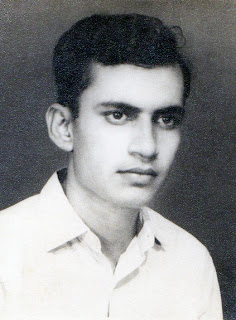
Shonakaka as a young man.
Unfair then that at a fairly young age, Shonakaka was forced to adopt a curtailed regimen and give up things that he loved. Cruel even.
He was my father’s youngest sibling. Kaka means father’s younger brother in Bengali. And Shona means gold or someone very precious. It used to be the norm to have a naming convention so as to avoid calling elders by their first names. That was considered disrespectful.
Shonakaka was born Ranjan Kumar Basu on July 8, 1942 in Lucknow, the capital of Uttar Pradesh. He was 18 years younger than my father and grew up as the baby in a family of five boys and three girls.
Now, within the span of a few months, that generation of my father’s family is down to just a brother and sister still living. Everyone else, including my father, is gone.
Many of my friends in America may not understand the pull of an uncle or aunt.
I was raised in an extended family system in which my grandfather’s house was occupied at various times by various members of the family. That meant Shonakaka often stayed in one of the many bedrooms in the house.
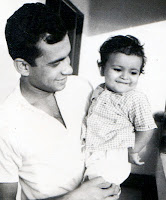
Shonakaka holding me. I was about a year old.
When I was a baby, he made me cry and took a photograph of me wailing. Just to be contrary, he said. Why should I be happy in every shot?
From his travels abroad, he brought us back chocolates and other goodies that were non-existent in India in the 1960s and early ‘70s. He regaled us with stories of his travels – each adventure made grander with Shonakaka’s unique infusion of enthusiasm and zeal.
Once, he started growing chickens on the roof. My brother and I raced up the stairwell every morning to see how many eggs we could retrieve. And in the backyard, he built a tank to farm tilapia so we’d have the freshest fish.
Shonakaka (center) at a dinner at my parents’ house
in Kolkata in the late 1990s.
It was understood that Shonakaka would fix the menu for family weddings and other festive events. I’ll always have images in my head of my two youngest uncles breaking into a pot of syrupy sweets before they even made it into the kitchen.
After he married my aunt, they lived for a while on the ground floor of the family house. It was there that my cousin Bideesha — Ronny’s elder sister — was born. I often babysat her with my brother and our housekeeper, Shantidi, when Shonakaka and Kakima went out with friends.
Shonakaka was not far from home when he was attacked on the streets with acid and lived the rest of his life with scars. But he always rose above his woes. He never let anything interfere with living life to its fullest.
Until recently, when his health began to fail him.
Shonakaka with his daughter, Bideesha, in Delhi last
December. That was the last time I saw him.
I’d not seen him in a couple of years when we met last December. He was not even 70 yet but looked frail. He’d lost weight and suddenly, he appeared to me just like my grandfather. At the time, my aunt in California was in her last days of battle with cancer. It was then that I realized how those I loved in India were going away, how I was losing the links that kept drawing me back all these years.
The finality of death brings with it a host of regrets. I always hear people say, I wish I had done this and I wish I had done that. Yes, I have my regrets regarding Shonakaka. I wish I had visited more in recent years. I wish we had talked more on the phone. But I am glad for what I had with him. Glad that I made the trip to Delhi to see him in what turned out to be the very last time.
And that he was still smiling then.

A voice in Vietnam

Ho Thi Bich Khuong.
Born: 1967
Activity: Writer
Date of arrest: November 15, 2011
Sentence: Sentenced December 29, 2011 to 5 years imprisonment followed by 3 years house arrest
Charge: Propaganda against the socialist state
Current location: Nghe An province

This is the information available on the Vietnam Reform Party’s page on blogger Ho Thi Bich Khuong. Few in America have probably heard of her. But this is her third arrest. She has been tortured in detention, according to Human Rights Watch.

She was found guilty of violating article 88 of Vietnam’s penal code, designed to deflect criticism of the Communist government. The state said she “blackened” Vietnam’s name and belonged to human rights groups led by “reactionaries.”

She publishes detailed accounts of the repression and harassment she and her family have faced, and writes about the suffering of poor rural farmers and of human rights defenders, said a statement from Human Rights Watch.

In November 2010, she visited the families of people killed by police in a land rights protest and questioned the authorities’ silence on the case. After that, she wrote about violence against Mennonites at Christmas. Three weeks later, she was arrested, said Human Rights Watch.

“Vietnam should be grateful that people like Ho Thi Bich Khuong call attention to local abuses,” said Phil Robertson, deputy Asia director of the global rights monitor.

“They give the government an opportunity to investigate and show commitment to the rule of law,” he said. “When the government instead clamps down on the media and locks up independent bloggers, it simply encourages further corruption and abuse of power.”

Human Rights Watch honored Ho Thi Bich Khuong with a Hellman/Hammett award in 2011. The group said it wanted to give an international platform to those who Vietnam will not allow to be heard.

Vietnam launched a crackdown on freedom of expression in 2009. Since then, dozens of political and human rights activists have been handed long jail terms, rights groups say. Vietnam now ranks 172 out of 179 countries on the Reporters Without Borders press freedom index.

It’s a disturbing trend we don’t hear much about in the Western media. We ought to, especially when we are so focused on the Arab Spring and the great risks people take to get information out to the rest of the world from places like Syria, Yemen and Bahrain.

A Vietnamese court will hear Ho Thi Bich Khuong’s appeal tomorrow. It’s unlikely she will be released. She may be silenced for now, but her voice, I am sure, will resonate for as long as there is injustice in her homeland.

Wendy


Wendy at Cafe 640

Last September, my friend Wendy was diagnosed with invasive ductal carcinoma. Breast cancer.

Her mammogram nine months earlier was clear.

“That’s how fast it can happen,” she wrote on her blog, “which is why I’ve already been pretty open and honest about my story.”

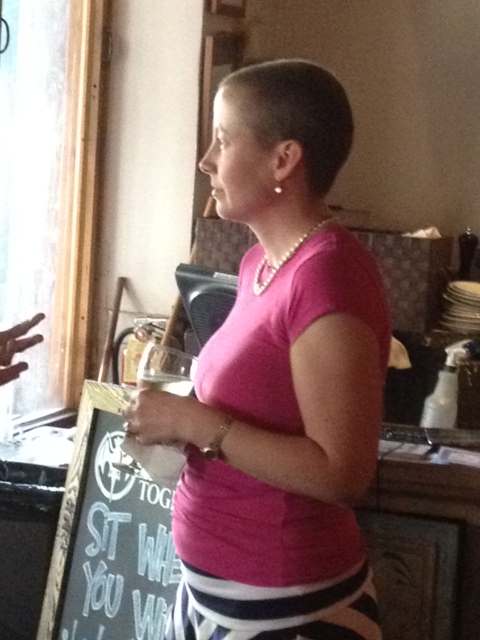
I saw Wendy Thursday at a gathering to celebrate her last day of radiation. She announced that her doctor had declared her “cancer free.”

She looked beautiful as always when I saw her. A big smile on her face, her positive energy filling the entire cafe.

If only everyone dealing with illness could see her, I thought. How inspired they would all be.

Killed in the name of honor


“All citizens are equal before law and are entitled to equal protection of law. There shall be no discrimination on the basis of sex alone.”


That’s what Pakistan’s constitution says. But the plight of women in Pakistan today is grim.  Last year almost a thousand women were murdered in honor killings, according to the Pakistan Human Rights Commission. The real number is feared to be much higher — many such killings are covered up by families.


Of the 943 cases documented by the commission’s staff, 93 were girls. 


Here’s why these women and girls were killed by husbands, brothers, fathers. They were accused of illicit relations or they voiced a desire to marry a man of their own choice.


Before being killed, at least 19 women were raped, 12 of them gang-raped.


They were shot, bludgeoned and even strangled to death. 

Only 20 of these women and girls were provided any medical aid before they died.


This is now. In Pakistan.


I don’t know the statistics for my native India or neighboring Afghanistan. But all three of these South Asian nations top the list for the worst countries in which to be a woman.


I was horrified to read the Pakistan report today. It probably won’t get much attention in the Western media. So I write this and ask you to think about how these women and girls lost their lives all in the name of saving a family’s honor.


Could there be anything more dishonorable?

I am born

To borrow from Charles Dickens:

WhetherI shall turn out to be the hero of my own life or whether that station will beheld by anyone else, these pages must show. To begin my life with the beginning ofmy life, I record that I was born (as I have been informed and believe) onthe thirteenth day of October. It was remarked that soon after my mother brought me home, a white owl appeared before her on the terrace, glistening in moonlight. 
 
It was Lakshmi Puja day, when Hindus worship the goddess of prosperity, grace, and charm. Lakshmi has a white owl by her side and the bird has come to be known as a sign of good luck. 
 
My mother was then convinced she had done the right thing.
 
By thatI mean that she had picked me up only days earlier at an orphanage in the Maniktola neighborhood of Kolkata. I had been left there, on the doorstep,hours after my birth.
 
Many people I have known in the course of my life have asked me why my natural parents abandoned me. I do not fully know the answer to that. If and when I do,perhaps I shall write more.
 
But what I do know is how lucky I was to have been left at that particular orphanage, run by American missionary Helen Benedict.
 
Mymother had just met Benedict at a luncheon at the Indo-American Society, whereshe was hoping to improve her spoken English. She told me she was attending afashion show. I never quite figured out what a missionary was doing at afashion show, but I am glad that Benedict went that day. 
 
She happened to be seated next to my mother, who lamented that she had not had success in having children. My parents had been married 10 years by then.
 
Benedict perked up.
 
A child was left on her doorstep, she told my mother. Would she like to come and look?
 
My mother went the next day with my grandmother. Many years later, I would see the gate through which she entered the day and meet the caretaker who greeted her.
 
I was only a few days old. Apparently, my mother agreed to take me home the moment she saw me. 
 
Benedict advised her that she ought to first consult my father. I suppose there was a chance that he might not have agreed — as much chance as there is of  snow falling in Kolkata.
 
He had already picked out a name. Monimala. Garland of pearls.
 
At seven days old, I was taken home. To an old house at 206 Barrackpur TrunkRoad on the campus of the Indian Statistical Institute. The banisters were wrought iron, the floors, marble. The courtyard was shaded by tall coconut palms.
 
My mother told me when I was much older that she had gone up the narrow stairs, up to the roof and seen the white owl. She felt unfiltered joy and relief, like monsoons after a searing May.
 
Many pages of my life are yet to be written.
 
But the first chapter begins with my great fortune — a child left at an orphanage who came into the home of a brilliant mathematician and his beautiful wife. That child might have grown up in slums, might not have been educated.Instead, she traveled the world and grew up to write about it.
I tell you this story on my 49th birthday.
 
Many people still ask me about my natural mother and father. But I tell them I had only one set of parents. They are long gone now but they gave me a life for which I will be eternally grateful. Yes, I an adopted child. Their blood does not run through my veins. 
 
But I have something much more potent — their love.