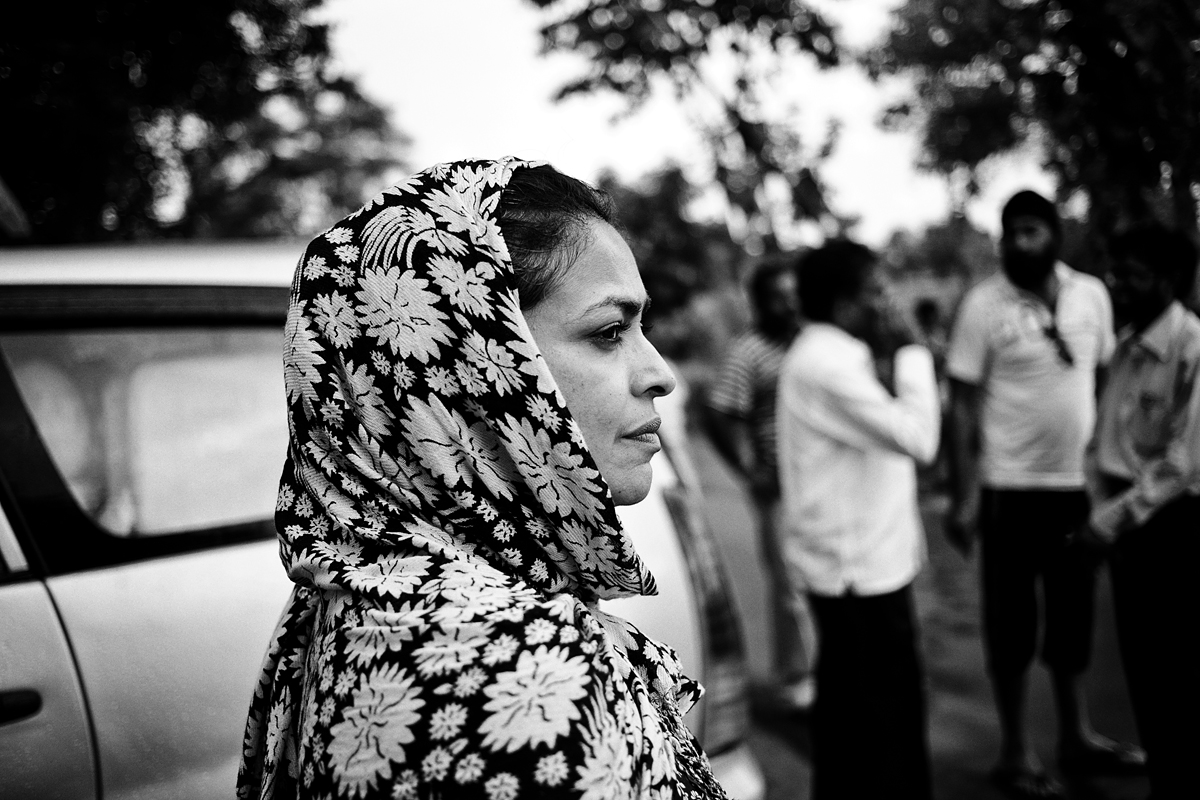
Me, reporting in Maharashtra. My friend Vivek took this photo. He was the photographer on the story.
I have reported difficult stories before. It was never easy to tell tales of tragedy from places like Iraq. But a piece that published on CNN.com today is the hardest story I’ve ever told.
Because it became very personal. Because it was raw.
The producer, the photographer, the cameraman who went with me to Maharashtra for this story had no idea how I was feeling. Even I did not know, really, the emotions that would surface and then haunt me as I returned home from India and began writing the story.
But in the end, I felt it would be disingenuous not to reveal a horrible truth about my own life.
I hope you will read the story on CNN.com. Here is the link:
As always, I have indebted to my editor, Jan Winburn. She edited the story with her usual brilliance and grace. But most of all, she believed in me. Again.
I hope rape survivors will be inspired by the quiet strength of Mathura. I know that I am.
Last year was the milestone year. The big 50. I felt OK about it. 50 is the new 40, my older friends told me. I celebrated with a big party. My brother came from Canada, my cousin from New York. My sisters-in-law traveled great distances, too. Then everyone went home and life resumed, no different, really, than before.
Today is different.
Not that suddenly, I feel old. Or that there is no hoopla this year.
Today is different for one very important reason.
My mother suffered a massive stroke in 1982. On my birthday. She was 51.
That day changed our lives in so many ways. You can imagine all the obvious ways: my mother was in a coma for days in the Intensive Care Unit at Tallahassee Memorial Hospital and when she regained her senses, the left side of her body no longer worked. There were months and months of physical therapy for my mother. And even more months of adjustment for me and my family while we learned how to take care of an invalid, infirm woman.
She’d also lost a lot of her cognitive abilities and the mother I adored was suddenly gone. She was there in person, physically. But the woman I knew died on that day.
Over the next 19 years that she lived, I learned to relate to my mother on a whole new level. In the end, when my father also cruelly lost his cognitive abilities to Alzheimer’s, my mother became like my daughter. She’d ask me what she should wear, what she could eat. If anyone asked her a difficult question, she’d consult me before answering publicly. We exchanged roles.
My mother died in May 2001. I had to deal with her dying all over again. Except this time, there was nothing left of her at all. She was gone.
I’ve always feared turning 51. I feared it even more after I learned I was prone to hypertension — my mother’s blood pressure had soared to obscene levels before the stroke.
So on this day, I contemplate my mortality. And want desperately to make time stop so that I can have the opportunities to accomplish all that is left on my long, long list of things to do, places to see. It’s not that I want to be young again — I greatly value the wisdom time and experience have given me. Just that I feel the days whizzing past like speeding bullets.
Like everyone else, I want to feel that I did something good for this world. Now there are fewer days left for me to achieve that.
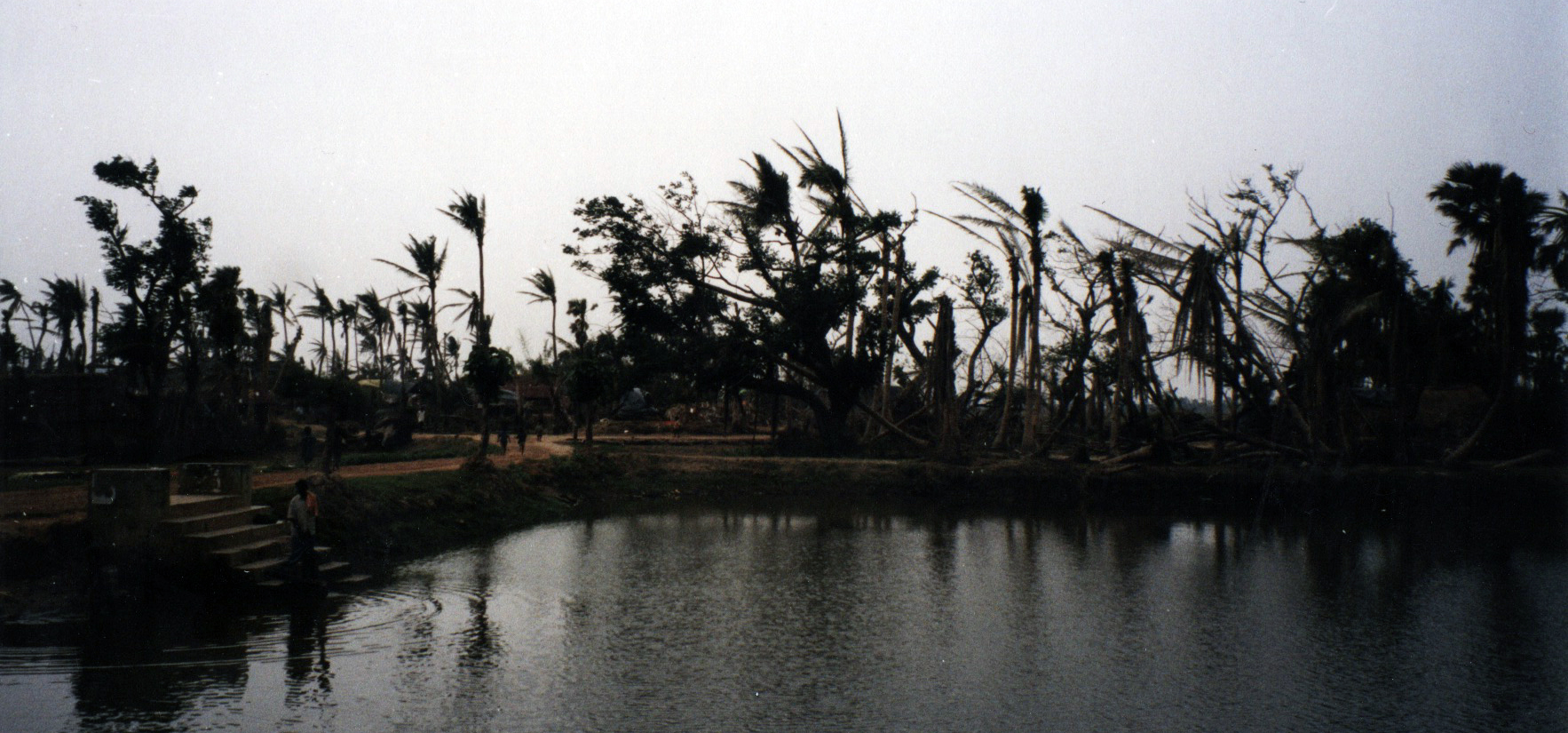
People lost everything they had in Ersama, Orissa in the 1999 “super-cyclone.”
Thinking of the 12 milion Indians who are bearing the brunt of Cyclone Phallin. Here is a piece I wrote for the Atlanta Journal-Constitution in 1999, after the last deadly cyclone in the state of Orissa.
November 25, 1999
Bhubaneshwar, India — I had been to Orissa before, lured by its ancient Hindu temples and pristine beaches.
This time, I was not a tourist.
I was there to witness a tragedy of enormous proportions. A “super cyclone” had visited the state just days before my trip. And it had changed the face of Orissa.
The plane ride from Calcutta to Bhubaneswar, Orissa’s capital, took 50 minutes. Indian Airlines Flight 7544 from Calcutta steadied itself after a steep climb into a clear November sky. We were more than halfway there when the captain announced, “We are flying over Paradwip. It’s to our left.”
On Oct. 29, the cyclone, having churned across the Bay of Bengal, came ashore at Paradwip. Wind and sea had spared little. I had read newspaper accounts about the devastation, and so had everyone else on the plane.
The very mention of Paradwip had nearly all the passengers on the right side of the cabin up from their seats. We craned our necks to peer out the windows and see firsthand what we already knew.
From 15,000 feet, the landscape resembled a blueprint for destruction. A vast sheet of silver-blue iridescence cut into the green mosaic of rice paddies and farmlands. Helicopters skimmed over the flooded land below us. Perhaps they were making air drops of food to cyclone victims.
Suddenly, the plane was filled with comments, sighs and emotions. Curiosity. Uncertainty. Fear.
As the aircraft descended, I saw the massive steel bridge over the Mahanadi River that I had crossed by train only months before on my way to the beach at Gopalpur. Then Orissa had seemed so lush, so serene, so idyllic. Now it was a series of mangled fields and broken trees, bare of bark and branches.
In the chaotic arrival hall at Bhubaneswar’s small airport, people held up placards to connect with arriving relief workers, journalists, government officials and medical teams. Boxes full of bottled drinking water rotated on the luggage carousel. People had come prepared to face the shortages. I wondered whether our six bottles of water would suffice.
Outside, the hoards of white taxis that normally await arriving tourists were in short supply. Instead, a line of four-wheel drive vehicles crowded the curb. Several bore the Red Cross symbol.
It wasn’t a long ride to the Hotel Shishmo, which had recently undergone minor renovation. I remembered it as being shoddier on my last trip to Bhubaneshwar, four years ago. It was the only thing I saw this time that looked better.
Eugene, my colleague and guide, and I wanted to grab a quick lunch before venturing into the city. At the hotel restaurant, we were told that the only thing available was a limited buffet, since many of the kitchen staff had returned to their villages to check on their families. The mediocre meal cost twice what it would have in Calcutta, but there wasn’t another restaurant open for miles.
Bhubaneswar, which was a relatively new but disheveled town before the storm, looked utterly dismal. Its dirty roads were even dirtier. Its nondescript architecture seemed uglier. Many of its tall palms stood no more. A confusion of electric lines dangled overhead as our taxi negotiated pools of mud and slush around the city’s shantytowns.
For the people who live in these slums, life had already been unimaginably difficult. Now it was plain unimaginable.
Still, the urban shantytowns were better off than the thousands of small hamlets and villages that fell prey to the cyclone. Tens of thousands of people died; no one knows exactly how many. Millions more were left with nothing to their names but the wet dirt on which they were standing.
These were India’s poorest, most vulnerable people, and they had been left in their mud huts to ride out one of the fiercest storms in the subcontinent’s history. A man in a nearby hospital had held onto the trunk of a palm tree through 36 hours of rain and wind. He survived but he had no flesh left on either arm.
On the way to Kendrapara the next day, we stopped for breakfast at the Indian equivalent of a truck stop. We were told there would be no more food available beyond that point. We sat in a dark, dingy dining hall — there was no electricity — and filled our stomachs with sand-laden rice cakes and vegetable curry. We planned to never eat there again.
But we did — out of necessity. And 10 exhausting hours later, the same rice cakes and curry seemed gourmet fare.
We thought about the villagers with whom we had spoken, and of how they had mobbed relief trucks for food and were surviving on one scanty meal a day. One man showed us his stash of rice carefully wrapped in a towel. He had gathered the grains from the road when a bag of supplies had burst.
In Paradwip and Ersama, names now synonymous with death, we had watched a young woman wash herself in a pool of water while a few yards away, another young woman’s body, bloated and rotting, floated along the bank. We saw the charred remains of human beings at mass funeral pyres, and we inhaled death. We looked into the eyes of a child who will grow up without his parents — and without hope.
After seeing all that, conversation in our taxi stopped for a long time. I found myself clutching my bottle of water and not wanting to look anymore.
But the images still burned in my mind. I left Orissa two weeks ago; soon I will return home to Atlanta, leaving India far behind. And this time, a very different Orissa will smolder in my memory.
One reason I miss India terribly: my pishi (aunt).
“When did you get home?” a friend asked me yesterday.
“Last night,” I replied.
“It must feel good to be back,” she said.
The pause on the phone was long enough to be awkward.
“Yes,” I said. I wanted the conversation to end.
But what was home? That word has always been problematic for me. I have always straddled two continents, two cultures, a feat that becomes hard at times like this.
My closest friend Eugene in Kolkata and I used to discuss for long hours what being home meant. Was it in Atlanta, where I have lived for 23 years, where I work, where I laugh and love? Or is it in my native India, where I am not an “other” or a minority, where I can bask in my Indianness, where I am in my element like I can never be in America?
After my parents died in 2001, going “home” to India became emotionally exhausting. Kolkata was not the same without my Ma and Baba waiting for me at our flat on Ballygunj Circular Road. Some of my trips after that were short — I was but a tourist on a fleeting journey. Others were punctuated by weddings and funerals and other events that made them extraordinary.
This time, it was different.
Another reason I miss home: the incredible food. This is Sunday lunch at my aunt’s house in Delhi.
I spent a lot of time with my father’s sister, my pishi, in Kolkata and his brother and his wife in Delhi. My uncle and aunt are the only two of my father’s seven siblings who are still living. Three of my aunts and uncles died in painfully rapid succession in the last year and a half.
I felt a need to soak up my family as much as I could.
I was also on assignment for CNN for part of the time I was home. I found it refreshing to report on my own people for a change and to work alongside Indian journalists.
Now, I am back at my desk at CNN Center in Atlanta. I look at the sun and think that it also shone over India today, many hours earlier. I smell India in my notebooks and clothes and long to make that long plane journey back.
I am an American by nationality and in many ways, by identity. Yet my heart remains Indian. Phir bhi dil hai Hindustani.
I just returned from a short trip to a part of central India that was previously unfamiliar — Gadchiroli District in the state of Maharashtra. I was there to report a rape story for CNN and traveled with CNN cameraman Sanjiv Talreja and producer Harmeet Shah Singh.
Photojournalist Vivek Singh also accompanied us. He’s a freelancer based in Delhi and we’ve used his work on CNN’s photo blog. I edited the text that ran with an amazing gallery about rising tensions between Bodo tribespeople and Bengali Muslims in northeastern India. It was refreshing to see journalism from India that goes far beyond the breathless and sensational stuff that is common in the media here.
Vivek’s work is hauntingly beautiful. Powerful. Sometimes stark in black and white. It’s difficult to take your eyes off his images. I was lucky he was able to make it to Gadchiroli with us.
My mother and me at the Acropolis in Greece. June 23, 1964.
My mother would have turned 82 today. I would have picked up the phone and called her. 011-91-33-2247-6600.
I would have said: Ma! Happy Birthday. I would have asked her what she was doing to celebrate.
She would have said that my pishi (aunt) was coming over for lunch. Nothing special was planned.
I wold have asked about what else was going on. She would have given me family updates — she kept in touch with everyone. She was the glue. She would have caught me up with gossip about the neighbors in our flat building.
She would have hurried through the conversation to get to the most important part. When will you come to Kolkata?
I would have said: In mid-September, Ma. I will be there soon.
I would have imagined her smile. She would have told me how she couldn’t wait to see me.
I will get on a plane to go home next week but she won’t be there waiting for me.
Happy Birthday, beautiful Ma. I miss you every waking moment.
Independence turned bloody as Hindus, Muslims and Sikhs crossed borders.
It’s too bad “Midnight’s Children” was a bust at the box office. I’m thinking that Deepa Mehta was perhaps the wrong director to give us the celluloid depiction of Salman Rushdie’s terrific book, which won the Booker Prize in 1981.
The protagonist and narrator of Rushdie’s story, Saleem Sinai, is born at the exact moment when India gained independence from Britain. The film, had it been a success, might have broadened knowledge of the painful history of my homeland, just like “Gandhi” had done years before. “Gandhi” won various Oscars in 1983, including best picture.
At 11:57 p.m. on August 14, 1947, the nation of Pakistan was born, carved out of land that was a part of British India. Five minutes later, at 12:02 a.m. on August 15, India was declared a free nation. To all my Pakistani and Indian friends: Happy Independence Day.
That independence came with a steep price. British India was partitioned along religious and political lines. Pakistan became the Muslim homeland and Muslims living in lndia crossed borders on the west and east. At the same time, Hindus and Sikhs in the new Pakistan made the trek to India. At least 10 million people were uprooted from their homes; some estimates say it was as many as 25 million.
It was far from peaceful, far from what Mahatma Gandhi, the father of non-violence had anticipated.
Hindus and Muslims butchered each other. Sometimes, entire trains from Punjab to Pakistan arrived with seats and bunks awash in red. Or vice versa. Women were raped; children slaughtered. There are no exact counts of the dead; just an estimate of 250,000 to 2 million.
Gandhi’s non-violent revolution turned exceedingly bloody. Brother against brother. Blood spilled in the name of religion.
My father’s generation remembers that ugly time in our history. His family was displaced from their home in Dhaka, Bangladesh, and started over in Calcutta. I heard stories from him and his friends and other Indians I have met from that era.
Atlanta physician Khalid Siddiq was one of those people. He told me he boarded a crowded train in New Delhi with his parents and four siblings to make a terrifying two-day journey through the farmlands of Punjab.
“I was very young but I think I understood what was happening,” he told me. “I could see the fear and anguish on my father’s face. It was a terrifying experience for everybody.”
Sohan Manocha told me he witnessed hundreds of killings as a young Hindu boy in Punjab. “That kind of horror leaves memories that are hard to erase, ” he said.
The stories of the painful birth of India and Pakistan are dying with the people who lived it. I am sorry I never recorded my conversations with people I knew.
“The 1947 Partition Archive is a people-powered non-profit organization dedicated to documenting, preserving and sharing eye-witness accounts from all ethnic, religious and economic communities affected by the Partition of British India in 1947,” the website says. “We provide a platform for anyone anywhere in the world to collect, archive and display oral histories that document not only Partition, but pre-Partition life and culture as well as post-Partition migrations and life changes.”
I’m glad someone took the time to preserve history.
It’s especially important since tensions between India and Pakistan have never settled.
Just last week, five Indian soldiers were killed last week along the heavily militarized Line of Control, the de facto border in the disputed region of Kashmir. Since then skirmishes have flared tension between the two rival nations. Again. (India and Pakistan have already fought two full-scale wars over Kashmir, which Pakistan argues should have been a part of the newly formed Muslim nation in 1947.)
So on this Independence Day, I remember all those lives that were lost in the making of free nations, in the making of our destinies.
Gold filigree earrings from the Sky Facebook page.
Last weekend, I went to a trunk show of jewelry crafted by my friend Anubha Jayaswal. She’s a friend from my hometown, Kolkata; her husband Vishal loves Bengali food more than I do. That’s true homage to the cuisine of my culture.
I bought a couple of pieces and enjoyed the afternoon talking with desi girls who, like me, are not big fans of the ornate gold stuff you see in Indian wedding photos.
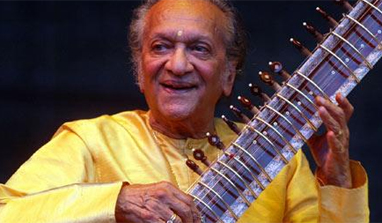
One of the greatest musical talents of our time was silenced Tuesday. Ravi Shankar died at 92.
His was a name I grew up with, a name that made me proud to be Indian at a time when my country was known mostly for human misery.
I read the sad news of Shankar’s death Tuesday evening in The Hindu newspaper and thought back to a time when I was still in high school in Tallahassee, Florida. Ravi Shankar was touring the United States and he was coming to Florida State University’s music school for a performance.
There were only a handful of Indian families in Tallahassee then and not much for us in the way of our culture. It was a rare treat for us to be able to hear the pandit play the sitar.
My mother was especially excited. She sang Rabindra Sangeet and played the taanpura, an Indian string instrument that resembles the sitar but has no frets.
Then came a phone call from the organizers of the Shankar event at FSU. The maestro was sick of eating steak and potatoes and had requested a Bengali meal in Tallahassee. My mother was asked to do the honors.
It wasn’t easy to make authentic Bengali food at home in those days because no stores carried fenugreek or mustard oil. Most people didn’t even know what cilantro was back then.
My mother did the best she could with her stockpile of spices purchased from New York wholesalers. I remember she began cooking days ahead so she could present dinner in Indian fashion — at least seven or eight courses and then several desserts. The Bengalis are known for their “mishti.”
Listening to Ravi Shankar was magical that night. I didn’t understand Indian classical music very well then. In fact, I was not unlike most Westerners who equated Ravi Shankar’s name with George Harrison and the concert for Bangladesh.
The great tabla player Alla Rakha accompanied Shankar’s sitar that night. When they arrived at our humble split-level house for dinner, I was in awe. I couldn’t believe I was sitting at the same table with these musical giants.
Later, I came to appreciate Indian classic music much more. Now I own many of Ravi Shankar’s music as well as that of his daughter, Anoushka.
But my lack of knowledge didn’t matter that night in Florida. Shankar’s music was mellifluous. Like a luscious silk sari fluttering in the wind. Like rays of sun peaking through clouds. It was, as the pandit himself said, music that is sacred.



 Love that we celebrate strength in a form of a woman. If only all women in India held such lofty status. Happy Durga Puja, everyone.


 Evil Reporter Chick