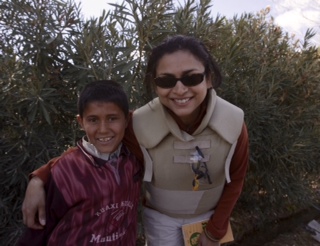
Remembering Ramadi as Iraq suffers again

Ramadi looked apocalyptic when the Sunni insurgency raged there in 2006.

I fought off tears as I read Sunday’s New York Times. The news from Iraq was horrifying.

A vicious civil war seems imminent as fighters from the Islamic State of Iraq and Syria (ISIS) point their guns toward Baghdad.

They are men who make al-Qaeda look like nice guys. And the Taliban, wimps.

They have taken over much of Nineveh province — Mosul, Iraq’s second largest city, and Tal Afar. They are now taking aim at Samarra and threatened to destroy a historic Shiite shrine there. An attack on that shrine in 2006 unleashed sectarian bloodshed. Entire neighborhoods in Baghdad and other places were ethnically cleansed.

I remember how hard it was after that to make amends.

I was in Anbar province when the Sons of Iraq program was just getting off the ground. It began with Sunni Sheik Sattar al-Rishawi who helped launch the Anbar Awakening, a movement to stop the extreme violence that had gripped Iraq’s only Sunni-majority province.

I patrolled with 1-9 Infantry soldiers who dubbed one neighborhood in Ramadi "the heart of darkness."
I patrolled with 1-9 Infantry soldiers who dubbed one neighborhood in Ramadi “the heart of darkness.”

Cities like Fallujah and Ramadi looked apocalyptic. I don’t think I saw a single building in Ramadi that had been spared from bullet holes.

I walked the streets of a Ramadi neighborhood called Melaab with Able Company of the 1st Battalion, 9th Infantry Regiment. The soldiers called the place “the heart of darkness.”

When I asked residents what it was like to live there, they glided their right index finger across their throats. Sunni insurgents brazenly beheaded people in public and distributed videos of the executions.

Ramadi, back then, was the perhaps most dangerous place on Earth. And it was widely believed that the sheiks of Anbar were supporting the insurgents.

Then they began withdrawing that tacit support. I sat with Sheik al-Rishawi’s brother, Ahmed, to understand why his family and others had come around to helping the Americans establish peace.

He showed me his camels (see the photo at the top of my blog), sipped sweet chai and told me the people were just weary from that kind of extreme violence. His own father and brothers were killed by Al Qaeda in Mesopotamia.

He invited U.S. commanders into his palatial home and talked strategy with them. Such friendships had seemed improbable just months ago but the sheiks were determined to bring peace.

From that movement came the Sons of Iraq. Insurgents who once pointed their guns at Americans and their Shiite brethren began to help keep the killing out of their territories. During the so-called surge in U.S. troops, the Sons of Iraq program was in full swing. The Americans paid them $10 a day to keep terrorism at bay.

When the Anbar Awakening first took hold, an uneasy calm came to Ramadi. I went to a polling station where people were voting in a city council election. Amazingly, there was no gunfire that day.

Outside, Capt. Jamey Gadoury, commander of 1-9 Inftantry’s Charlie Company, took his helmet and flak jacket off. We shared lamb and rice with community leaders and members of the Iraqi police.

There were three ways to deal with insurgents, Gadoury told me as he tore a piece of bread and scooped up a chunk of meat. “You either want to kill them, make them go away or get them on your side.”

“So what happened to the Sunni insurgents here?” I asked.

Gadoury stopped chewing and grinned, as though he were onto some awful secret.

“You’re eating with them, ” he told me.

I looked around and suddenly lost my appetite.

I think of my days in Anbar now as I read the tragedy unfolding in Iraq. All that ingenuity to befriend the enemy and make peace. Where did it all go?

Many have blamed Iraqi Prime Minister Nuri al-Maliki for stirring Iraq’s cauldron of ethnic strife. Others have blamed President Barack Obama for withdrawing U.S. troops prematurely.

I won’t go into all the reasons I think that violence has come back with a venomous vengeance — I’ll save that for a later post.

I will only say this: my heart is broken.

Memorial Day is not National BBQ Day


Arlington National Cemetery.

Occasionally, I pick up my iPhone and am pleasantly surprised to see an incoming call from a soldier I met in Iraq. The other night, it was Mike Brown, who helped train Iraqi security forces for a year in Baghdad.

He wanted nothing in general, nothing in particular. Just to say hello.

His call was a good reminder, just ahead of Memorial Day.

There’s a photo that went viral on Facebook and Twitter of a grill. The caption says: Memorial Day is not National BBQ Day. So true.

For many of us, the three-day weekend has become synonymous with the beach or hamburgers or a chance to get away. It means the start of summer, the start of lazy afternoons under a hot sun.

We are quick to forget the true meaning of the holiday.

Civil War depiction at Gettysburg National Military Park.

It used to be known as Decoration Day and was started after the Civil War to remember the thousands of Union and Confederate soldiers who died on bloody battlefields. Later, Memorial Day became a remembrance of all men and women in uniform who gave their lives for America.

Mike Brown served in the 48th Infantry Brigade of the Georgia Army National Guard, which lost nearly 30 soldiers in the year it spent fighting in Iraq. I covered memorial services for the 48th as well as other brigades in Iraq that lost almost as many soldiers. I attended too many services.

They were men and women who lost their lives too young. They left behind shattered families and communities. I think of them and all our servicemen and women this weekend and salute their courage. I urge all of you to do the same.

Iraq’s forgotten tragedy

I met Ahmad in 2007 in Nineveh province. I wonder how he is doing today. I don't even know if he is alive.
I met Ahmad in 2007 in Nineveh province. I think about him and all the people I met over the years in Iraq and wonder what their lives are like today.

I just read an excerpt from Peter Baker’s new book, “Days of Fire: Bush and Cheney in the White House. It’s being touted as the most comprehensive account of the Bush-Cheney years, at least until historical archives are opened to the public.

What’s clear from the book is that Cheney was a major driver of the Iraq War. And a  senior administration official is quoted as saying that America was looking for a fight, looking to kick someone’s ass.

So the Iraqi people paid the price.

I am looking forward to reading Baker’s book. I met him in Baghdad in 2002, when he was with the Washington Post and I was with the Atlanta Journal-Constitution. That was four months before the invasion and all foreign journalists were made to stay at the Al-Rashid Hotel — the one that had a mosaic of Papa Bush’s face on the entrance floor. You couldn’t enter the hotel without stepping on the presidential mug.

I read about Baker’s book today along with the latest media reports of more bloodshed. At least 43 people were killed Sunday. Dozens more were wounded.

A suicide bomber blew himself up in a crowded coffee shop in a predominantly Shiite neighborhood in southwest Baghdad, not too far from where I was in March when I was last in the Iraqi capital. Many of the victims were young men gathering to drink tea, smoke hookah and play games, officials told CNN.

Earlier, in mainly Sunni Anbar province, three attacks killed six people.

At least 350 people have been killed in October.

Take a look at these numbers compiled by the United Nations mission in Iraq. They are nothing short of shocking:

September: 887 killed; 1957 injured

August 2013: 716 killed; 1936 injured

July: 928 killed; 2109 injured

June: 685 killed; 1610 injured

May: 963 killed; 2191 injured

April: 595 killed; 1481 injured

March: 229 killed; 853 injured

February: 418 killed; 704 injured

January: 319 killed; 960 injured

Adding to the horror is a new survey that estimates the civilian death toll of the war to be much higher than believed — 500,000.

Yet Iraq is but a blip on the news. Iraqis are not a part of the global conscience, at least, certainly not a part of the American conscience.

My heart bleeds for Iraq. I think about friends I made there; how so many of them lead lives marred by hatred. It’s difficult to read about daily death and destruction now, more than 10 years after Bush and Cheney made the decision to attack.

Few American news outlets are covering events in Iraq the way they should be, I believe. It’s a mistake not to focus attention on the bloodshed. Terrible to ignore tragedy, worse to forget.

You can read my last story from Baghdad on CNN.

Every day is Memorial Day

John Alderman, who was captain of Mike's cavalry troop in Iraq, at the grave Thursday.
John Alderman, who was captain of Mike’s cavalry troop in Iraq, at the grave Thursday.

Thursday evening, I drove out to Loganville, Georgia. I suppose it’s not a tremendous distance from downtown Atlanta but during rush hour, it took me more than an hour before I turned right onto Georgia Highway 81, named the Michael Stokely Memorial Highway.

It was the eighth anniversary of Mike’s death.

He went to Iraq with the 48th Infantry Brigade and was killed by a bomb in the Iraqi town of Yusufiya. I covered his memorial service in Iraq and later, when I returned home, I wrote about his father, Robert Stokely, and how he coped with his son’s death. I visited Mike’s grave with Robert one year after Mike died. Friends and family gathered to remember the fallen soldier at the exact time of his death. 2:20 a.m. in Iraq.

Over the years, I kept in touch with Robert; quoted him in several of my Iraq stories and wrote a longer piece about his own journey to Yusufiya a couple of years ago. He felt he would never have closure until he touched the dirt where his son fell. That journey did not turn out as Robert had planned it but it was healing nevertheless. You can read the story on CNN.com.

Michael Stokely was killed in Iraq in August 2005.

I’ve always felt grateful to Robert for sharing the details of his punctured life. It’s important, I believe, for America to know it has helped others cope with their grief.

Not too many people showed up this year for the annual gathering at Mike’s grave. As Robert said, people move on with their lives. We said our hellos and made conversation. It had already rained Thursday and the clouds looked down at us with a threat of more to come. We talked about how it was unusually cool for August, almost chilly, how it has rained so much this summer that Robert didn’t have to buy gallon jugs of water to keep the grass green over Mike’s grave.

There was nothing formal about the gathering. Just family and friends remembering Mike and reflecting on the path our lives have taken.

Robert and me at a November screening of an HLN documentary about his trip back to Iraq.

Before I began covering the Iraq War at the Atlanta Journal-Constitution, I never called anyone in uniform a friend. But now I know many people in the military. Before, I was like many Americans who are oblivious to the toll of war. Not any more.

On the way home on 1-20, I thought about Robert standing on the ground above his son’s coffin. He asked everyone to remember the men and women who gave their lives fighting for their country. To many, he said, they are just soldiers. To us, they are sons, daughters, fathers, mothers, brothers and sisters.

Today is not Veteran’s Day or Memorial Day but for families like the Stokelys, every day is one of remembrance.

Silenced too soon

Michael and me at Camp Striker near the Baghdad airport in September 2005.

Michael Hastings died Tuesday in a car crash in Los Angeles.

The news hit me hard. He was 33. He was a great journalist. He was a friend.

Most people know his name for the Rolling Stone story “Runaway General,” the profile of Gen. Stanley McChrystal that exposed him as a loose cannon, chiding his civilian commanders in the Obama administration.

“Great reporters exude a certain kind of electricity,” said Rolling Stone Managing Editor Will Dana, “the sense that there are stories burning inside them, and that there’s no higher calling or greater way to live life than to be always relentlessly trying to find and tell those stories. I’m sad that I’ll never get to publish all the great stories that he was going to write, and sad that he won’t be stopping by my office for any more short visits which would stretch for two or three completely engrossing hours. He will be missed.”

Ben Smith, editor-in-chief of BuzzFeed praised Michael’s incredible instinct for a story. He also said this:

“Michael was also a wonderful, generous colleague, a joy to work with and a lover of corgis — especially his Bobby Sneakers.”

Michael was known for his aggressive reporting. He believed the wars in Afghanistan and Iraq were misguided and didn’t for a second let any U.S. official — whether it was McChrystal or Hillary Clinton — get away with an easy answer.

His fiancee, an aide worker, was killed in Iraq when Michael was a Newsweek correspondent. He wrote about that relationship in his first book, “I Lost My Love n Baghdad: A Modern War Story.”

I never met his wife,  Elise Jordan. I cannot imagine her grief today.

As much as I respect his journalistic prowess — I leave it up to every media outlet to give him the proper reporter’s eulogy — the Michael I will cherish the most is the one I met in May 2005 at a hostile environment training put on by AKE in Virginia. I was there with AJC colleagues. He was there, I guess, on his own, determined to make a career for himself by going to the wars America was fighting.

He entertained us with his NYC white-boy rap — he was really good — and acerbic wit. Not bad, I thought, for a 28-year-old kid.

Three months later, Michael messaged me. “I am in Baghdad,” he said. “Going to Camp Striker tomorrow. I hear you are there. Lunch?”

So we ate standard military fare at the chow hall and shared stories about being embedded with the U.S. Army. He made me laugh when I hadn’t laughed in weeks. For that I will always be grateful.

An incredible young man robbed of life. An amazing journalist who will never again be able to write all the words that were within. Or expose the world for its sins.

Goodbye, Michael. May you rest in peace.

Read Michael’s advice for young journalists.