It was six decades in the making, the fruit of a strong separatist movement that argued neglect by successive governments and finally succeeded in breaking off a chunk of land from Andhra Pradesh. The man who once went on a hunger strike in defense of Telangana, K. Chandrashekar Rao, became its first chief minister Monday.
The celebrations began Sunday night. Hyderabad, which will now serve as capital for both states, was awash in pink, the color of Rao’s party, the Telangana Rashtra Samithi.
India’s newly elected prime minister, Narendra Modi, hailed the newest state in the republic.
India gets a new state! We welcome Telangana as our 29th state. Telangana will add strength to our development journey in the coming years.
Amid the joy, however, there was reason for pause, especially among the citizens of Andhra who were against the carving up of their state. For economic reasons. For political reasons.
Proponents of Telangana argued that holding together different peoples under linguistic lines was silly; that it was better to have a more culturally cohesive state. Others pulled out proof that small states can prosper in India. The cited Uttarakhand and Chhatisgarh as examples.
It’s a good thing the two states will share Hyderabad, a city that was at the forefront of India’s high-tech boom and houses corporate giants like Infosys. I visited there in 2000 and remember being so impressed with the efficiency and cleanliness there compared to my hometown, Kolkata. Without Hyderabad, I worry Telangana might flounder.
I am always wary when states are split because I fear that it might lead to a deeper division of people. We certainly don’t need to add to that problem in India.
But now the deed is done. I hope for Andhra and its sister Telangana to both prosper. Only time will reveal if this was the right decision.
I worked for the Center for Participant Education at Florida State University and we had invited Angelou to speak on campus. I went with my friend Graciela Cuervo to fetch her at the Tallahassee airport, shook her hand and said: “Maya, I am so happy to finally meet you.”
She was a towering figure in so many ways. Even physically. She stood 6 feet tall.
She looked at me and said: “Ms. Basu, it’s Ms. Angelou.”
I was taken aback. I had not imagined her to be, well, so Diva-like.
She sent me all over town to find her an avocado sandwich. I moved her things from a west-facing room at the Holiday Inn because it was too hot. That night, at the event, I had to allow people to sit on the floor behind the podium on the stage — there were not enough seats in the auditorium. She didn’t like that and made it clear she didn’t. But on stage, she told everyone, in her resounding voice, how thrilled she was to be among them.
Others, including my friend Valerie Boyd, who curated the literary component of the National Black Arts Festival in Atlanta, have also spoken about how demanding Angelou could be. Journalist and writer A’Leila Bundles said she was dignity personified but sometimes haughty and over the top, according to folks who groused about the special items her contract required.
“Was the story about the rider requesting 30 year old cognac true or apocryphal?” Bundles asked. “That rumor, and the way she carried herself were the source of caricatures in recent years. How dare a little black girl speak with such precision and carry herself with such grace? Well, dare she did.”
If anyone had the right to be demanding, it was Angelou.
She grew up poor in a small Arkansas town, raised by a grandmother who assured a black girl in a brutally racist society that she was worthy, important and talented. She was pioneering in literature and wrote about the cruelty of Jim Crow like no other black woman had done before for wider audiences.
I was 16 when I read “I Know Why the Caged Bird Sings.” I was blown away.
Angelou gave voice to women of color. Her work continues to inspire generations of women, who, like me, drew from her words a strength to always live with pride.
The news of Angelou’s death spread quickly Wednesday. There are many obituaries and appreciations online. I urge you to read them, to learn more about a phenomenal woman.
Pretty women wonder where my secret lies. I’m not cute or built to suit a fashion model’s size But when I start to tell them, They think I’m telling lies. I say, It’s in the reach of my arms, The span of my hips, The stride of my step, The curl of my lips. I’m a woman Phenomenally. Phenomenal woman, That’s me.
I walk into a room Just as cool as you please, And to a man, The fellows stand or Fall down on their knees. Then they swarm around me, A hive of honey bees. I say, It’s the fire in my eyes, And the flash of my teeth, The swing in my waist, And the joy in my feet. I’m a woman Phenomenally.
Phenomenal woman, That’s me.
Men themselves have wondered What they see in me. They try so much But they can’t touch My inner mystery. When I try to show them, They say they still can’t see. I say, It’s in the arch of my back, The sun of my smile, The ride of my breasts, The grace of my style. I’m a woman Phenomenally. Phenomenal woman, That’s me.
Now you understand Just why my head’s not bowed. I don’t shout or jump about Or have to talk real loud. When you see me passing, It ought to make you proud. I say, It’s in the click of my heels, The bend of my hair, the palm of my hand, The need for my care. ’Cause I’m a woman Phenomenally. Phenomenal woman, That’s me.
Occasionally, I pick up my iPhone and am pleasantly surprised to see an incoming call from a soldier I met in Iraq. The other night, it was Mike Brown, who helped train Iraqi security forces for a year in Baghdad.
He wanted nothing in general, nothing in particular. Just to say hello.
His call was a good reminder, just ahead of Memorial Day.
There’s a photo that went viral on Facebook and Twitter of a grill. The caption says: Memorial Day is not National BBQ Day. So true.
For many of us, the three-day weekend has become synonymous with the beach or hamburgers or a chance to get away. It means the start of summer, the start of lazy afternoons under a hot sun.
We are quick to forget the true meaning of the holiday.
Civil War depiction at Gettysburg National Military Park.
It used to be known as Decoration Day and was started after the Civil War to remember the thousands of Union and Confederate soldiers who died on bloody battlefields. Later, Memorial Day became a remembrance of all men and women in uniform who gave their lives for America.
Mike Brown served in the 48th Infantry Brigade of the Georgia Army National Guard, which lost nearly 30 soldiers in the year it spent fighting in Iraq. I covered memorial services for the 48th as well as other brigades in Iraq that lost almost as many soldiers. I attended too many services.
They were men and women who lost their lives too young. They left behind shattered families and communities. I think of them and all our servicemen and women this weekend and salute their courage. I urge all of you to do the same.
By Friday afternoon, everything should become clear.
Who did more than 500 million voters choose to lead India? India’s day of reckoning is here. Election results will be announced soon.
All week, there has been so much speculation and interpretation of exit polls that my head is spinning. By all guesses, Narendra Modi of the Bharatiya Janata Party will become the next prime minister of my homeland.
Modi is known as a Hindu nationalist. He is controversial, polarizing. Under his watch, Gujarat suffered Hindu-Muslim carnage. But he also inspired voters who are fed up with the same old corruption and drudgery of government. For them, the Nehru-Gandhi dynasty and Congress stopped delivering, despite being the party of independence and freedom.
People in India are hungry for change. They grew disappointed after India failed to launch, as it were. How many people predicted India would be the next Asian tiger? But the growth slowed and India is still a poor nation that lags far behind rival China.
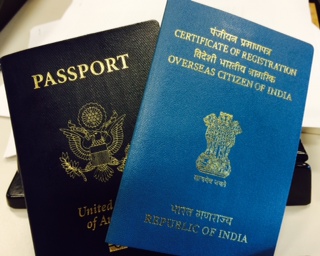
Today, I received my Overseas Citizenship of India certificate. With OCI status. I am entitled to most of the rights and privileges I once had as a citizen of India, except I can’t vote. I wished that I had been able to in this landmark Indian election.
I cannot say who I supported — I am a journalist, after all. But I can say this: I hope, for the sake of my homeland, someone steps in and cleans up government. I am done paying bribes and drowning in bureaucracy and dealing with inefficiency.
Voters in India get their fingers marked with indelible ink after casting a ballot.
Today was the last day of polling in India’s mammoth parliamentary elections. Five weeks of voting; Nine polling days; 814 million eligible voters; 543 Lok Sabha (lower House) seats.
From all the exit polling I’ve seen, it looks like the worst loss ever for the Indian National Congress, the party of Jawaharlal Nehru and Indira Gandhi that for so many years led an independent India.
But people are fed up with corruption and inefficiency. The polls show a huge victory in the making for Narendra Modi, a self-avowed Hindu nationalist.
Modi has been a controversial and polarizing figure in India. Hindu-Muslim violence under his watch in 2002 earned him the nickname, “The butcher of Gujarat.”
But Modi’s Bharaitya Janata Party is known as entrepreneurial and business-friendly. That’s why a lot of people I know in India voted for Modi in the election, the largest ever in the history of mankind.
Exit polls have been proven grossly wrong in the past in India. But still, it’s not looking good for Congress. I think there are big changes looming in my homeland.
My story on a home for the dying in Varanasi, India, came out on CNN.com today.
I spent a week reporting in the fabled holy city and was fascinated by its spirituality much more this time than I was on previous trips. Part of it was because I was reporting on faith. But another part of it was that I think I have transformed over the years; my rebellion against organized religion has mellowed.
As I have grown older, I have lost people who were close to me. My parents, aunts, uncles, cousins and good friends. I was in shock after I returned from India in February to the death of my colleague Lateef Mungin. He was 10 years younger than me.
That kind of loss makes you think about the things that are important in life and also about what happens to us after we stop breathing.
The people I spent time with in Varanasi were, for the most part, steadfast in their beliefs, though there is one man in my story who may surprise you.
I saw a remarkable film this past weekend. “Finding Vivian Maier.”
If you get a chance, see it. It’s well worth your times.
Vivian was an enigma. A puzzle that no one solved.
She worked most of her life as a nanny for wealthy suburban families in Chicago. And she had a Rolleiflex (and later, other cameras) around her neck almost all her waking hours.
She took thousands and thousands of street photographs. Of men, women and children. At parks, the beach, the stockyards, downtown. Her images are incredible yet she never showed them to anyone in her lifetime. She was a loner. Eccentric. Strange.
This is what the website about her says:
“Piecing together Vivian Maier’s life can easily evoke Churchill’s famous quote about the vast land of Tsars and commissars that lay to the east. A person who fit the stereotypical European sensibilities of an independent liberated woman, accent and all, yet born in New York City. Someone who was intensely guarded and private, Vivian could be counted on to feistily preach her own very liberal worldview to anyone who cared to listen, or didn’t. Decidedly unmaterialistic, Vivian would come to amass a group of storage lockers stuffed to the brim with found items, art books, newspaper clippings, home films, as well as political tchotchkes and knick-knacks. The story of this nanny who has now wowed the world with her photography, and who incidentally recorded some of the most interesting marvels and peculiarities of Urban America in the second half of the twentieth century is seemingly beyond belief.”
A young photographer and filmmaker, John Maloof, stumbled upon her works. He is determined the world know the talent of Vivian Maier.
Anja Niedringhaus, 48, an acclaimed photographer for the Associated Press, died instantly after an Afghan policeman opened fire while they were sitting in their car in eastern Afghanistan, the AP said. Correspondent Kathy Gannon was wounded and is in stable condition in hospital.
“Anja and Kathy together have spent years in Afghanistan covering the conflict and the people there. Anja was a vibrant, dynamic journalist well-loved for her insightful photographs, her warm heart and joy for life. We are heartbroken at her loss,” said AP Executive Editor Kathleen Carroll.
I did not know Niedringhaus, though I am familiar with her incredible body of work. But I can imagine what kind of woman she was. Her fortitude. Her courage. Her convictions.
Just yesterday, I spoke on a panel at the University of Georgia about reporting on trauma. There was some discussion there about journalists in conflict zones. One student asked me how journalists deal with fear.
I did not have a good answer for her because the fear never goes away. It’s a matter of not dwelling on it and getting on with your work. But then, when news of tragedy comes, like today’s from Afghanistan, it’s difficult to remain composed.
Here’s to all my colleagues working at this very moment in places near and far where they are in harm’s way. They make me proud of my profession.
A body lies on the steps of Manikarnika Ghat in Varanasi, where funeral pyres burn day and night. Concepts of death are very different in many Indian communities.
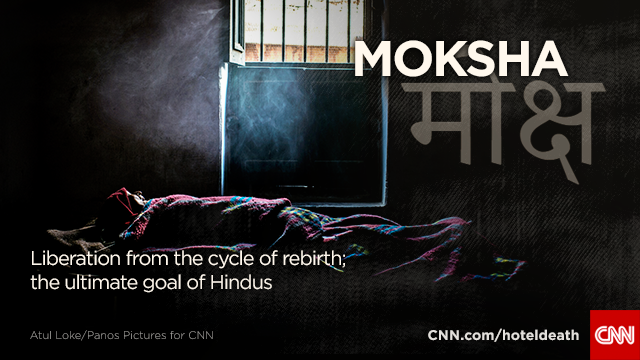
I’ve been immersed in writing about death after spending a week in Varanasi at a home where ailing, elderly Hindus go to end their lives. They want to die there because they believe dying within the boundaries of the ancient city of Kashi will mean moksha, or salvation for the soul.
The story — I will write more about that later — took me back to the deaths of my own parents in 2001. I cremated my father, Debabrata Basu, 13 years ago.
Every year, especially on March 24, I think about the events of that day. Of bringing his body home to our flat in Kolkata. Of going to Park Circus Market to buy garlands of marigolds and bouquets of white, fragrant Rajanigandhas (tuber roses). Of all the people who came to pay their last respects. Family. Friends. My father’s students and colleagues from the Indian Statistical Institute.
I think of how summer had already cut spring short that year. The temperature soared beyond 90 degrees as we made our way to the crematorium in Kalighat. I waited with my father’s body, under a hot sun. I felt exposed to the entire world, for seven hours. Time stood still then. I looked down at his gaunt face, his cold body. I touched his hand from time to time. Was it to make sure he really was gone? Physically, he was.
But his soul was free. He would be with me always, I thought.
I attended ‘Teef’s funeral at an African-American Baptist church in suburban Atlanta. Everything about it was so decidedly different than what I had seen at the cremation grounds in Kolkata and most recently in Varanasi. The way a body is laid out. They way we honor a person. They way we say goodbye.
In the last few days, death has again entered my life with the story of the missing Malaysia Airlines jet. I spoke with Mr. K.S. Narendran, whose wife. Chandrika Sharma, was on that flight. This is what he wrote to his friends last week:
I remain focused on what we have at hand by way of information, and stay with the knowledge that Chandrika is strong and courageous, that her goodness must count for something, somewhere. I carry firmly the faith that the forces of life are eternal, immutable and ever present to keep the drama ever moving. In the ultimate analysis, I am neither favored nor deserted. No one is.
I admired Mr. Narendran’s quiet strength and how he coped with the knowledge that his wife may never come back home. It was a stark contrast to the way many of us display our anxiety and grief.
We all have to come to terms with dying. We will all die one day. That is certain. But there is so much uncertainty about what happens afterwards, about what we believe happens to us after our physical presence on Earth has ended.
Do you believe in heaven? In hell? Do you believe we possess souls?
Hindus believe in rebirth. They see it as another cycle of testing for one’s soul. That’s why people go to Benaras to die. That’s why they take God’s name and hope for moksha that will put an end to that undesirable cycle. It is an alien idea for Christians, Jews and Muslims. But who’s to say?
I am not sure I will ever come to any concrete conclusions. But I do know this. I feel my parents’ presence within me. And that will never go away.
Khushwant Singh spared no one in his newspaper columns.
When I first started out in my career as a reporter, most of the journalists I admired were from America or Europe. There were very few English-language journalists in my homeland who really stood out. Khushwant Singh was an exception.
Singh died Thursday at his home in Delhi. He was 99 and by all accounts, he’d led an incredibly full life. Still, he will be missed in so many ways.
Singh was undeniably India’s most prolific writer. From countless newspaper columns to more than 100 books, Singh penned words that people remembered. He was uninhibited in his writing. Witty. Funny. Acerbic. His column was called “With Malice Toward One and All” and he made a reputation of sparing no one. He also was known for his love of poetry, something that endeared him to me.
Singh served as editor of several publications including The Hindustan Times in the early 1980s. They were positions that kept him surrounded by controversy. He was close to Prime Minister Indira Gandhi but that relationship soured after she instituted a state of emergency in India in 1975 and censored the press.
Singh even served in parliament — he was a member of the Rajya Sabha or upper house. But as a Sikh, he was deeply affected by the anti-Sikh riots after Indira Gandhi’s assassination. He received many honors, among them the prestigious Padma Bhushan, the third highest civilian award in India, which he later returned in protest of the Indian Army’s siege of the Golden Temple in Amritsar.
On Twitter Thursday, Indian Prime Minister Manmohan Singh called Khushwant Singh “a gifted author, candid commentator and a dear friend.. He lived a truly creative life.”
Writer and politician Shashi Tharoor tweeted this: “Mourning the passing of the irrepressible, inimitable Mr Original himself. A great loss for the world of ideas&letters.”
The letter Khushwant Singh wrote to Harmeet.
Singh was mourned by millions in India. Even Bollywood stars came out Thursday to say Singh had made their lives richer.
I never had a chance to meet Singh. I wish I had. But I wanted to share with you something my friend Harmeet Shah Singh posted on his Facebook page today.
Harmeet, now a producer in CNN’s Delhi bureau, was an up and coming journalist in 1998. He was looking for a break, took a chance and called Khushwant Singh. The latter took the time to write him back.
“He didn’t know me but wrote back to a cold call on this sweet 15-paise postcard,” Harmeet said.
That to me was so telling of Khushwant Singh’s greatness. That even after all those years, after establishing himself as India’s top journalist, he took the time to respond to a young man just starting out in the business. Believe me, this sort of stuff rarely happens in India.
Khushwant Singh, RIP. You are a man who was on the top of my list way back then. And you’ll always remain there.





 Evil Reporter Chick