Back to Baghdad

At the Roman ruins in Jerash, Jordan.

I felt small standing amid the Roman ruins in Jerash.

I marvel at the building accomplishments of people who lived so long ago; they intended to make structures last. How many slaves gave their lives in constructing magnificence not even an earthquake could fully take away?

I think of how I’d stood in this exact place more than a decade ago, when war seemed imminent in Iraq and I was in Jordan, waiting for a visa to fly into Baghdad. Just as I was now.

Time seems fleeting – and not.

Back in December of 2002, no one knew for sure what would become of Iraq. How George Bush would invade, drop bombs, send the world’s most powerful military in to destroy Saddam Hussein.

No one knew what would come next – a de-Bathification program that purged Iraq institutions of knowledge and expertise and left an occupying U.S. force with the daunting task of running a nation.

No one knew how American soldiers and Iraqi civilians would fall. One after another. In roadside bombings, firefights and attacks from an enemy that was often unseen. Or how Iraq would fall into chaos; Sunni fighting Shiite to the point that everyone assumed the worst of a civil war.

I stand under a cloudless sky in Jerash. It is late February but the chill that is normal for this time of air is gone. It is warm. The sun, bright. Like in Baghdad.

I will be there soon, 10 long years after the first time I visited.

saddam-hussein-picture-21Saddam’s face was everywhere then, a constant reminder of the consequences of stepping outside the boundaries of subservient Iraqi life. I remember clearly when I walked down the jetway from the Royal Jordanian plane at Saddam International Airport. “Down With the USA!,” it said. There was no mistaking where I had just arrived.

I was frightened and alone as I navigated my way through the maze of Iraqi controls for the foreign media. I was even afraid to close my eyes at night in my twin bed on a sixth-floor room at the Al Rashid Hotel. I knew someone was watching. Or listening. Or both.

On that trip, I met good people who had given up on life after years of conflict and punishing sanctions that robbed Iraq of material goods and normalcy of life.

A doctor who had no access to modern medicine, current journals or technology. A professor who sat under empty bookshelves – he had sold them all to feed his family. And a bookseller who hoped to make a living hawking outdated computer science books along with “the Great Gatsby” and “War and Peace” on the sidewalks of Al Mutanabi Street.

Where were they all now, I wondered? How their hopes must have risen an plunged like the tides of the oceans. I know I will probably not find them again now – after a decade of war, a decade of convulsion.

But I cannot wait to see Baghdad again. The way it was without American tanks and Humvees. I am anxious to see how the Iraqi capital is faring a decade after the war began and forever changed the course of Iraqi history.

I leave Jerash, my face pressed against the car window, all the way back to Amman. Soon I will be in Iraq, where I spent so many months of my life covering the war. In the midst of tragedy, I came to know a land that I loved in a way that is not always understandable. Perhaps it was because I saw the very best of humanity in conditions that were the worst.

Now I am eager to be there again.

WAR & Fashion

Carnage: Afghanistan, Iraq, Syria.

Catwalk: Armani, Balenciaga, Yves Saint Laurent.

War is ugly. Fashion is beautiful. War projects the worst of humanity. Fashion displays sartorial splendor in its highest.

War is fraught with danger, even for journalists and especially for photographers who must get up close to their subjects to frame an image.

Fashion is far less perilous, though photographers must also get intimate with their subjects on and around the runways.
There are photographers who shoot both: battlefields and runways, guns and glamour. At first, photographing war and fashion appear as incongruous acts that are difficult to reconcile. Until, perhaps, you take a deeper look.

Check out this provocative project on CNN. It was our Director of Photography Simon Barnett’s idea. I got to interview some very cool people for the story.  http://www.cnn.com/interactive/2013/02/world/war-and-fashion/index.html

Terezin

On my last full day in Europe back in Novemeber (yes, I meant to write this eons ago), I hopped on a bus in Prague for an hour ride northwest to Terezin.

Joseph II built the city in 1780 and named it after his mother, Maria Teresia. It served as a fortress to protect Prague from invaders.

But during World War II, the Germans occupied the city. Adolf Hitler told the world that Terezin had been built for the Jews for their own protection. There was even a Nazi propaganda film made there that showed how happy the Jews were to be taken to Terezin. The Nazis even invited the Red Cross to visit Terezin after which the organization determined that the Jews were being treated well.

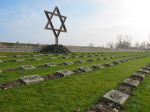
In reality, nearly 200,000 men, women and children were forced to the ghetto in Terezin. Many were taken from there to concentration camps and likely death.

The Czechs have tried to preserve the town’s history with a Ghetto Museum and tours through the town. I could feel the ugliness the moment I stepped off the bus in the town square. Yes, there were sure giveaways that it was the 21st century like the Stella Artois signs advertising a bar. But I could easily see how Terezin must have been in 1942.

The streets were largely empty. I guessed the houses must have gotten fresh coats of paint since the war but they stood as they were then, inanimate witnesses to acts of brutality.

This was a town of 5,000 people when the Germans drove the locals out. At the height of the war, 55,000 Jews were sent here. We saw in the museum exhibits how disease and starvation were rampant.

Still, many felt lucky to arrive at Terezin. This was not a Nazi extermination camp like Auschwitz-Birkenau or Treblinka. But many were sent there from Terezin.

Perhaps that’s why the town haunted me. That so many human beings sought refuge here and harbored hope in their hearts that they may live.

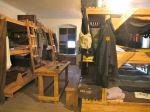
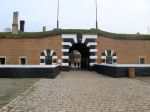
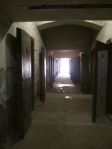
Just outside the town, in the old fortress, the Gestapo took over an existing a prison. I stood in the commandant’s office and stared at the sign in the courtyard: “Work makes you free.”

Here was a town with such an ugly past that I think many Czechs who were driven out to make room for the Jews, never returned. Why would they?

As the bus back to Prague meandered out of town, I pondered once again the breadth of inhumanity in this world. And why we should never forget places like Terezin.

Last U.S. soldiers leave Iraq

It was hard writing about the close of the Iraq war from so far away.Deadly Iraq war ends with exit of last U.S. troops
http://www.cnn.com/2011/12/17/world/meast/iraq-troops-leave/index.html#cnn

A long, divisive war will soon be over

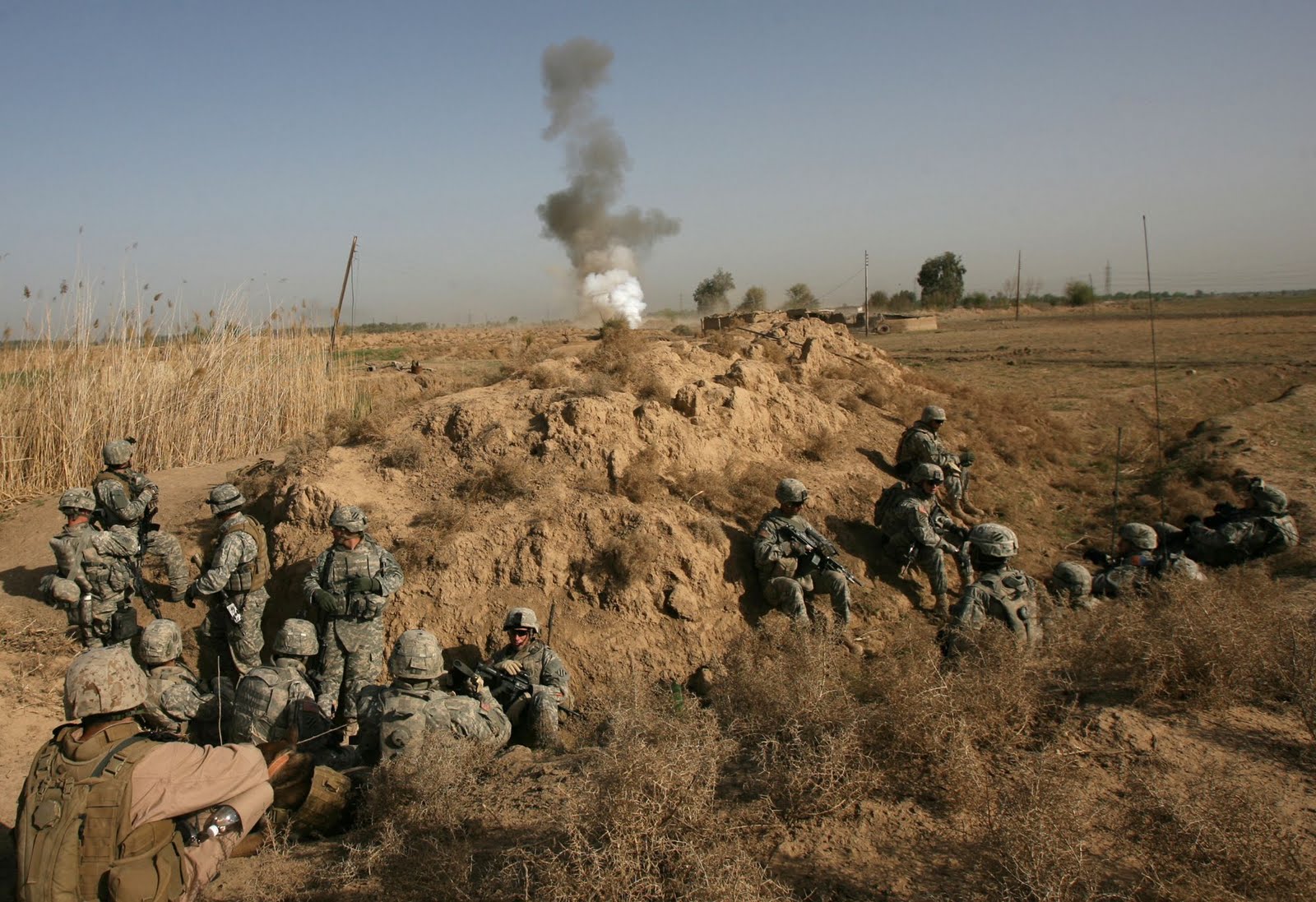
Georgia  soldiers patrolled western Baghdad in 2006

President Barack Obama made a stunning announcement Friday. The war in Iraq would be over in December when virtually all of the remaining 40,000 U.S. troops will pull out and come home

After nine long, divisive years, the Iraq war is finally coming to an end.

I am glad for all those troops who will come home before the holidays to hug their friends and loved ones. 
I am concerned about the future security of Iraq — many of my friends in Baghdad still live in fear.


And, I feel strange that the war will no longer be a headline. It has been so much a part of my life — from my first trip in 2002 under the controlled environment of Saddam Hussein’s information ministry to my last journey there with so-called surge units in 2008.


The night that the United States began “shock and awe,” it was pouring in Atlanta. I rushed in the rain to the Woodruff Arts Center from the Atlanta Constitution newsroom to cover a ceremony honoring Jimmy Carter’s Nobel Peace Prize.

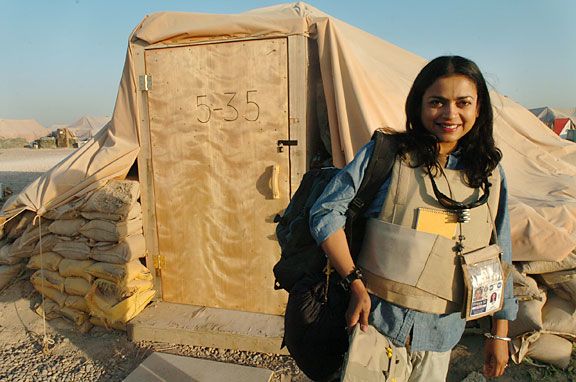
I lived in this tent for almost four months at Camp Striker in 2005.
I remember sitting there, amid nobly dressed ladies and gentlemen beaming with pride, taking in the pomp and ceremony of the evening.


But my mind was elsewhere.


I thought of my friends Salar Jaff and Hala Araim. Were they alright? Had they fled Baghdad? How many people were cowering in fear that night? How many suffered?


It was only a month later when I arrived in Iraq that I found the answers to my questions.


Less than a week after the U.S. bombing started, the 3rd Infantry Division’s 2nd Brigade Combat Team from Fort Stewart was about 100 miles outside the Iraqi capital. They had raced through the harsh Iraqi desert and were eying Baghdad, once the crown jewel of the Middle East.


I met up with some of them in April. Little did they know then how things would transpire in Iraq. In the first weeks of American occupation, the soldiers traveled in soft-skinned Humvees without fear of being blown up.


I thought about the first days of euphoria after the fall of Saddam as I listened to Obama from the CNN newsroom today. In another country not far from Iraq, the same kind of jubilation was unfolding on the streets.


Will Libya succeed in enforcing security so it can get on with the task of building democracy? Or will it turn into terror as Iraq did?


No one can answer such questions with any certainty, of course. We will have to wait and see.


In the meantime, to all my Iraqi friends and the many soldiers and Marines I met over the course of nine years: I raise my glass to your courage. 


War


Today is the eight anniversary of the Iraq war.

That fact got lost in all the breaking news, most significantly, the U.S. use of force against Libya.

It reminded me of George W. Bush’s intention to remove Saddam Hussein. The term “regime change” did not surface much but that’s essentially what’s going on in Libya, right? The United States would not be leading the charge against Moammar Qaddafi if he were a friendly fellow, even if he did fire on his own people.

Lost also in the news of the last week are the horrific events unfolding in Cote D’Ivoire, where a political crisis has spiraled downward rapidly into bloodshed. The United Nations has reported incidents of people burned alive. Others have had their throats slit. At least seven women were butchered earlier this month — the video posted online showed one who had been decapitated by the power of a big gun.

Crimson rivers are flowing in West Africa — and in the East. Sudan, Somalia. Yet we hear so little in the news.

I hope that Libya does not escalate or turn into protracted war in the same vein as Iraq or Afghanistan. And while that conflict is most urgent, I hope we will not turn away from human suffering in other parts of the world.

Leaving Iraq


The last of the 4,000 soldiers in the 4th Stryker Brigade, 2nd Infantry Division, crossed the border from Iraq into Kuwait Thursday. There are no U.S. more combat brigade teams left in Iraq. All is going seemingly well for President Barack Obama’s plan to pull to leave just 50,000 troops there by September.

Hard to think about how it was then.

By then, I mean seven years ago, when the United States invaded Saddam Hussein’s Iraq and U.S. soldiers deployed in droves.

In 2003, I looked at the American Humvees and Abrams tanks rolling through Baghdad. The soldiers wore aviator glasses and pointed their M-16s triumphantly. I stood among crowds of Iraqis and like them, pondered the course of history.

I did not know then that more than 4,000 of those soldiers would die in Iraq, along with thousands of Iraqis, many of them caught in the middle of dirty urban warfare.

By the time I returned as an embedded reporter in 2005, Americans ruled the landscape.

Camp Liberty was a sprawling American base with air-conditioning, movie theaters, stores, restaurants and other amenities the Iraqis lacked. Even now, Iraqis say they have no electricity or other basic services. A young lieutenant who was waiting to catch a plane with me on the military side of the Baghdad airport told me that if the Americans could deliver electricity, they would win the war.

In a way, he was right. By 2008, Iraqis asked me why the world’s superpower could not give them something as basic as power.

This year, protests erupted over the lack of power. In a land where temperatures soar to 120-plus in the summer, it’s hard to live without a fan. Only two-thirds of Iraqi have their electricity needs met — in Baghdad, it averages to four hours a day.

I thought about the day when I returned to my tent at Camp Striker and the AC unit had shut off. I sat on my cot dripping buckets of sweat and and tried to imagine life for Baghdadis outside the camp.

Seven years after the war, basic services are still a problem in Iraq.

So is insecurity.

Many people like to point to the drop in violence as a marker for success in the war. But my Iraqi friends still worry about stepping out with their children.

A car bomb exploded in Ramadi Wednesday night, killing two people. That may not sound like a lot compared to the height of the war when hundreds died each month. But when it is your husband or your mother, it’s everything.

Another 48 people died Tuesday in an attack outside a military recruiting center in Baghdad.

When will the killing end in Iraq? When the Americans are gone? When the Americans are still there?

When will the government be formed? It has been almost six months since the parliamentary elections and still there are no agreements on forming a new government.

“Iraq is still at the beginning of the story of its evolution since 2003,” Ryan Crocker, the former American ambassador to Iraq, told CNN.

I cannot pretend to be an expert on Iraq and pass judgment on this day being hailed as another milestone in post-Saddam history.

Today, I am in the comfort of my Atlanta home, thinking back to all the suffering I saw in the past.

I think especially of Dahlia, a young girl I met in the barren fields of dust and scrub near Nasiriyah. She was walking testament to her name: Dahlia. A bright flower in the midst of drab.

She wore a crimson and lemon yellow printed robe, her head was covered in a black scarf – at 10, she was old enough to respect the modesty taught by her culture. She stood barefoot in front of a lone U.S. Humvee that stopped before entering the gates of Camp Cedar.

Dahlia’s father was killed by Saddam, she told me. She never went to school — there were no schools nearby. She lived in a makeshift tent with her mother and brother.

I asked her what she wanted to do when she grew up. “Nothing,” she said, as though she knew her fate was bound to the bleak sands of southern Iraq, that she would never break out of poverty.

She thought for a while longer. “I want to work at Cedar.”

That was in 2006. The U.S. military closed Cedar shortly after I met Dahlia. Now so many more of those bases are gone.

No, today, I cannot share in the optimism of all those who hail Iraq a success. I think of the hundreds of Dahlias I met in the midst of war.

The Hurt Locker: Ouch


I’ll be watching the Oscars on Sunday night, though this year, I am not as excited as I usually am. I’ve only seen two of the movies nominated for best picture: Up in the Air and The Hurt Locker.

The former is an entertaining movie even though George Clooney is George Clooney solely because he looks like George Clooney and not because of any Oscar-worthy talent.

The latter had the makings of a great movie, but the director lost me on the very first scene when the words “Baghdad 2004” flashed on screen and American soldiers were seen wearing the digital green combat uniforms. Those uniforms, of course, were not issued until May 2005. I know this because I was embedded with the 48th Infantry Brigade, the first unit to receive the re-engineered fatigues.

The camera panned wide to show a neighborhood in Baghdad that I instantly recognized as Amman, Jordan. There are no rolling hills in the Iraqi capital.

From there, other inaccuracies skewed my judgment of good filmmaking. I thought director Kathryn Bigelow perfectly captured the tension and adrenaline rush that goes with war, specifically with the job of a bomb detection specialist. But the lead character, played by Jeremy Renner, is too much of a cowboy. There’s no way an EOD team leader would be able to run through the streets of Baghdad in a t-shirt and cammos and make it back to the gates of Camp Liberty and be allowed in without stern questioning and punishment. There’s no way, a lone Humvee would leave the gates without a convoy and find itself way out in the Iraqi desert in a showdown with snipers.

My soldier friends agree with me that The Hurt Locker is rife with errors. So do a lot of EOD veterans who have been interviewed by various media outlets including my own, CNN.

I realize that the movie is a work of fiction. But the Iraq war is so fresh that I felt the film lost credibility by not getting things right. It wouldn’t have taken much to correct those errors.

So while The Hurt Locker beautifully captures the addiction to war and what happens to soldiers who return to lives that seem mundane, the movie missed the mark with me.

I cannot hope that it trumps its contenders Sunday night. For the sake of truth. That’s just the journalist in me, I suppose.

About journalists and trauma

“Hey! Welcome back. How was Iraq?”

That’s something I heard often in the hallways of the Atlanta Journal-Constitution when I was freshly returned from war. But how do you answer such a question when the person who asked hasn’t even slowed their gait to listen. I mean, really listen.
So the answer, inevitably, went like this: “Iraq was great. Glad to be home.”
Keep moving.
Tonight, at the Atlanta Press Club, I have been asked to contribute to a discussion on journalists who cover traumatic events. I’m not sure what I will say because I’m not sure I have figured it all out.
I just know that after seven trips to Iraq, life became rather difficult to navigate at times. I felt lonely, cocooned really, thinking that no one here understood me anymore. I was frustrated to hear my friends speak of things I considered dull, irrelevant, inane. I wanted the paper to laud me for my heroic efforts. It didn’t. I considered every assignment boring — what could top a war story?
I saw rivers of blood in my dreams and when I awoke, I wanted to return there. It was the only place that had meaning.
I don’t know what I will say tonight. That, perhaps, is the entire point.
Covering These Troubled Times: What Journalists Should Know about Trauma


WHEN
Wednesday, November 4
6 – 6:30pm reception
6:30-7pm Screening: Breaking News, Breaking Down
7- 8:30pm Panel discussion

WHERE
The Commerce Club, 16th Floor
34 Broad Street Atlanta, GA 30303 Valet parking is available for $6 and is not included in the ticket prices. For directions, please visitwww.thecommerceclub.org/location.html. Because of limited parking at TCC, please consider using MARTA, whose Five Points station is across the street, or parking in nearby decks on Marietta Street.

R.S.V.P.
This program is open to the public. APC members and students receive complimentary admission to the event. Please R.S.V.P. so we know how many people to expect. Nonmembers may purchase tickets for $10. Tickets may be purchased by clicking the link below or by calling 404-57-PRESS. Payment must accompany reservations, and there is a 48-hour cancellation policy.

85,000

That’s how many Iraqis died in the war between 2004 and 2008. Iraq’s human rights ministry released that grim number a week ago.


We keep an exact count of the number of Americans who were killed in Iraq and Afghanistan. Or the number of British troops and other coalition members. But no one really counts the civilians. The children. The mothers. The grandmothers. They remain nameless, numbing numbers in headlines. “42 died in suicide bombing.”

“Outlawed groups through terrorist attacks like explosions, assassinations, kidnappings or forced displacements created these terrible figures, which represent a huge challenge for the rule of law and for the Iraqi people,” the ministry said.

“These figures draw a picture about the impact of terrorism and the violation of natural life in Iraq,” the ministry said in a draft report on deaths in Iraq.


But no one really knows how many Iraqis died.

The Iraqi government report was compiled with death certificates issued by the health ministry. What about all those people who never saw home again. Or whose families never reported a death out of sheer fear.

I know people who have lost loved ones and kept silent. One death in the family was enough.

Some Iraqis were killed by AK-47 fire, rockets, mortars, and bombs, otherwise known as improvised explosive devices. Some were abducted, stabbed or beheaded. In places like Ramadi, such gruesome acts were carried out in public places and in broad daylight.


The capital of al-Anbar province was once al-Qaida’s haven and an Iraqi citizen’s hell on Earth — the neighborhood of Melaab was known as “the heart of darkness.”

I asked Ramadi residents what life was like before the insurgency was quelled. They glided their right index finger across their throats. The insurgents brazenly beheaded people in public and distributed videos of the executions. Think of what kind of fear an ordinary Iraqi lived through. And still does.
The headlines these days report fewer incidents of violence.

But one bullet, one bomb — is all it takes.