Iraq’s forgotten tragedy

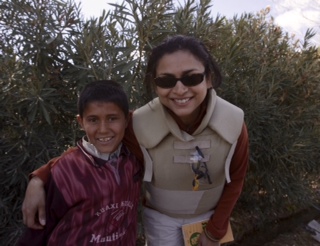
I met Ahmad in 2007 in Nineveh province. I wonder how he is doing today. I don't even know if he is alive.
I met Ahmad in 2007 in Nineveh province. I think about him and all the people I met over the years in Iraq and wonder what their lives are like today.

I just read an excerpt from Peter Baker’s new book, “Days of Fire: Bush and Cheney in the White House. It’s being touted as the most comprehensive account of the Bush-Cheney years, at least until historical archives are opened to the public.

What’s clear from the book is that Cheney was a major driver of the Iraq War. And a  senior administration official is quoted as saying that America was looking for a fight, looking to kick someone’s ass.

So the Iraqi people paid the price.

I am looking forward to reading Baker’s book. I met him in Baghdad in 2002, when he was with the Washington Post and I was with the Atlanta Journal-Constitution. That was four months before the invasion and all foreign journalists were made to stay at the Al-Rashid Hotel — the one that had a mosaic of Papa Bush’s face on the entrance floor. You couldn’t enter the hotel without stepping on the presidential mug.

I read about Baker’s book today along with the latest media reports of more bloodshed. At least 43 people were killed Sunday. Dozens more were wounded.

A suicide bomber blew himself up in a crowded coffee shop in a predominantly Shiite neighborhood in southwest Baghdad, not too far from where I was in March when I was last in the Iraqi capital. Many of the victims were young men gathering to drink tea, smoke hookah and play games, officials told CNN.

Earlier, in mainly Sunni Anbar province, three attacks killed six people.

At least 350 people have been killed in October.

Take a look at these numbers compiled by the United Nations mission in Iraq. They are nothing short of shocking:

September: 887 killed; 1957 injured

August 2013: 716 killed; 1936 injured

July: 928 killed; 2109 injured

June: 685 killed; 1610 injured

May: 963 killed; 2191 injured

April: 595 killed; 1481 injured

March: 229 killed; 853 injured

February: 418 killed; 704 injured

January: 319 killed; 960 injured

Adding to the horror is a new survey that estimates the civilian death toll of the war to be much higher than believed — 500,000.

Yet Iraq is but a blip on the news. Iraqis are not a part of the global conscience, at least, certainly not a part of the American conscience.

My heart bleeds for Iraq. I think about friends I made there; how so many of them lead lives marred by hatred. It’s difficult to read about daily death and destruction now, more than 10 years after Bush and Cheney made the decision to attack.

Few American news outlets are covering events in Iraq the way they should be, I believe. It’s a mistake not to focus attention on the bloodshed. Terrible to ignore tragedy, worse to forget.

You can read my last story from Baghdad on CNN.

Fifty-one

meandma2I turned 51 today.

Last year was the milestone year. The big 50. I felt OK about it. 50 is the new 40, my older friends told me. I celebrated with a big party. My brother came from Canada, my cousin from New York. My sisters-in-law traveled great distances, too. Then everyone went home and life resumed, no different, really, than before.

Today is different.

Not that suddenly, I feel old. Or that there is no hoopla this year.

Today is different for one very important reason.

My mother suffered a massive stroke in 1982. On my birthday. She was 51.

That day changed our lives in so many ways. You can imagine all the obvious ways: my mother was in a coma for days in the Intensive Care Unit at Tallahassee Memorial Hospital and when she regained her senses, the left side of her body no longer worked. There were months and months of physical therapy for my mother. And even more months of adjustment for me and my family while we learned how to take care of an invalid, infirm woman.

She’d also lost a lot of her cognitive abilities and the mother I adored was suddenly gone. She was there in person, physically. But the woman I knew died on that day.

Over the next 19 years that she lived, I learned to relate to my mother on a whole new level. In the end, when my father also cruelly lost his cognitive abilities to Alzheimer’s, my mother became like my daughter. She’d ask me what she should wear, what she could eat. If anyone asked her a difficult question, she’d consult me before answering publicly. We exchanged roles.

My mother died in May 2001. I had to deal with her dying all over again. Except this time, there was nothing left of her at all. She was gone.

I’ve always feared turning 51. I feared it even more after I learned I was prone to hypertension — my mother’s blood pressure had soared to obscene levels before the stroke.

So on this day, I contemplate my mortality. And want desperately to make time stop so that I can have the opportunities to accomplish all that is left on my long, long list of things to do, places to see. It’s not that I want to be young again — I greatly value the wisdom time and experience have given me. Just that I feel the days whizzing past like speeding bullets.

Like everyone else, I want to feel that I did something good for this world. Now there are fewer days left for me to achieve that.

Phir bhi dil hai Hindustani

One reason I miss India terribly: my pishi (aunt).

“When did you get home?” a friend asked me yesterday.

“Last night,” I replied.

“It must feel good to be back,” she said.

The pause on the phone was long enough to be awkward.

“Yes,” I said. I wanted the conversation to end.

But what was home? That word has always been problematic for me. I have always straddled two continents, two cultures, a feat that becomes hard at times like this.

My closest friend Eugene in Kolkata and I used to discuss for long hours what being home meant. Was it in Atlanta, where I have lived for 23 years, where I work, where I laugh and love? Or is it in my native India, where I am not an “other” or a minority, where I can bask in my Indianness, where I am in my element like I can never be in America?

After my parents died in 2001, going “home” to India became emotionally exhausting. Kolkata was not the same without my Ma and Baba waiting for me at our flat on Ballygunj Circular Road. Some of my trips after that were short — I was but a tourist on a fleeting journey. Others were punctuated by weddings and funerals and other events that made them extraordinary.

This time, it was different.

Another reason I miss home: the incredible food.
Another reason I miss home: the incredible food. This is Sunday lunch at my aunt’s house in Delhi.

I spent a lot of time with my father’s sister, my pishi, in Kolkata and his brother and his wife in Delhi. My uncle and aunt are the only two of my father’s seven siblings who are still living. Three of my aunts and uncles died in painfully rapid succession in the last year and a half.

I felt a need to soak up my family as much as I could.

I was also on assignment for CNN for part of the time I was home. I found it refreshing to report on my own people for a change and to work alongside Indian journalists.

Now, I am back at my desk at CNN Center in Atlanta. I look at the sun and think that it also shone over India today, many hours earlier. I smell India in my notebooks and clothes and long to make that long plane journey back.

I am an American by nationality and in many ways, by identity. Yet my heart remains Indian. Phir bhi dil hai Hindustani. 

Can A White Guy Lead An Organization Founded For Journalists of Color?

Can A White Guy Lead An Organization Founded For Journalists of Color?.

via Can A White Guy Lead An Organization Founded For Journalists of Color?.

Vivek Singh

vivek

I just returned from a short trip to a part of central India that was previously unfamiliar — Gadchiroli District in the state of Maharashtra. I was there to report a rape story for CNN and traveled with CNN cameraman Sanjiv Talreja and producer Harmeet Shah Singh.

Photojournalist Vivek Singh also accompanied us. He’s a freelancer based in Delhi and we’ve used his work on CNN’s photo blog. I edited the text that ran with an amazing gallery about rising tensions between Bodo tribespeople and Bengali Muslims in northeastern India. It was refreshing to see journalism from India that goes far beyond the breathless and sensational stuff that is common in the media here.

Vivek’s work is hauntingly beautiful. Powerful. Sometimes stark in black and white. It’s difficult to take your eyes off his images. I was lucky he was able to make it to Gadchiroli with us.

Check out Vivek’s work here:

http://www.viveksinghphotography.com/#/home?i=1710

Casualty

HeaneySeamus Heaney died today. The New York Times headline described him as “Irish poet of soil and strife.”

I don’t pretend to always understand poetry though I savor it. I am always awed by how poets use language in such an artful way. My favorite poet of all time remains Pablo Neruda, who is simply magical to me. Seamus Heaney was another writer I have admired for a long time.

The world has lost another terrific writer today.

Here is my favorite verse by Heaney from his poem, “Casualty.”

It was a day of cold
Raw silence, wind-blown
surplice and soutane:
Rained-on, flower-laden
Coffin after coffin
Seemed to float from the door
Of the packed cathedral
Like blossoms on slow water.
The common funeral
Unrolled its swaddling band,
Lapping, tightening
Till we were braced and bound
Like brothers in a ring.

Purse paradise

Many years ago, I walked through the Bata Shoe Museum in Toronto, mesmerized that the history of mankind could be told through footwear — from caveman to Christian Laboutin. I was fascinated, given my penchant for shoes. (Yes, I have way too many.)

So when I stumbled upon the Tassen Museum Hendrikje in Amsterdam recently, I had to go in. Housed in a beautiful old building on Herengracht, the museum pays homage to, what else, handbags. It’s not as extensive as the shoe museum but tells a 500-year-history of handbags and purses in the Western world. Through bags, you get a good idea of how social norms changed for women.

And the museum shop is terrific if you are in the market for a good bag.

The Fourth of July

Frederick_Douglass_portrait_900x6002
Frederick Douglass: “This Fourth July is yours, not mine. You may rejoice, I must mourn.”

On the Fourth of July, I ask you:

Should African-Americans celebrate this day? They were slaves when the Declaration of Independence was crafted. Should Native Americans celebrate this day? The white man obliterated them from their lands.

Or perhaps the right question to ask is: How should people of color celebrate American independence? The answer is varied and often, personal.

I am proud to have become an American citizen. I love this country.

But I also understand its brutal history of racism. I know that this day means many things to many people.

Here is Frederick Douglass on the “Meaning of July Fourth for the Negro:” http://www.historyisaweapon.com/defcon1/douglassjuly4.html

I’m living in twilight

phone“Oh, oh Telephone Line, give me some time, I’m living in twilight.”

That was Electric Light Orchestra singing a song about a man wishing his love would just pick up the phone. Back then, it was probably a phone that looked a lot like this one at the Grove Park Inn in Asheville, North Carolina.

I was so happy to see it, one among an entire row of them hanging on a wall. I didn’t really need to call the front desk but I did anyway. Just to pick up the shiny black hand-set and say: “Hello.”

I miss old-school telephones. I miss them at airports and in booths along the street. Sure, I use an iPhone. But I don’t enjoy chatting on end on a mobile device. I used to do that with a regular phone, one that was attached with its own umbilical cord to the earth.

To quote ELO again (what’s come over me?): “I just can’t believe … They’ve all faded out of view yeah yeah yeah yeah yeah. Doowop dooby doo doowop doowah doolang.

Eat your heart out, Travis Bickle

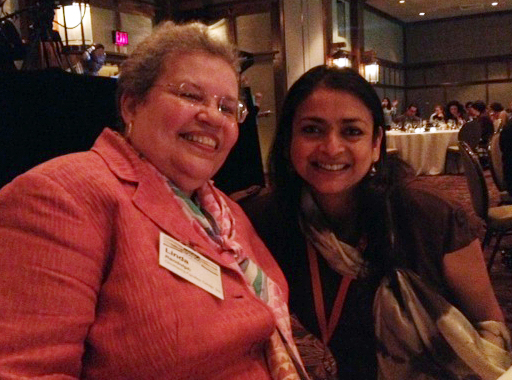
Meet Linda Randolph. Her resume is impressive.

Public health pediatrician. Graduated from Howard University College of Medicine and the School of Public Health in Berkeley, California. She is president and CEO of Developing Families Center, Inc., a non-profit in Washington D.C. that serves low-income women of child-bearing and child-rearing age and their families. She has been recognized for her sensitivity and commitment to the complex needs of poor women, especially those of color. She’s been doing this sort of work for years — three decades to be exact.

I had the privilege of sitting next to her at dinner one night last week at the America Healing conference, sponsored by the Kellogg Foundation. Randolph nibbled on a slice of prime rib and mashed potatoes. Somehow the conversation migrated from maternal outcomes to the day that Randolph will retire.

Linda Randolph and I had dinner together at a racial healing conference last week.
Linda Randolph and I had dinner together at a conference.


“What will you do?” I asked. “Will you stay in Washington?”

Randolph is a native of D.C.

I wasn’t expecting the answer I got.

“I’m going to move to New York and drive a taxi.”

Whoah. Seriously?

Randolph said there were few women who drove taxis in NYC. She wants another cabbie to glance her way and take a good look when she’s behind the wheel of a yellow cab.

And she’s gonna make sure it’s a taxi with manual transmission.

She loves to drive stick-shift. More than 40 years ago, when she was still young and impressionable, Randolph drove from New York to San Francisco with a friend. He was from Costa Rica and had never shifted gears. But never mind that. They took turns at the wheel: 4 hours each. They drove like the wind and made it to the Pacific in 3 and 1/2 days.

So that’s what Randolph looks forward to. Out performing badass cabbies in the city known for them. I guessed her cabbie days were fast approaching. But how long would she work as a driver? She’s 72 now. Didn’t she want a few years of rest and relaxation?

Well, she said, her mama lived to see 99.

“When she died, she didn’t have a wrinkle on her face.”

Here’s to you, Dr. Linda Randolph, full of life and and now a source of inspiration for me. Here’s to you and many good years as a taxi driver.