Back to Haiti


I returned to Port-au-Prince yesterday.

Before January, it was a city known to me only through books and a few films and of course, the news – always bad news. But CNN sent me to Haiti to report on the aftermath of the earthquake. And my eyes were opened to a whole new world.

I saw Haiti for the first time after devastation and suffering of epic proportions. I regretted that I had not seen it before.

But before in what? “Normal times?” What were normal times for Haiti? This country has been through more turmoil and pain than any other nearby.

In news stories, you see phrases like “the most impoverished nation in the Western hemisphere.” You see on CNN that Haiti’s comeback will be that much more difficult because of lack of government, lack of system, lack of everything.

When I was there in January and February, I worked closely with a CNN producer, Edvige Jean-Francois. She taught me to see Haiti the way it ought to be seen – outside the American lens. She showed me the richness of culture, the wealth of Haiti. Not in monetary terms, but in other ways that matter.

Now, almost four months later, I am back.

I still see uncleared rubble and buildings teetering on the verge of collapse. But the smell of death has gone. There is no longer that dazed look on people’s faces – the look you have after you have lost everything, when you haven’t yet distilled the horror that has befallen your homeland.

On the way from the airport, I saw school children wearing bright checkered uniforms. I knew then that Haiti was progressing. Slowly, perhaps. But moving forward.

Sisters


I don’t have a sister, though sometimes, in my childhood, I got a taste of what that might be like because we lived among extended families. The line between a cousin and a sister quickly blurred.

But I longed for the sister I never had.

Like Elizabeth and Jane Bennett in “Pride & Prejudice.” Or even the dysfunctional variety in “Rachel Getting Married.”

I wanted to share clothes and the heart’s innermost secrets. Wanted to whisper into the night until we both fell asleep. Wanted someone to be there. Always.

So when Deirdre came to visit Eileen, I went to see the Drennen girls. Of course, I enjoy spending time with them — I have known Ei for almost three decades and first met Deirdre in the mid-1980s when she came to visit Ei in Tallahassee. I gave her one of my salwar kameez suits. It looked grand on her, I thought. She was so thin and tall and pretty.

Eileen has four sisters. I have always been jealous of that. But she gels perfectly with Deirdre. Unmistakably sisters. One comforts the other — always has, in times of divorce, illness and the darker things in life that take us down.

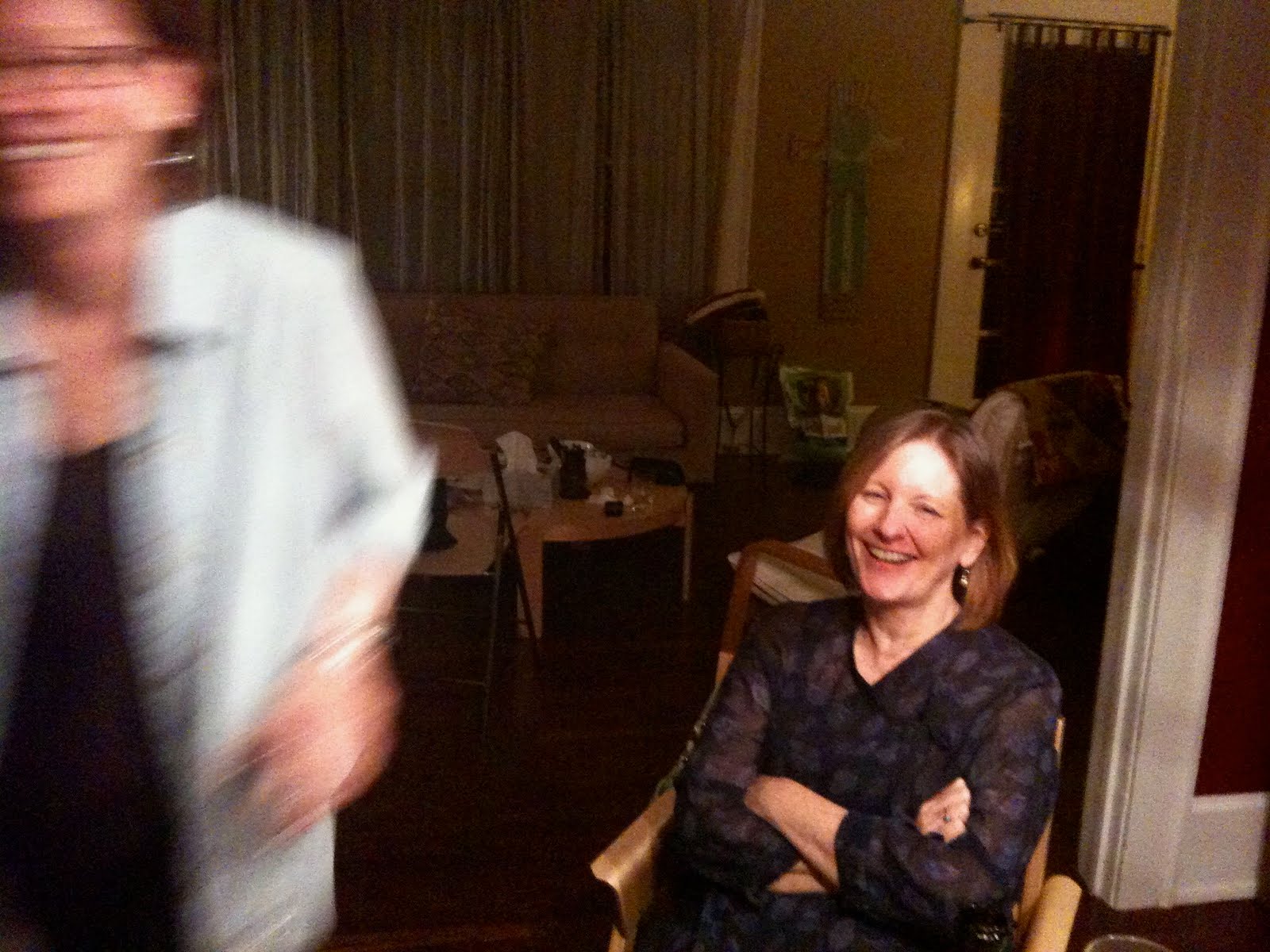
We sat around the living room table and talked. And talked. For a few moments, I pretended. Sisters, we were.

And at 10:30 at night, when the Drennen girls realized their bellies were empty and the groceries were still intact, we piled into the kitchen to fix a fattening concoction of macaroni with Swiss chard, cheese and more cheese.

How divine.

Tallahassee

I graduated from high school in 1979. Never been to any of my reunions. I earned a master’s degree in 1983. Never attended any college alumni functions either. But last week, I drove down to Tallahassee to see old friends from my first newspaper, The Florida Flambeau. (see post below)

A few of those people are my best friends and I see them often. Others, I had not seen in more than 20 years.

Some looked just the same. Some had changed quite a bit. It was lovely to see everyone again, though it served as yet another reminder of how fleeting time is; how fleeting our lives really are. Two decades, gone like that.

I got in my car on a sunny afternoon and drove past my old house, campus watering holes, restaurants, shops. Past Live oaks and Spanish Moss. On Park Avenue, Tennessee Street, Magnolia Avenue, Lake Ella, the Miracle Theater, Governor’s Square Mall, Chez Pierre, Maclay Gardens.

My father, a professor of statistics, settled our family in Tallahassee in 1976. We arrived there from Perth, Australia and cried for three months. A town in the Deep South was a tough adjustment after having lived in cosmopolitan cities around the world. But I ended up living 14 years of my life in Tallahassee. It became home.

It was where I grew to womanhood, married and divorced, committed all of life’s mistakes. It was the place that shaped me, helped make me whom I am.

There were memories swirling in my head that made that time feel like it was just yesterday. And yet, some sights felt so distant, as though it were almost someone else’s life.

The reunion weekend flew by. But now I have fresh memories of a time, a place and people to cherish — as life keeps whizzing by.

For Chile

This weekend, as Chile suffered the wrath of an enormous earthquake, I reread one of my favorite poems by Chilean poet Pablo Neruda.

Ode to Broken Things

Things get broken
at home
like they were pushed
by an invisible, deliberate smasher.
It’s not my hands
or yours
It wasn’t the girls
with their hard fingernails
or the motion of the planet.
It wasn’t anything or anybody
It wasn’t the wind
It wasn’t the orange-colored noontime
Or night over the earth
It wasn’t even the nose or the elbow
Or the hips getting bigger
or the ankle
or the air.
The plate broke, the lamp fell
All the flower pots tumbled over
one by one. That pot
which overflowed with scarlet
in the middle of October,
it got tired from all the violets
and another empty one
rolled round and round and round
all through winter
until it was only the powder
of a flowerpot,
a broken memory, shining dust.
And that clock
whose sound
was
the voice of our lives,
the secret
thread of our weeks,
which released
one by one, so many hours
for honey and silence
for so many births and jobs,
that clock also
fell
and its delicate blue guts
vibrated
among the broken glass
its wide heart
unsprung.

Life goes on grinding up
glass, wearing out clothes
making fragments
breaking down
forms
and what lasts through time
is like an island on a ship in the sea,
perishable
surrounded by dangerous fragility
by merciless waters and threats.

Let’s put all our treasures together
— the clocks, plates, cups cracked by the cold —
into a sack and carry them
to the sea
and let our possessions sink
into one alarming breaker
that sounds like a river.
May whatever breaks
be reconstructed by the sea
with the long labor of its tides.
So many useless things
which nobody broke
but which got broken anyway.

It’s never too late to be what you might have been


I met Mariot a few days after I arrived in Port-au-Prince. He was one of several drivers retained by CNN.

Mariot spoke English well, and often, on our long days out, we’d carry on conversations. About his life — before and after the earthquake. I quickly figured out that he was special.

His full name is Jean Mariot Cleophat. He was born in 1983 in Bainet, a town in southern Haiti. His father was killed in 2000 in a burglary; Mariot lived with his mother, a brother and two sisters in the Haitian capital.

Life was not easy before tragedy struck January 12. He never attended schools, he told me. When he was nine, his grandmother began teaching him to read and write. He is fluent in his native Kreyol. He learned French and said he wanted to perfect his English. One day, he said, he wanted to write a book in English, one that would make it on the New York Times bestseller list.

He told me he owned more than 2,000 books and once things had settled, he planned to dig under the rubble of his house to find them. It was the second time his family had lost their possessions. A hurricane wiped out their house in Gonaives in 2004. That’s what brought them to Port-au-Prince.

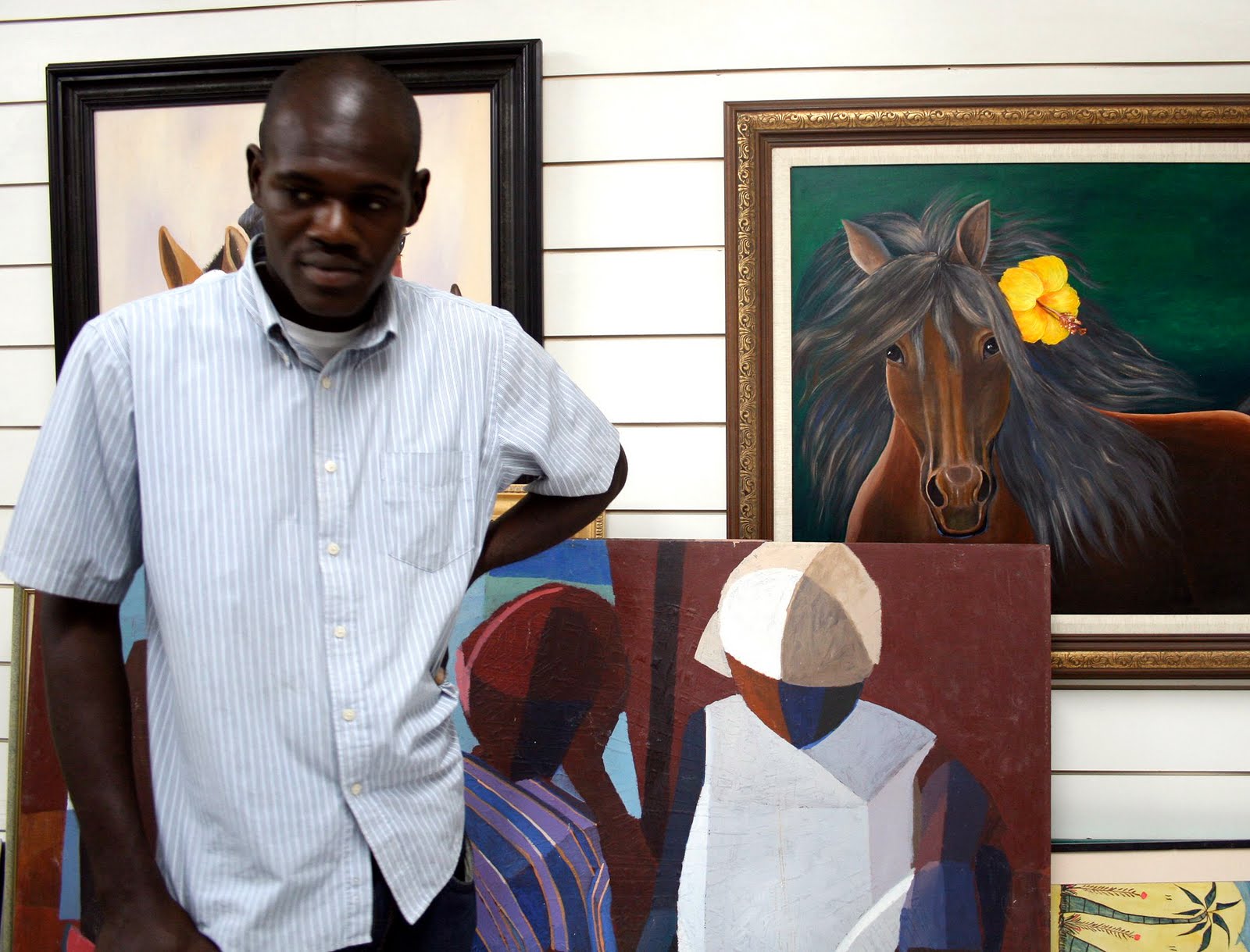
Mariot considered himself lucky to have landed a job, albeit temporary, with CNN. He liked acting as our guide, our translator. He met people he would have otherwise not met, saw places he had not seen before. In this photo of him, he is standing inside Gallerie Nader, one of the best known art galleries in Port-au-Prince.

He said he felt thankful to God that his family had survived the earthquake. He saw dead people in his dreams and when he was awake, he thought about the many friends he would never see again.

Still, he never gave up his will to succeed.

“It may be stormy now, but it can’t rain forever,” he wrote in an e-mail this week.

One day, as we drove back down to central Port-au-Prince on a winding hillside road, Mariot told me that reading was what sustained him through everything. He was upset that the library had collapsed and he could no longer check out books there. He liked history and philosophy. He read about Abraham Lincoln and Benjamin Franklin. He admired Mahatma Gandhi and asked me about my native India.

“It’s never too late to be what you might have been,” he said, quoting Gandhi.

“The past is behind you, learn from it,” Mariot continued. “The future is ahead, prepare for it. The present is here. Live it.”

“Do you know that quotation?” he asked.

I nodded my head, in awe that a Haitian man who had never gone to a single day of school could quote Gandhi this way. I don’t know that many Indians who could do the same.

Mariot dropped me at the Plaza Hotel and I knew he would be going back to his family, surviving in a makeshift tent nearby. I knew that he would arrive again the next morning, in a freshly laundered shirt and a big smile on his face.

SOS


There are things that one remembers about a place. Things that are clear and fresh, even many years later when memories of the most obvious have faded.

I find this to be especially true about tragedy. I have photographic recall of certain events and people in India, in Iraq — and now in Haiti.

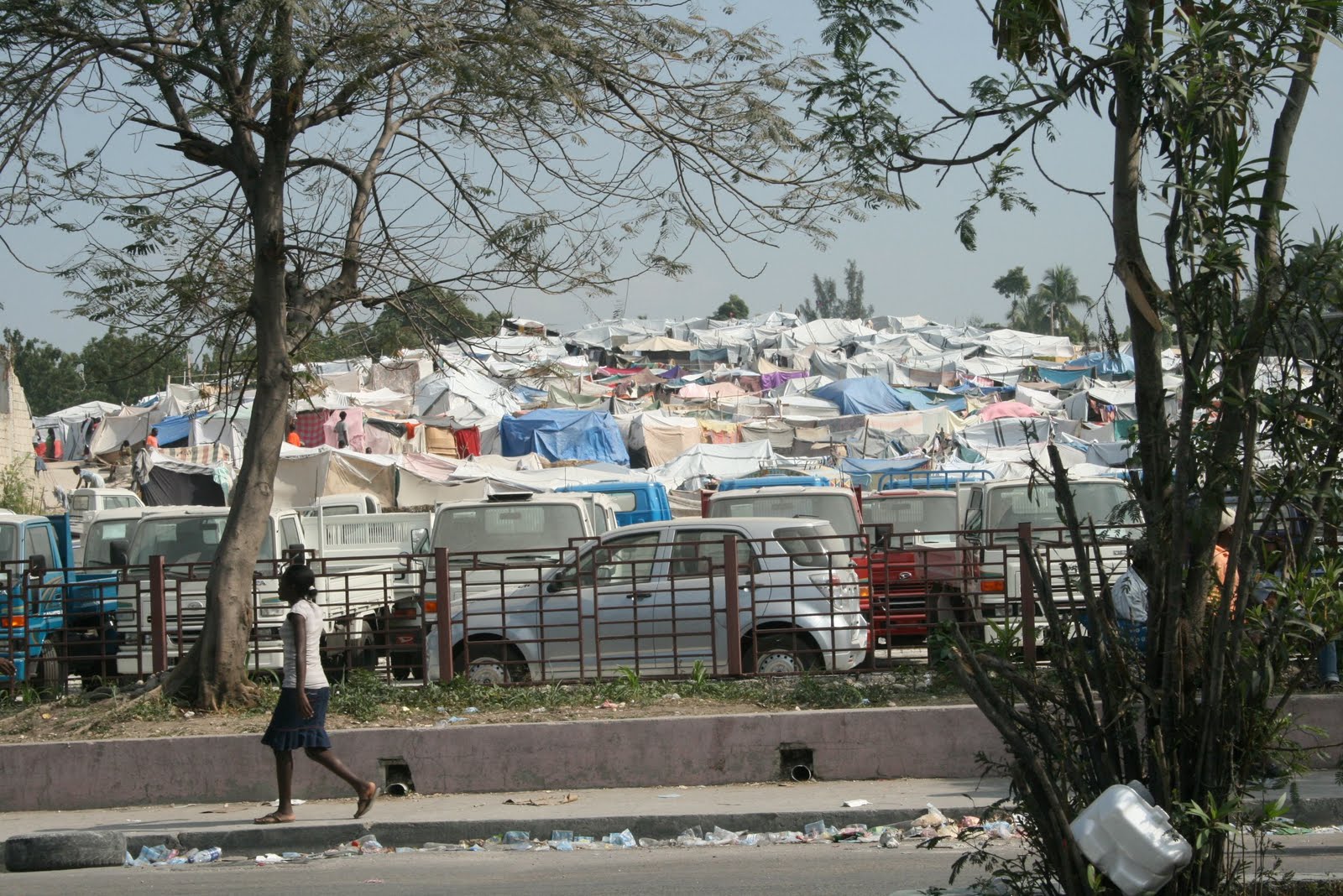
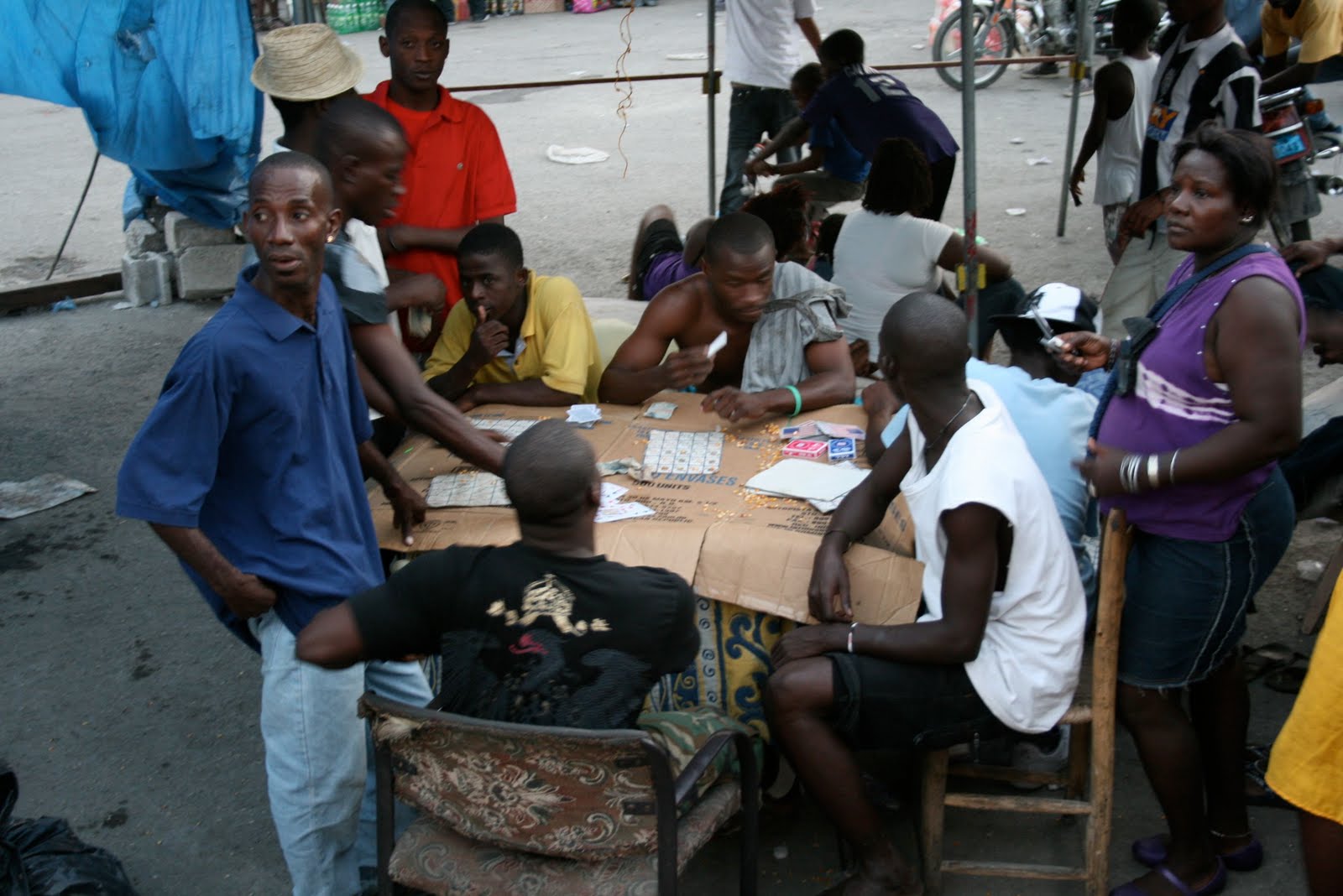
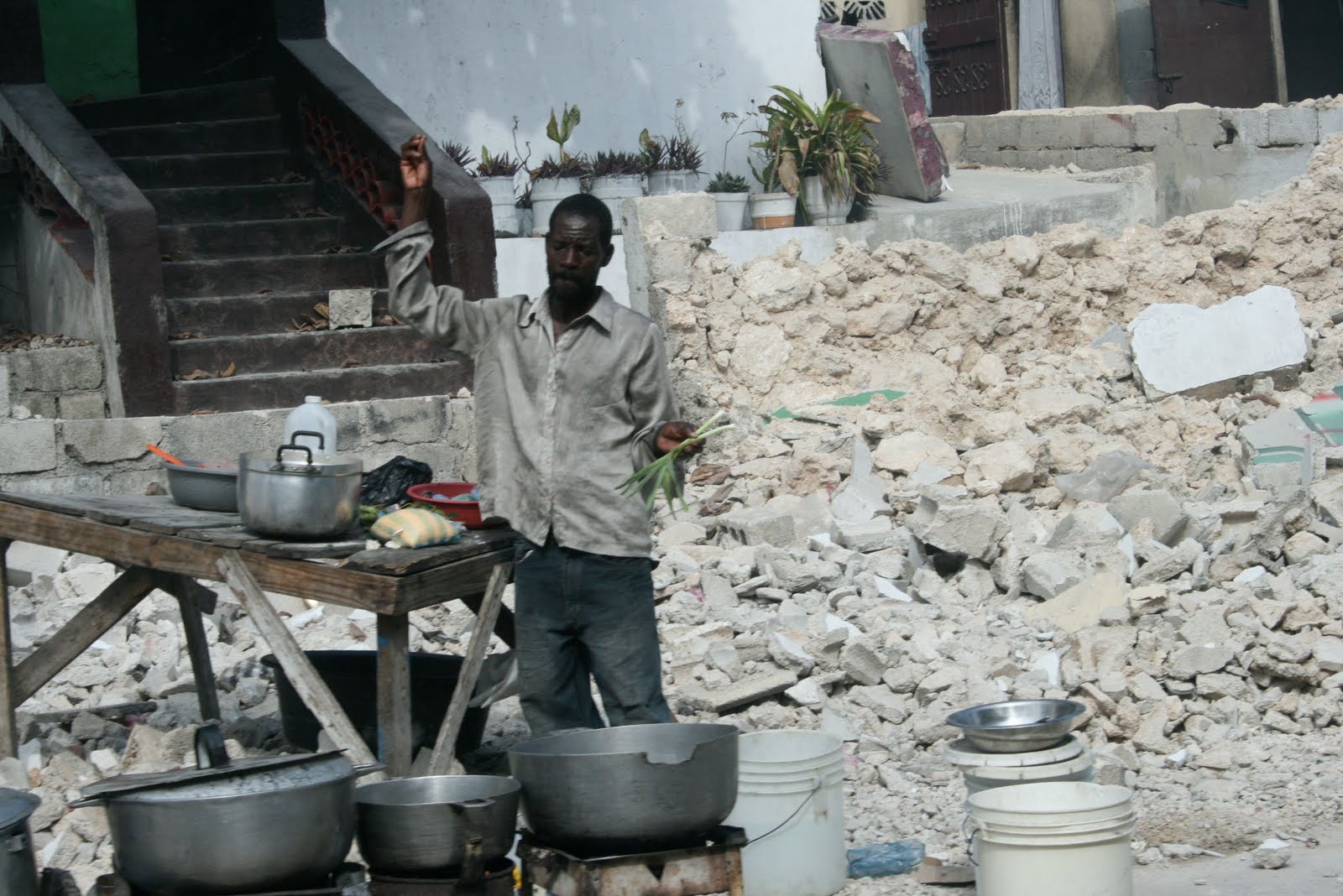
On my last full day, I drove around Port-au-Prince, trying desperately to finish a story. It was a city trying to rebound, the spirit of the people alive. Markets and shops were bustling. Some businesses had reopened. As had eateries and service providers. But then, the eye would fall on a vast makeshift settlement or a hill of rubble. And I was instantly reminded of the magnitude of suffering here and the equally enormous effort it will take to rebuild.

I went up to Petionville on that last day, weaving through city streets. A tree had started new life from the concrete chunks of a building that once stood tall. I looked at the young leaves and wondered how long it would survive before a bulldozer came.
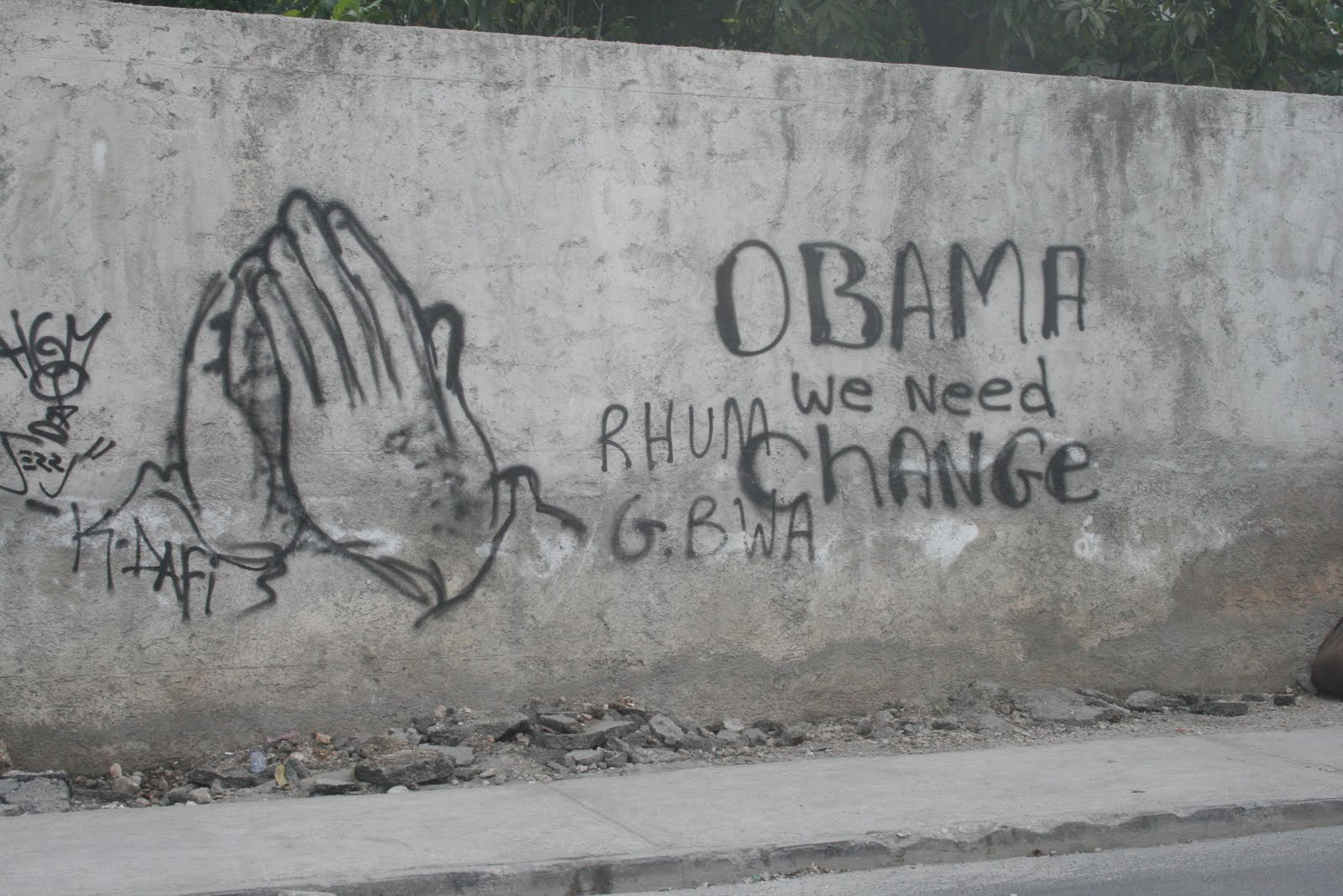
Nearby, a freshly spray painted sign on a wall: “Obama, we need change.”

Soldiers from the 82nd Airborne made their presence known, as did the United Nations, it’s hulking white tanks unadorned save two letters — U.N. — stopped on street corners. No wonder some Haitians felt this was another the start of another foreign occupation.

A man sat on the street with his family silver. A coffee set, a tray. Pure silver, he said. Money for the next month’s meals. No takers in sight, though. Why buy silver when you no longer have a home? But the furniture makers weren’t discouraged. They set about their freshly varnished dressers, tables and chairs. They might look just as good in tent city, behind four sheets instead of four walls in a hillside home.

The random nature of the destruction was curious. One house untouched, the next reduced to debris. I thought about walking the streets of Mexico City a year after the massive 1985 earthquake and every so often, I’d feel a gust of chilling air slap my face. The wind was swirling like ghosts around empty plots where once buildings had stood.

And still, all around Port-au-Prince, are signs asking for help. One off John Brown Avenue said: “SOS. We are hungry. We need water. Please help now. Go this way.”

Back to school


A Catholic school in the Port-au-Prince neighborhood of Sainte Marie resumed classes Wednesday. It was a vital sign of normalcy.

The kids need routine, they need to be with their friends. It’s a massive step toward recovery for the earthquake’s most vulnerable survivors.

Again, I cherished their smiles.

Faces of hope


A few days ago, I accompanied CNN producer Edvige Jean-Francois to her father’s grave in Port-au-Prince (she was worried that it might have been desecrated after the quake) and then to the home her parents had recently finished building.

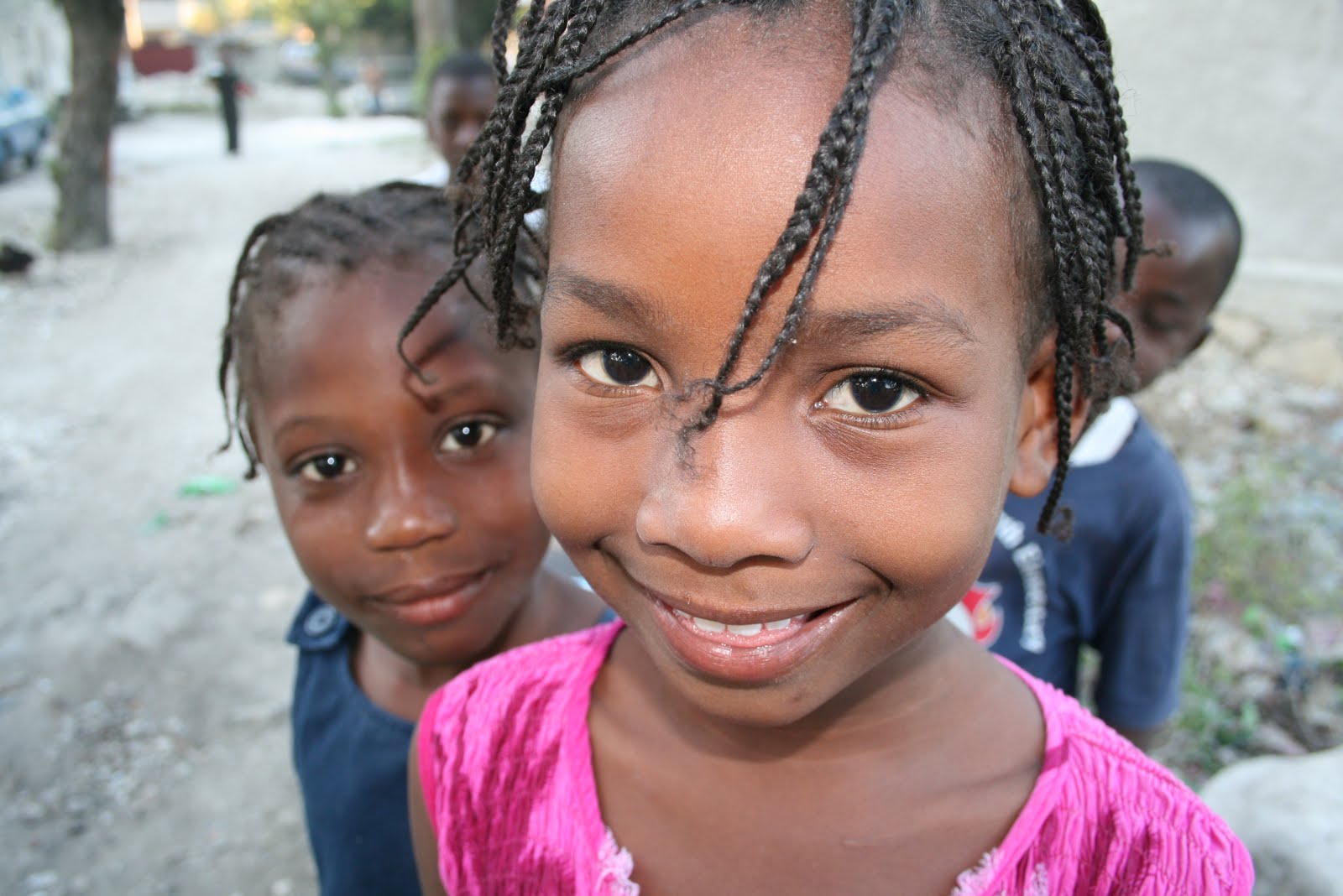
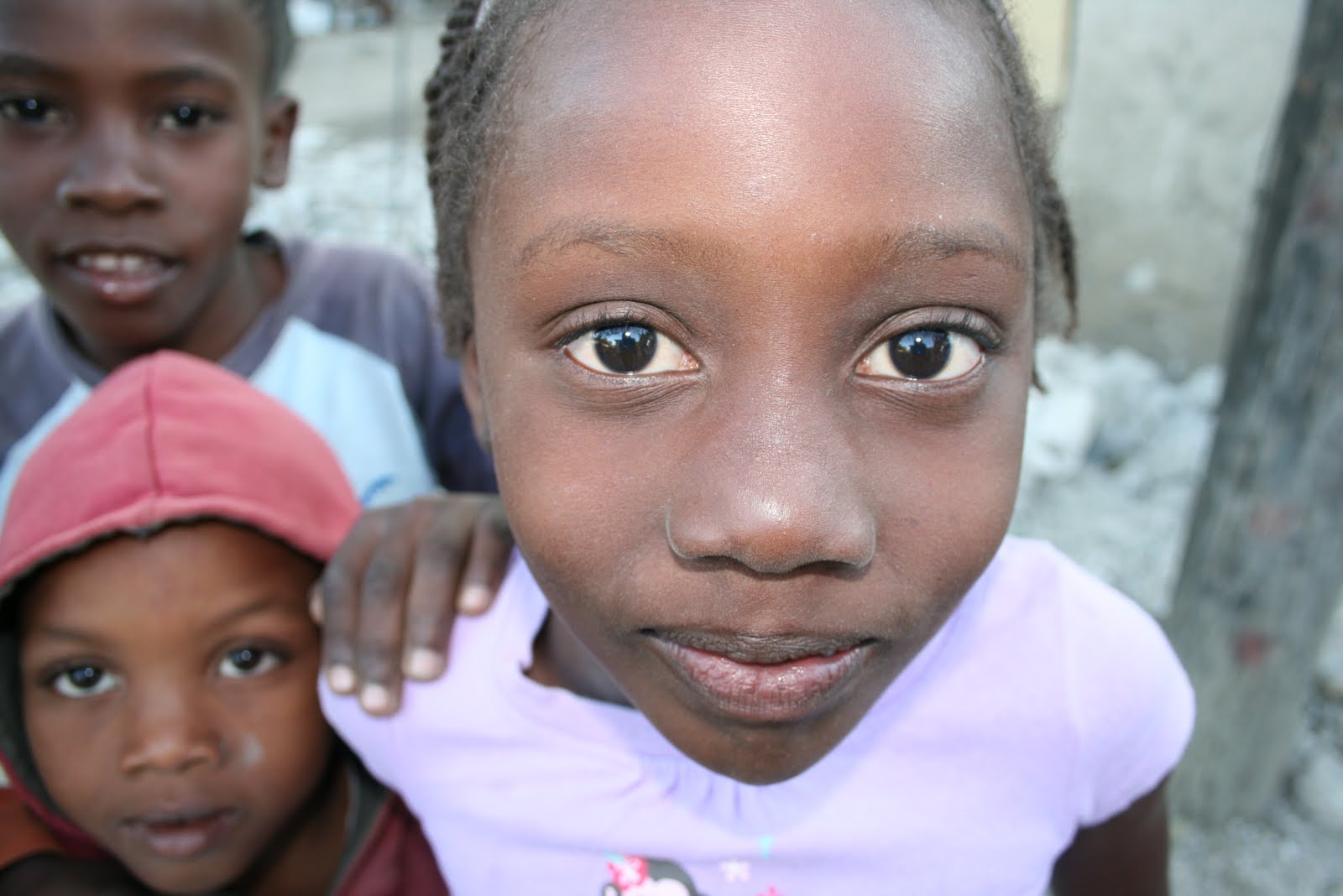
There, like everywhere I have been to in Haiti, the children flocked toward the visiting journalists. Their faces tell me there is hope. That Haitians are resolved to overcome their national agony.

Here are a few photos.

What have they done?

I wandered through the Port-au-Prince cemetery today with a Haitian colleague looking for his family crypt. His heart was full of trepidation. What would he find?

Had someone tossed his ancestor’s bodies and stuffed fresh ones in there instead. That’s what has happened to so many crypts.

We stepped over bones and skulls spread through the maze of crypts. Flies swarmed. The stench of rotting human flesh.

And the souls of the dead. Restless. Disturbed. “Why can’t you let us rest in peace?” they seemed to say.

What else were people to do? Where to dispose of those freshly departed? After the earthquake, there were bodies everywhere. And nowhere to bury them properly.

I don’t know where to begin this story for CNN.

Haiti’s horror

My heart breaks.

Every time I head out of the Plaza Hotel in a CNN car, my heart breaks.

In the massive tent cities, in the villages, on the big island in the deep blue Caribbean. My heart breaks.

A woman grasped my arm today and would not let go. She held her sick child with her other arm. “I am hungry,” she said.

Everywhere you look, there is misery. People who had nothing have one hundred times nothing now.

After the earth heaved, the world turned to help Haiti but will it now begin to turn away?

“I am out of this stinking place tomorrow,” said one journalist staying at our hotel. He had just come out from a dip in the pool.

Yes, yes, you can go home. I can go home. We can all run away, back to our plush places with climate control, soft beds and enough on our plates to feed five Haitians.

But what of those who are already home? Amid the stench of rotting bodies, garbage-strewn streets and makeshift settlements where, if they are lucky, an aid group has delivered bulgar and lentils.

Imagine living side by side, without privacy. A woman on her period. Families bathing in public. Flies swarming, the heat rising. Ahead, lies the rainy season. And more misery.

Imagine never recovering what you have lost, memories and lives forever buried under mountains of crushed concrete and twisted metal.

I met a young man Tuesday on the Isle de la Gonave. Joinvil Anvousse. He was studying theology in Port-au-Prince. Today, he thinks his education is lost. He has no money. He does not know where his parents are. The house where he was living is gone. He moved back to the isolated island and eats every two or three days. One meal of plain rice. When someone shows mercy.

I pulled out a melting Pop-Tart from my backpack and gave to him. Within seconds, he devoured half. The other half he shared with his cousin. Then, he gave me his e-mail address.

“Tell the world my story because I want to go to school,” he said. “Promise me, you will.”

Yes, Joinvil, I promise.

For Haiti’s sake.

Read my stories about Haiti: http://www.cnn.com